Quick answer
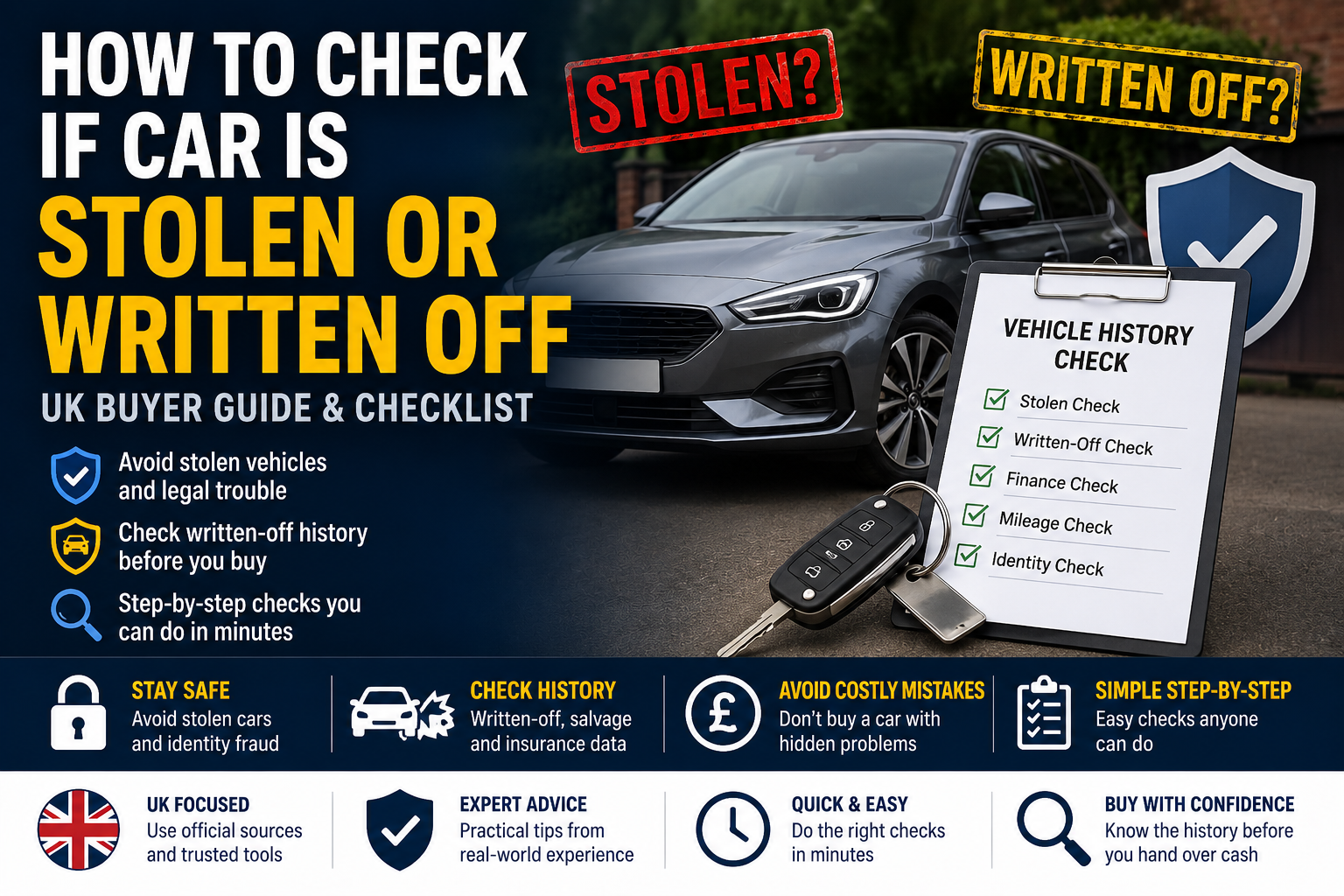
Before buying a used car in the UK, check whether it has been reported stolen, written off, cloned, under finance or badly repaired after an accident. The safest approach is combining a trusted vehicle history check with a proper physical inspection.
A cheap-looking deal can quickly become expensive if the car has hidden structural damage, finance owing, cloned plates, mileage problems or insurance write-off history.
A shiny exterior means nothing if the identity, paperwork, chassis, repair history or seller story does not add up.
What risky cars often look like in real life
In real used car checks, stolen or written-off risk usually appears as a pattern rather than one clue. The seller may rush you, paperwork may look thin, VIN details may be hard to inspect, MOT history may show odd gaps, and the car may have repair signs that do not match the advert.
Many buyers only focus on price, mileage and colour. A safer buyer checks the car’s identity first. If the vehicle is stolen, cloned, under finance or badly repaired, a cheap price is not a bargain.
If the seller refuses inspection, avoids VIN questions, will not show the V5C or pressures you to pay a deposit quickly, slow down or walk away.
Best checklist flow before buying
Use this order before viewing, paying a deposit or arranging collection. It keeps the process simple and helps you spot high-risk cars early.
1. Check the advert carefully
Look for missing history, vague wording, poor photos, suspiciously low price or pressure language.
Common used car scams →2. Check MOT history
Look for mileage patterns, repeated advisories, corrosion, suspension damage, brake issues and old failures.
Check MOT history →3. Run a vehicle history check
Check stolen status, written-off status, finance, mileage markers and registration details before paying.
4. Match VIN and V5C
The VIN on the car should match the V5C, chassis stamping, windscreen plate and history report.
5. Inspect for accident repair
Check panel gaps, paint mismatch, overspray, welding, underseal, lights, boot floor and wheel alignment.
Accident repair guide →6. Test drive properly
Check steering, braking, pulling, noises, warning lights, overheating and suspension behaviour.
Test drive checklist →How stolen cars are hidden and sold
Most stolen vehicles sold privately are disguised using cloned number plates, fake paperwork, false seller stories or altered VIN numbers. Some are mixed with parts from another vehicle after accidents or theft.
Cloned registration
Criminals copy the registration from another similar vehicle so the stolen car appears legitimate online.
Fake paperwork
Some sellers use forged V5C details, fake service history or edited invoices to build trust quickly.
VIN tampering
The VIN plate or chassis numbers may look scratched, replaced, uneven, covered or altered.
Suspicious seller story
The seller may say they are selling for a friend, cannot meet at the registered address or needs money urgently.
Very cheap price
A price far below similar cars can be used to make buyers rush before checking properly.
No proper viewing address
Meeting in a car park, petrol station or random street can make it harder to verify the seller.
What does written off mean?
A written-off car is a vehicle an insurance company decided was uneconomical to repair after damage, theft recovery or flooding. Some written-off cars are repaired properly and return to the road, while others are repaired badly.
Cosmetic damage
Some write-offs only suffered cosmetic or non-structural damage, but repair quality still matters.
Structural damage
Other vehicles suffered major structural damage affecting the body shell, chassis or crash safety.
Flood damage
Flood-damaged vehicles can develop electrical, corrosion and interior problems months later.
Flood damage signs →Theft recovery
Recovered stolen vehicles may have missing parts, damage, electrical faults or identity concerns.
Checks you should always do before buying
- 1Run a trusted vehicle history check.
- 2Check MOT history online for mileage, failures and advisories.
- 3Match VIN numbers on the car, V5C and history report.
- 4Inspect for accident repairs, paint mismatch and uneven panel gaps.
- 5Check service history consistency and invoice mileage.
- 6Check for finance risk before paying privately.
- 7Look for warning lights, water damage, smoke, leaks or hidden faults.
- 8Never rush because of “another buyer coming”.
How to check the VIN number properly
The VIN is the car’s unique identity number. It should match across the windscreen plate, chassis stamp, V5C logbook, service records and vehicle history report.
Dashboard VIN
Usually visible through the lower windscreen area.
Door sticker
Often found inside the driver door shut area.
Chassis stamping
Stamped directly into the body shell or chassis structure.
If VIN numbers do not match perfectly, walk away until the issue is fully explained and verified.
Warning signs of hidden accident damage
Mechanics usually spot badly repaired accident cars because repair shortcuts leave clues behind. These signs matter even if the history check looks clean.
Uneven panel gaps
Bonnet, boot or doors sitting unevenly can suggest previous accident repair.
Paint mismatch
Different paint shades or overspray around seals often reveal repair work.
Fresh underseal
Heavy fresh underseal underneath may sometimes hide welding or structural damage.
Misaligned headlights
Crooked headlights or bumper fitment problems are common after front-end accidents.
Warning lights removed
Some sellers hide dashboard warning lights before selling.
Water inside cabin
Can suggest flood damage or poor accident repair sealing.
Cat S vs Cat N explained simply
Cat S
Cat S means the vehicle suffered structural damage affecting parts of the body or chassis. Repair quality and alignment checks are very important.
Full Cat S guide →Cat N
Cat N means non-structural damage such as cosmetic, electrical or mechanical faults. It can still be expensive if repairs were poor.
Full Cat N guide →Neither category automatically means the car is unsafe, but the repair quality, documentation and price must make sense.
Free vs paid vehicle history checks
Free checks
You can check MOT history, mileage pattern, tax status and basic registration details online for free.
Paid checks
Paid checks may reveal stolen status, finance, write-offs, plate changes and mileage inconsistencies.
Best approach
Use both free checks and a trusted paid history report before buying, especially on expensive cars.
When to walk away
- !The VIN does not match the V5C or history report.
- !The seller refuses to show paperwork.
- !The seller will not meet at the registered address.
- !The car is much cheaper than similar examples with no clear reason.
- !There are signs of poor accident repair or hidden structural work.
- !The history check shows stolen, finance or write-off concerns you do not understand.
- !The seller pressures you to pay before checks are complete.
Best mechanic-style buying advice
The safest used car buyers are usually the slowest buyers. Rushing creates mistakes.
If the seller pressures you heavily, refuses inspections, avoids paperwork questions or becomes defensive when you ask about history, treat it as a warning sign.
Independent mechanics do not care about selling you the car. That is why a proper inspection before purchase can save thousands later.
Check the identity, check the history, inspect the repairs and only then decide whether the price is worth the risk.
Related buying and checking guides
Frequently asked questions
How can I check if a car is stolen?
Use a vehicle history check, inspect VIN numbers carefully and compare all documents with the vehicle itself.
Can you legally sell a written off car?
Yes, many repaired write-off vehicles are legally sold in the UK, but the write-off history should be declared honestly.
Is Cat S worse than Cat N?
Usually yes because Cat S involves structural damage, while Cat N does not involve structural repairs.
Can MOT history show accident damage?
Not directly, but repeated suspension, alignment or structural advisories can sometimes reveal previous accident problems.
Should I avoid all written off cars?
Not necessarily. Some repaired vehicles are fine, but buyers should inspect them carefully and understand the risks.
Should I buy a car if the VIN does not match?
No. If the VIN does not match the V5C, history check or car body, walk away until the issue is fully verified.