
Quick answer
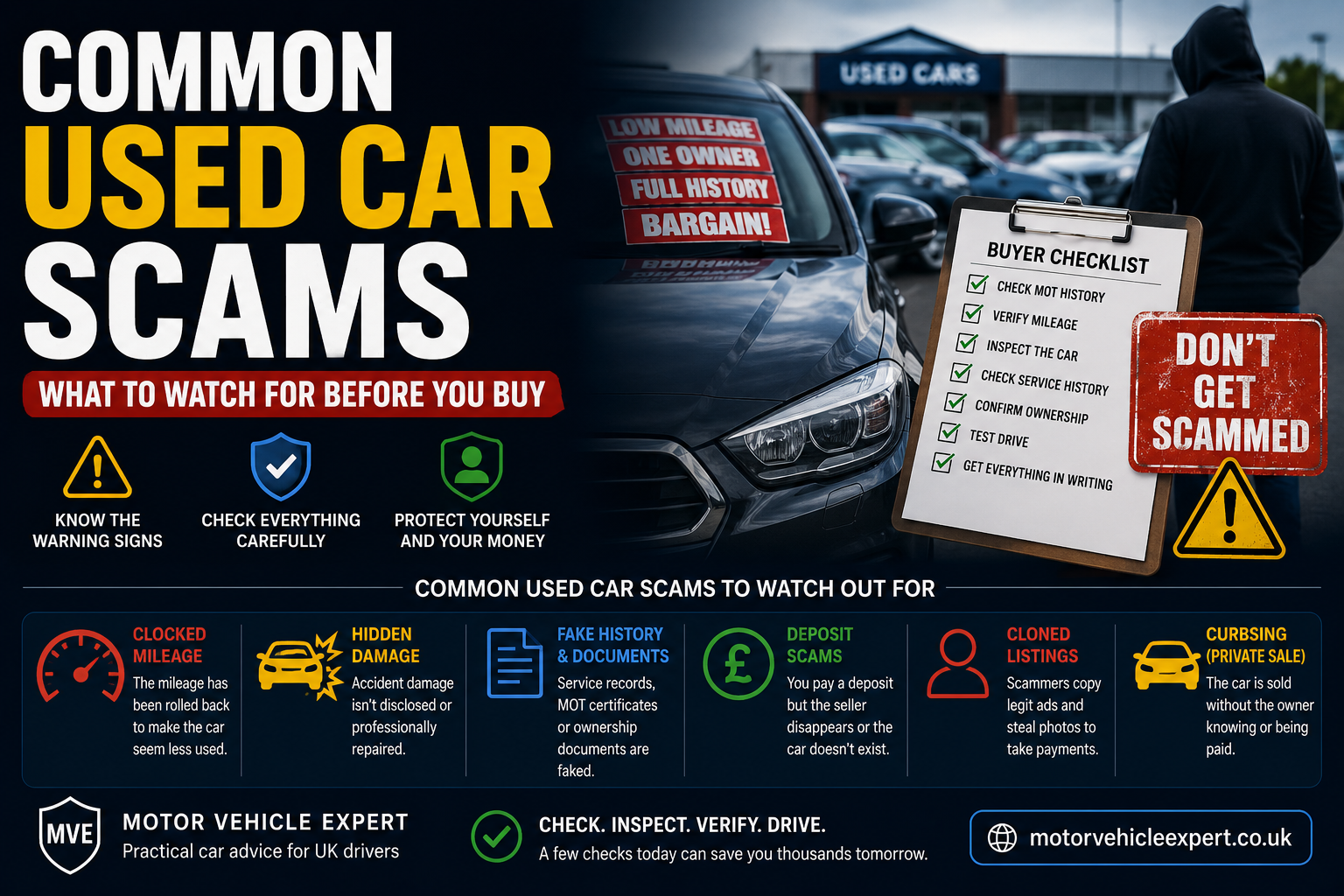
The most common used car scams include deposit pressure, fake private sellers, clocked mileage, hidden finance, stolen or cloned cars, fake service history, undisclosed Cat S or Cat N history, and sellers hiding expensive mechanical faults.
Before buying, check the MOT history, service records, V5C, VIN, seller details, mileage pattern, vehicle history report, test drive behaviour and payment terms. If the seller rushes you, refuses inspection or avoids paperwork, walk away.
A genuine seller should not be offended by normal checks. Scams usually depend on speed, pressure and confusion.
What I normally see with used car scams
In real buying situations, the car often looks better than the story. It may be clean, polished and photographed well, but the paperwork, seller details, mileage history or payment request does not line up.
The biggest mistake buyers make is getting emotionally attached before checking the basics. Once you want the car, it becomes easier to ignore pressure, vague answers, missing documents or a suspiciously cheap price.
A safe used car deal should make sense from every angle: the seller, the V5C, the VIN, MOT history, service records, mileage, test drive and payment details should all agree with each other.
If the seller’s story changes when you ask simple questions, treat that as a warning sign.
What used car scams look like in real life
“Someone else is coming today”
Pressure is often used to make you skip checks and pay a deposit quickly.
“Selling for my cousin”
This can be genuine, but it can also hide ownership, trader activity or paperwork issues.
“Full history” with no invoices
A stamped book without invoices may not prove proper maintenance.
Check service history →Low mileage, heavy wear
A tired interior on a low-mileage car can point to mileage tampering.
Clocked mileage signs →Fresh MOT, old advisories
A fresh MOT is useful, but repeated advisories can reveal long-term neglect.
MOT advisory meaning →Clean car, strange paperwork
A polished car still needs matching V5C, VIN, MOT history and seller details.
Inspection checklist →Deposit scams
Deposit scams usually start with urgency. The seller says the car is in high demand, someone else wants it, or they need a holding payment before you can view it properly.
- !Seller asks for money before you see the car.
- !Deposit terms are vague or not written down.
- !Seller refuses to confirm whether the deposit is refundable.
- !Advert looks too cheap compared with similar cars.
- !Seller pushes urgency instead of answering questions.
- !Payment is requested by unusual method or to a different name.
Mechanic-style advice: never let a deposit stop you doing the basic checks. A good car will still be a good car after you inspect it properly.
Fake private sellers
Some traders pretend to be private sellers to avoid questions, responsibilities or complaints. The car may still be real, but the seller’s story may not be.
Several cars for sale
If the seller has multiple cars listed, they may be trading rather than selling their own car.
Won’t meet at V5C address
A genuine private seller should normally be comfortable meeting where the car is registered.
“Selling for someone else”
This can be true, but it needs extra caution because ownership and history become less clear.
Trade-style wording
Phrases like “first to see will buy” or repeated advert templates can suggest regular selling.
Related guide: buying from dealer vs private seller.
Clocked mileage scams
Mileage affects value. A clocked car may be advertised as lower-mileage to make it look more desirable and more expensive than it should be.
- !MOT mileage drops or does not match the advert.
- !Service invoices show different mileage from MOT records.
- !Steering wheel, pedals, gear knob or driver seat are heavily worn.
- !Low-mileage car has tired brakes, tyres, suspension and interior.
- !Seller cannot explain mileage gaps clearly.
- !Service history disappears during key years.
Read signs of clocked mileage before buying any car with suspicious mileage.
Hidden finance scams
A car can still have outstanding finance attached to it. If finance is not settled properly, the situation can become messy for the buyer.
Do a history check
A paid vehicle history check can help reveal finance markers before you buy.
Be careful with rushed sales
A seller in a hurry may be trying to sell before finance, ownership or paperwork issues are questioned.
Check seller details
The V5C is not proof of ownership, but mismatched seller details should still make you cautious.
Get payment evidence
Keep receipts, messages and proof of payment if you go ahead.
Stolen or cloned car scams
A cloned car may use the identity of another vehicle to hide theft, finance, insurance history or previous damage. This is why checking the VIN, number plates, V5C and vehicle history matters.
- !VIN does not match the V5C or visible plates.
- !VIN plate looks tampered with, damaged or freshly replaced.
- !Seller refuses to show the V5C.
- !Seller will not meet at a traceable address.
- !Price is unusually low for the model and condition.
- !Vehicle history check raises identity, stolen or finance concerns.
Hidden write-off or accident history
Some cars have been written off, repaired and put back on sale. That does not always mean the car is bad, but the history must be clear and the price should reflect it.
- !Cat S or Cat N history not mentioned in the advert.
- !Paint mismatch, overspray or uneven panel gaps.
- !Car pulls, shakes or wears tyres unevenly.
- !Airbag, ABS or steering warning lights stay on.
- !Seller avoids questions about repair history.
- !Repair invoices or photos are missing for a categorised car.
Useful guides: Cat S vs Cat N explained UK and how to spot accident repair.
Fake service history
Fake or exaggerated service history can make a neglected car look well maintained. Do not rely on stamps alone if the car is expensive, high mileage or has major work due.
Stamps with no invoices
Stamps are useful, but invoices give stronger detail about real work.
Mileage does not line up
Service mileage should match MOT mileage and the car’s condition.
Missing major work
No proof of cambelt, clutch, DPF or major servicing can be expensive later.
Same handwriting everywhere
Not proof of fraud, but worth checking if all records look freshly filled out.
No garage details
Invoices should show garage name, date, mileage, registration and work carried out.
Seller becomes vague
A genuine history should not fall apart when you ask simple questions.
Read how to check service history for a deeper checklist.
Hidden mechanical fault scams
Sometimes the scam is not fake paperwork. Sometimes the seller knows the car has a fault and tries to move it on before it becomes your problem.
- !Engine already warm when you arrive.
- !Warning light appears during the test drive.
- !Car smells hot, smoky, oily or like coolant.
- !Coolant level is low or the engine overheats.
- !Gearbox, clutch or brakes behave badly on test drive.
- !Seller says “it only needs a cheap sensor” but has no diagnosis.
Use the used car test drive checklist and car repair costs guide UK before buying a car with faults.
Payment red flags
Different account name
Be cautious if payment is requested to a name that does not match the seller or business.
Cash pressure
Cash is not automatically wrong, but pressure to pay quickly without checks is a warning.
Deposit before viewing
Avoid paying before seeing the car, checking paperwork and confirming the seller is genuine.
No receipt
Always get a written receipt showing car details, price, date, seller and buyer details.
What to check first
1. Check MOT history
Look for mileage issues, repeated advisories, previous failures and neglect patterns.
2. Check the V5C and VIN
The vehicle identity should match the paperwork and the seller’s story.
3. Compare service records
Dates, mileage and invoices should support the advertised history.
4. Inspect the car in daylight
Check tyres, bodywork, engine bay, interior wear, leaks and warning lights.
5. Test drive properly
Do not buy without checking clutch, gearbox, brakes, steering, suspension and temperature.
6. Pay for a history check
A history check can help reveal finance, write-off markers, mileage issues and stolen vehicle concerns.
Start with the full used car inspection checklist.
Paperwork checklist before paying
- 1V5C details match the car and seller story.
- 2VIN on the car matches the V5C and history check.
- 3MOT mileage makes sense year by year.
- 4Service invoices show date, mileage, registration and work carried out.
- 5History check does not reveal finance, stolen markers or write-off surprises.
- 6Receipt includes buyer, seller, vehicle registration, price, date and terms.
When to walk away
- !The seller pressures you to pay before checks.
- !The V5C, VIN, MOT history or seller details do not match.
- !The seller refuses a test drive or inspection.
- !Mileage history does not add up.
- !Service history looks fake or incomplete.
- !The car has warning lights, smoke, overheating or serious leaks.
- !The payment request feels unusual or rushed.
- !The seller’s story changes when you ask direct questions.
A genuine seller should expect proper questions. If simple checks cause pressure, excuses or changing stories, do not ignore that.
Questions to ask the seller
Why are you selling?
A normal question. Listen for a clear and consistent answer.
How long have you owned it?
Short ownership is not always bad, but it needs explaining.
Can I see the V5C?
Do not buy if paperwork is avoided or the details do not match.
Can I inspect it independently?
A serious seller should not object to a genuine buyer arranging inspection.
Has it ever been written off?
Ask directly and compare the answer with a vehicle history check.
Any known faults?
A vague “just a sensor” answer should be treated carefully without diagnosis.
Use questions to ask when buying a used car for a full seller question checklist.
Best mechanic-style advice
A scam usually depends on speed. The seller wants you excited, rushed or afraid of missing out. Slow the sale down and check the car properly.
Do not buy the story. Check the car, the paperwork, the seller and the money trail. If those four do not line up, walk away.
A genuine car should survive proper checks. If checking the car makes the seller defensive, that is often the clearest warning sign.
Related used car buying guides
Frequently asked questions
What are the most common used car scams?
Common scams include deposit pressure, fake private sellers, clocked mileage, hidden finance, fake service history, hidden write-off cars, cloned vehicles and sellers hiding serious faults.
How do I avoid a deposit scam?
Avoid paying before viewing the car and checking the paperwork. If you pay a deposit, get the terms in writing and confirm whether it is refundable.
How can I spot a fake private seller?
Be cautious if they have several cars for sale, refuse to meet at the V5C address, avoid questions or say they are selling for someone else.
Can a used car have hidden finance?
Yes. A vehicle history check can help reveal finance markers before you buy.
How do I spot clocked mileage?
Compare MOT mileage, service invoices, dashboard mileage, interior wear and vehicle condition.
Can service history be fake?
Yes. Fake stamps, missing invoices, mileage mismatches and vague garage details are warning signs.
Is a fresh MOT enough to trust a used car?
No. A fresh MOT is useful, but it does not prove the car has no hidden faults, finance, mileage problems or poor service history.
Should I buy from a seller who will not meet at the V5C address?
Be very cautious. There may be genuine reasons, but it increases risk and should be backed by clear paperwork and identity checks.
What is the safest way to avoid used car scams?
Check the MOT history, V5C, VIN, service records, vehicle history report, seller details and test drive behaviour before paying any money.
When should I walk away?
Walk away if the seller pressures you, refuses checks, avoids paperwork, asks for unusual payment or the car’s history does not add up.