
Quick answer
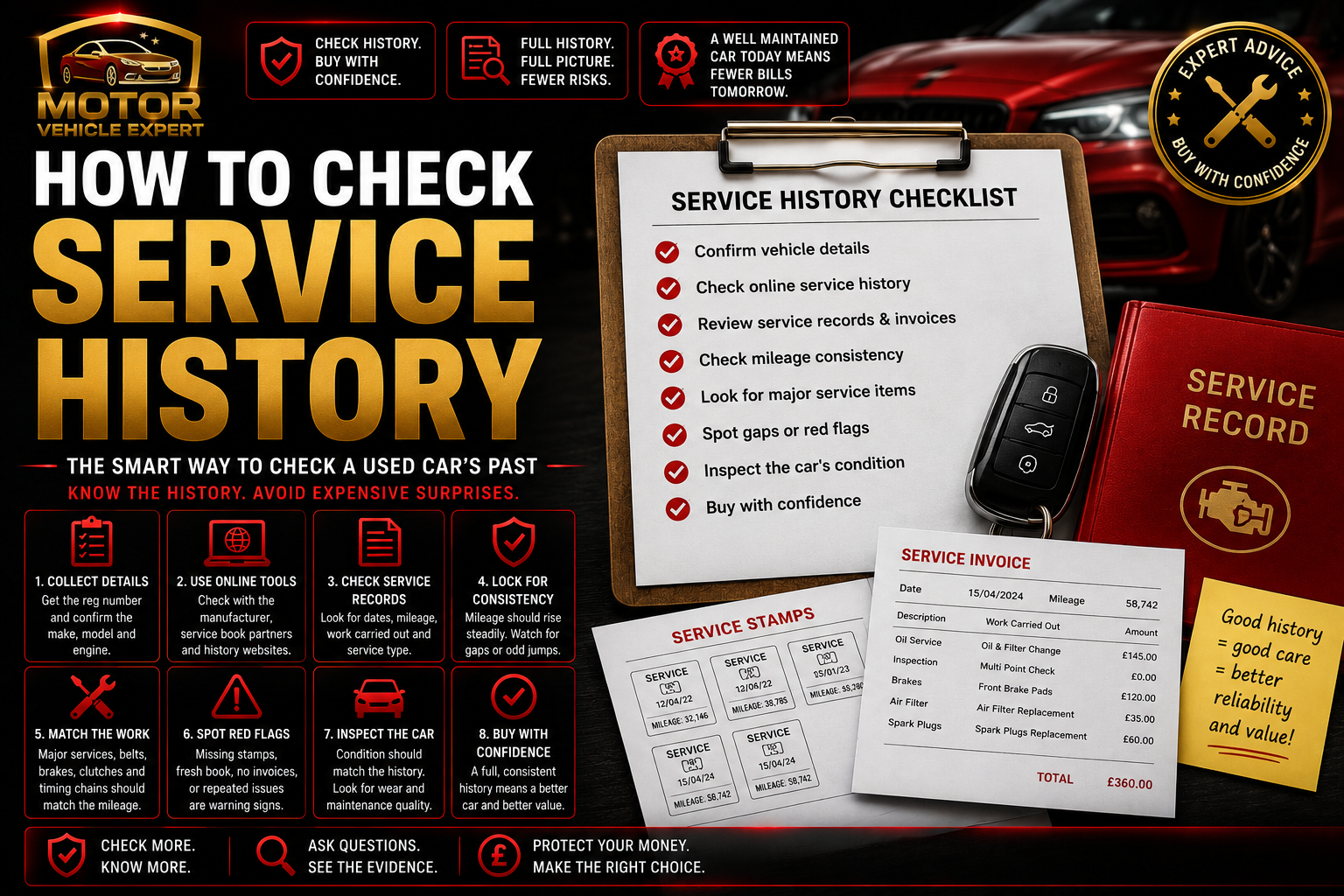
To check used car service history properly, compare the service book, invoices, MOT mileage records, digital servicing history and vehicle condition together. The dates, mileage, garage names, registration number and repairs should all make sense.
A stamped service book alone is not enough. In real life, invoices, MOT history and evidence of major work usually tell you far more about how the car has actually been maintained.
The strongest service history is consistent, detailed and believable. The weakest history has missing years, vague stamps, no invoices, mileage gaps or a seller who cannot explain the maintenance.
Why service history matters in real life
Oil changes matter
Skipped oil changes can lead to timing chain wear, turbo damage, sludge build-up and engine problems.
Major jobs are expensive
Cambelts, clutches, DPF systems and cooling repairs can cost far more than buyers expect.
Repair costs guide →Good history adds confidence
Consistent servicing usually suggests the car has not simply been run cheaply until sale time.
MOT history exposes gaps
Repeated advisories and poor maintenance patterns often show up in MOT records.
MOT history guide →Low mileage is not everything
A higher-mileage car with strong maintenance can be safer than a neglected low-mileage one.
Best mileage guide →Fake history exists
Some cars have fake stamps, copied invoices, missing years or vague “full history” claims.
Used car scams →What to check in a used car service history
- ✓Service dates should follow realistic intervals for age and mileage.
- ✓Mileage on invoices should match MOT records and dashboard mileage.
- ✓Look for invoices, not just stamps in a service book.
- ✓Check whether oil changes were carried out regularly.
- ✓Look for evidence of cambelt, water pump or timing chain work if due.
- ✓Check for brake, tyre, battery, suspension and coolant repair history.
- ✓Diesel cars should ideally show DPF, injector, EGR or fuel filter maintenance where relevant.
- ✓Make sure invoices match the registration number, VIN where shown and vehicle details.
- ✓Check whether the last service was recent or only done just before sale.
- ✓Look for signs that advisories were actually repaired, not simply ignored.
Use this together with the used car inspection checklist and used car test drive checklist.
Paperwork that proves good service history
Itemised invoices
Best evidence. They show garage details, date, mileage, parts, fluids and work carried out.
Service book stamps
Useful, but stronger when backed up with invoices and MOT mileage consistency.
Digital service record
Common on newer cars and often stored through the dealer or manufacturer system.
Parts receipts
Can help prove DIY or independent maintenance, especially on older cars.
MOT history
Shows mileage, failures, advisories and maintenance patterns over time.
MOT advisories →Major repair evidence
Cambelt, clutch, brakes, water pump and DPF work should have clear proof.
Digital service history vs stamped service books
Digital service history
Many newer cars store servicing records electronically through the manufacturer, dealership or specialist network. Ask the seller for a printout, screenshot or confirmation from the servicing garage where possible.
Paper service book
Older cars often rely on stamps and invoices. Stamps are helpful, but a stamp without an invoice gives less detail about what was actually done.
Best combination
The strongest history usually includes invoices, MOT consistency, receipts, digital records and visible evidence that the car has been looked after.
Be cautious
Freshly stamped books with little detail, missing invoices or large mileage gaps deserve closer inspection.
Service history red flags
- !Large mileage gaps between services.
- !Several years missing from the records.
- !Invoices that do not match the car registration.
- !Service stamps with no supporting paperwork.
- !MOT mileage that does not match service records.
- !Repeated MOT advisories for tyres, brakes, suspension or corrosion.
- !No proof of cambelt replacement when overdue.
- !Seller avoids questions about servicing or maintenance.
- !All stamps look freshly written in the same pen or handwriting.
- !The advert says “full service history” but the paperwork is incomplete.
If the story feels unclear, walk away or arrange an independent inspection before paying anything.
Major maintenance work buyers should look for
Cambelt replacement
A missed cambelt interval can risk major engine damage. Look for date, mileage and water pump evidence where relevant.
Cambelt guide →Clutch replacement
Useful on higher-mileage manuals, especially diesels, cars used for towing or cars with heavy town use.
Clutch cost →Cooling system repairs
Look for radiator, thermostat, coolant leak, water pump or overheating repair evidence.
Overheating guide →DPF maintenance
Diesels may need DPF cleaning, sensors, fuel filter changes or regeneration-related diagnosis.
DPF guide →Brake replacement
Brake discs and pads should match mileage and condition realistically.
Brake costs →Tyres
Quality matching tyres often suggest better maintenance habits than mixed cheap tyres.
Tyre MOT guide →How mileage and service history should match
Mileage only makes sense when matched against servicing and MOT records. A “low-mileage” car with poor history can be riskier than a properly maintained higher-mileage one.
Consistent mileage pattern
Mileage should rise steadily through MOT and service records without suspicious jumps or drops.
Wear should match mileage
Heavy steering wheel, pedal, gear knob and seat wear can look suspicious on supposedly low-mileage cars.
Storage periods matter
Cars sitting unused for years can still develop battery, tyre, brake, corrosion and fuel-system issues.
Missing years matter
Several years without servicing can suggest neglect, lost paperwork or hidden history.
Related guide: signs of clocked mileage.
Checking service history from a dealer vs private seller
Buying from a dealer
Ask for itemised history, not just “it has history”. A dealer should be able to show paperwork, digital records or explain gaps clearly.
Questions to ask dealer →Buying privately
Check that the seller’s story matches the V5C, invoices, MOT history and how long they have owned the car.
Dealer vs private →Be careful if a “private seller” has several cars for sale, avoids paperwork questions or says they are selling for someone else. Read common used car scams before paying a deposit.
Questions to ask the seller or dealership
- ?Can I see the full service history and invoices?
- ?When was the last oil service completed?
- ?Has the cambelt or timing chain been replaced?
- ?Are there receipts for major repairs?
- ?Was the car serviced by a main dealer, specialist or independent garage?
- ?Why are there gaps in the service records?
- ?Has the car ever overheated or had engine repairs?
- ?Were previous MOT advisories repaired?
- ?Can I inspect the car and test drive it properly?
- ?Can I take time to check the history before leaving a deposit?
Useful related guide: questions to ask when buying a used car.
Should you buy a used car with no service history?
Not every car without history is automatically bad, but risk is definitely higher. Without proper records, you cannot confirm oil changes, servicing intervals, cambelt replacement or previous repair quality.
Lower-value cars
Some buyers accept missing history on cheaper older cars if the condition, MOT records and inspection results look strong.
Higher-value cars
Expensive, performance, hybrid or premium cars without service history deserve extreme caution.
Diesels
Diesel engines especially benefit from proven maintenance because injector, turbo, EGR and DPF repairs can be costly.
Independent inspection
If history is weak but the car interests you, pay for a professional inspection before buying.
Related guide: used car with no service history — is it worth it?
When to walk away from the car
- !The mileage records do not add up.
- !The seller avoids paperwork questions.
- !Important maintenance has no evidence.
- !The engine smokes, overheats or runs badly during viewing.
- !The MOT history shows repeated neglect.
- !The service history appears fake or incomplete.
- !The seller pressures you to pay quickly.
- !The price is only cheap because the maintenance risk is being passed to you.
A good used car should make sense on paper and on the road. If the story feels wrong, trust your instincts and walk away.
Best mechanic-style advice
Do not get distracted by shiny paint, fresh valeting or cheap pricing. Service history is one of the biggest clues to how a car has actually been treated.
In real life, buyers usually regret cars with unclear records, missing invoices and overdue maintenance far more than they regret walking away.
Related used car buying guides
Frequently asked questions
How do I check a used car service history?
Check the service book, invoices, MOT mileage records, digital history and evidence of major repairs together.
Is full service history important?
Yes. It helps show whether the car has been maintained properly and whether important maintenance has been completed.
Can service history be fake?
Yes. Fake stamps, missing invoices and mileage inconsistencies are common warning signs.
Should invoices matter more than stamps?
Usually yes. Detailed invoices often give stronger evidence of real maintenance work.
Should I avoid a car with no service history?
Not always, but risk is definitely higher and you should inspect the car much more carefully.
Why is cambelt evidence important?
A missed cambelt replacement can cause severe engine damage on many vehicles.
Can MOT history help check servicing?
Yes. MOT mileage and advisory history often reveal maintenance patterns and possible neglect.
What is the biggest service history red flag?
Mileage inconsistencies, missing years, fake-looking stamps and no proof of major maintenance are major warning signs.