Quick answer
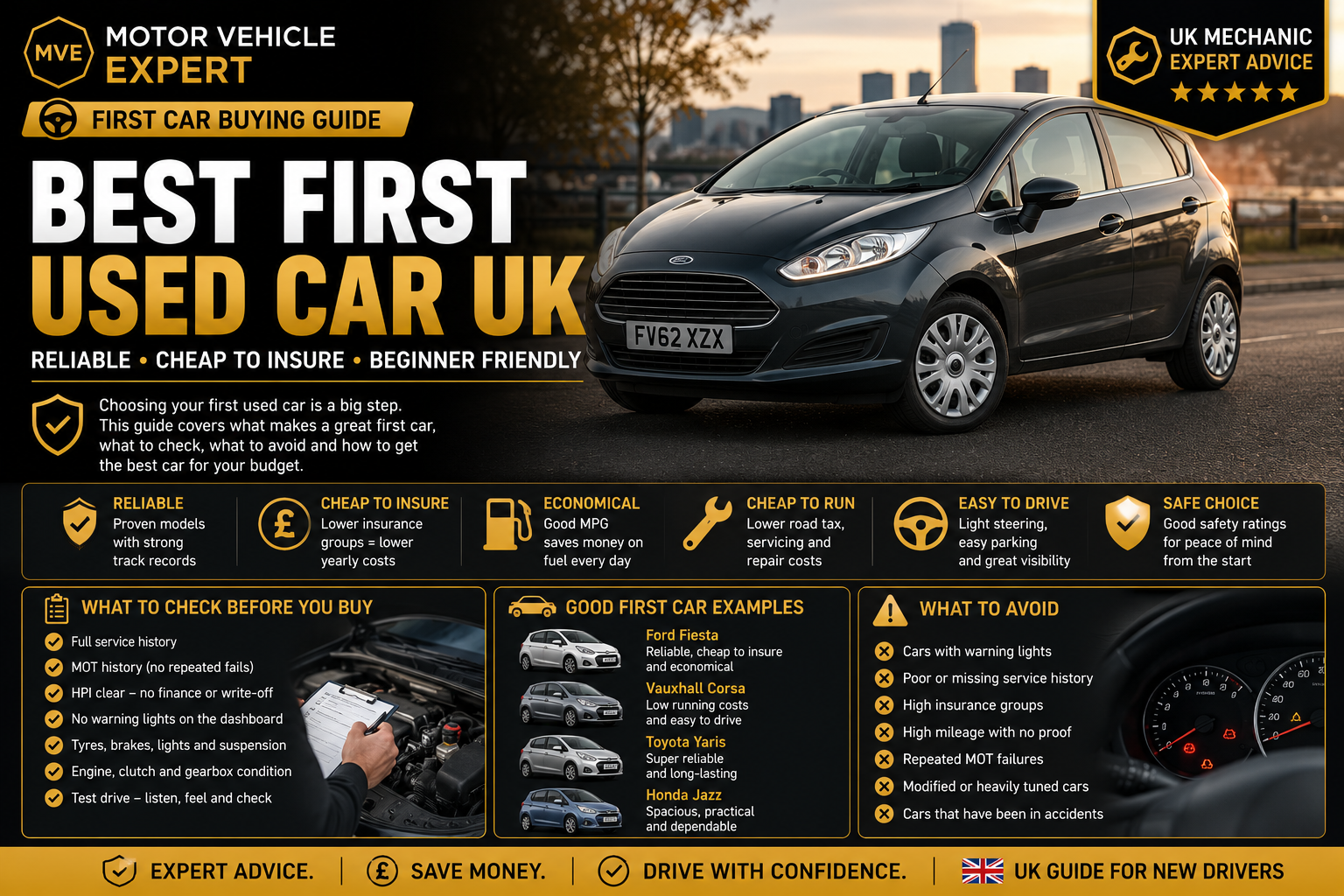
The best first used car is usually reliable, cheap to insure, simple to maintain and easy to drive. Service history, MOT history and condition matter more than sporty styling, badges or very low mileage.
Many first-time buyers regret choosing a car with expensive insurance, poor reliability, warning lights, hidden accident damage or neglected servicing. Buying carefully often saves more money than buying cheaply.
For a first car, choose low risk over excitement. A boring, well-maintained car is usually better than a flashy car with expensive surprises.
Real-world first car advice
From a practical point of view, the best first car is not always the cheapest advert. It is the car least likely to give you expensive surprises in the first few months.
A car can look clean in photos and still need tyres, brakes, a clutch, suspension work, coolant repairs or electrical diagnosis. That is why MOT history, service records and a proper viewing matter so much.
A good first car should feel boring in the right way: easy to start, easy to insure, easy to park, no warning lights, no overheating, no smoke, no hard sell and no strange noises on the test drive.
Check the car before the deal
Before paying a deposit, check the MOT history, service records, warning lights, tyres, brakes, clutch, coolant level, bodywork and paperwork. A quick check can save you from buying someone else’s expensive problem.
Best first used car by budget
Budget changes what you should expect. A cheap first car can still be good, but the lower the price, the more carefully you need to check condition, MOT history and upcoming repairs.
£1,500–£2,500
Expect age, higher mileage and cosmetic wear. Focus on MOT length, tyres, brakes, clutch, overheating signs and whether the car starts cleanly from cold.
£2,500–£4,000
This can be a sensible first-car range if you buy carefully. Look for simple petrol cars, decent service history, clean MOT patterns and no warning lights.
£4,000–£6,000
You should expect better condition, fewer urgent repairs and stronger history. Still check insurance before viewing because some cars in this range can cost a lot to insure.
£6,000–£8,000
More choice, newer cars and better safety features. Do not assume newer means trouble-free; check service history, tyres, accident repairs and finance status.
Over £8,000
Worth considering if you want newer safety tech and lower repair risk, but insurance can still be high. A pre-purchase inspection may be sensible.
Keep repair money aside
Do not spend every pound on the car itself. Keep money back for insurance, tax, servicing, tyres, brakes and unexpected repairs.
Repair costs guide →What matters most in a first used car?
A good first car should be easy to own, easy to insure and easy to repair. Do not judge it by looks alone.
Reliability
A reliable car matters more than fast performance when you depend on it for work, college or daily driving.
Insurance group
Insurance costs can vary massively between similar-looking cars, so check quotes before buying.
Running costs
Fuel economy, tyre prices, servicing and repair costs all affect ownership.
MOT and history
Repeated MOT failures or missing service history should make you cautious.
MOT history guide →Easy parts availability
Common UK cars are often easier and cheaper to repair than unusual models.
Simple maintenance
Simple petrol cars are often easier for beginner ownership than complex performance or diesel models.
Insurance can make or break the deal
Many new drivers choose cars based only on looks, then get shocked by insurance prices. Always check insurance quotes before agreeing to buy a car.
- ✓Sporty trims usually cost more to insure.
- ✓Large alloy wheels and modifications can increase premiums.
- ✓Engine size matters, but repair cost and theft risk matter too.
- ✓Some small turbo cars still attract high insurance prices.
- ✓Telematics or black-box insurance may reduce costs for some drivers.
Check insurance before travelling. A car can look cheap but still be too expensive to insure as a new driver.
Is mileage important on a first car?
Mileage matters, but condition and maintenance matter more. Low mileage does not automatically mean a good car.
Low mileage warning
Very low mileage does not guarantee a good car if servicing was ignored, the car sat unused or the mileage story does not match the condition.
High mileage reality
A car with motorway mileage and strong history may still be a good buy.
100k miles guide →Clocked mileage risk
Always compare MOT mileage records, service invoices and interior wear.
Clocked mileage signs →Wear clues
Heavy steering wheel, pedal and seat wear may not match low mileage claims.
Petrol or diesel for a first car?
Petrol first car
For many new drivers doing short trips, town driving and lower annual mileage, a simple petrol car is often the safer and lower-risk choice.
- ✓Usually simpler for short journeys.
- ✓Often cheaper to repair than complex diesel systems.
- ✓Can be better suited to learner and new-driver use.
Diesel first car
Diesel can suit longer motorway driving, but modern diesels may develop DPF and emissions problems if mainly used for short trips.
What to check during the test drive
A test drive is where many hidden problems show themselves. Do not rush it.
- 1The engine should start easily from cold.
- 2No warning lights should stay on after startup.
- 3The clutch should not slip, judder or smell burnt.
- 4The gearbox should shift smoothly.
- 5The steering should feel stable and not pull badly.
- 6Brakes should feel strong without grinding or vibration.
- 7The engine temperature should stay stable once warm.
- 8Listen for knocking suspension, humming wheel bearings or whining noises.
Cars and problems first-time buyers should avoid
- !Cars with overheating or coolant loss.
- !Heavy smoke from the exhaust.
- !Cars with warning lights or limp mode.
- !Modified cars with unclear history.
- !Cars with missing V5C or suspicious paperwork.
- !Cheap premium cars with poor service history.
- !Flood-damaged or poorly repaired accident cars.
- !Cars with repeated MOT advisories for the same faults.
Running costs new drivers forget about
The buying price is only the start. Budget for the things the car will need after purchase.
Tyres
Large wheels and premium tyres can become expensive quickly.
Servicing
Skipping servicing usually creates bigger repair bills later.
Servicing guide →Brakes
Cheap cars often still need discs, pads or tyres soon after purchase.
Brake costs →Insurance excess
Always check what excess you would actually need to pay.
Fuel economy
Real-world MPG may differ from advertised figures.
Unexpected repairs
Always keep some money aside for maintenance and breakdowns.
Maintenance checklist →Big red flags when buying your first used car
If several of these appear together, slow down or walk away.
- !The seller refuses a proper test drive.
- !Warning lights stay on after startup.
- !The car overheats or smells strongly of coolant.
- !The V5C details do not match the seller.
- !The seller pressures you into paying quickly.
- !Service history is missing or suspicious.
- !MOT mileage and interior condition do not match.
- !The price seems far below normal market value.
Best advice for a first-time buyer
Do not buy emotionally. A reliable, well-maintained car with clean history usually beats a flashy car with warning signs.
Take someone experienced with you if possible, inspect the car in daylight, check MOT history properly and never feel pressured to buy immediately.
A first car should make your life easier, not drain your wages. Buy the car with the cleanest history and lowest risk, not the one that looks best in the advert.
Your used car inspection checklist is already indexed, so this page should support it naturally. Use this page for choosing the right first car, then send readers to the checklist before they view one.
Open used car inspection checklist →Related first car and used car guides
Frequently asked questions
What is the best first used car in the UK?
Usually a reliable, economical petrol car with a low insurance group, clean MOT history and strong service records.
Should I buy a diesel as a first car?
Usually only if you regularly do longer journeys. Short trips can cause DPF and emissions problems on modern diesels.
Is low mileage always better?
No. Maintenance history and condition matter more than mileage alone.
What should first-time buyers avoid?
Avoid warning lights, overheating, smoke, poor history, suspicious mileage, major modifications and pressure-selling.
How important is service history?
Very important. Good service history often tells you more about the car than the badge or age.
Should I get a professional inspection?
For expensive cars or anything you are unsure about, an independent inspection can be worthwhile.
How much should I spend on a first used car?
Spend enough to buy a safe, reliable car with clean history, but keep money aside for insurance, tax, servicing and repairs.
Should I buy the cheapest first car I can find?
Not always. A very cheap car with hidden problems can cost more than a better-maintained car bought for slightly more.