Brake repair cost guide

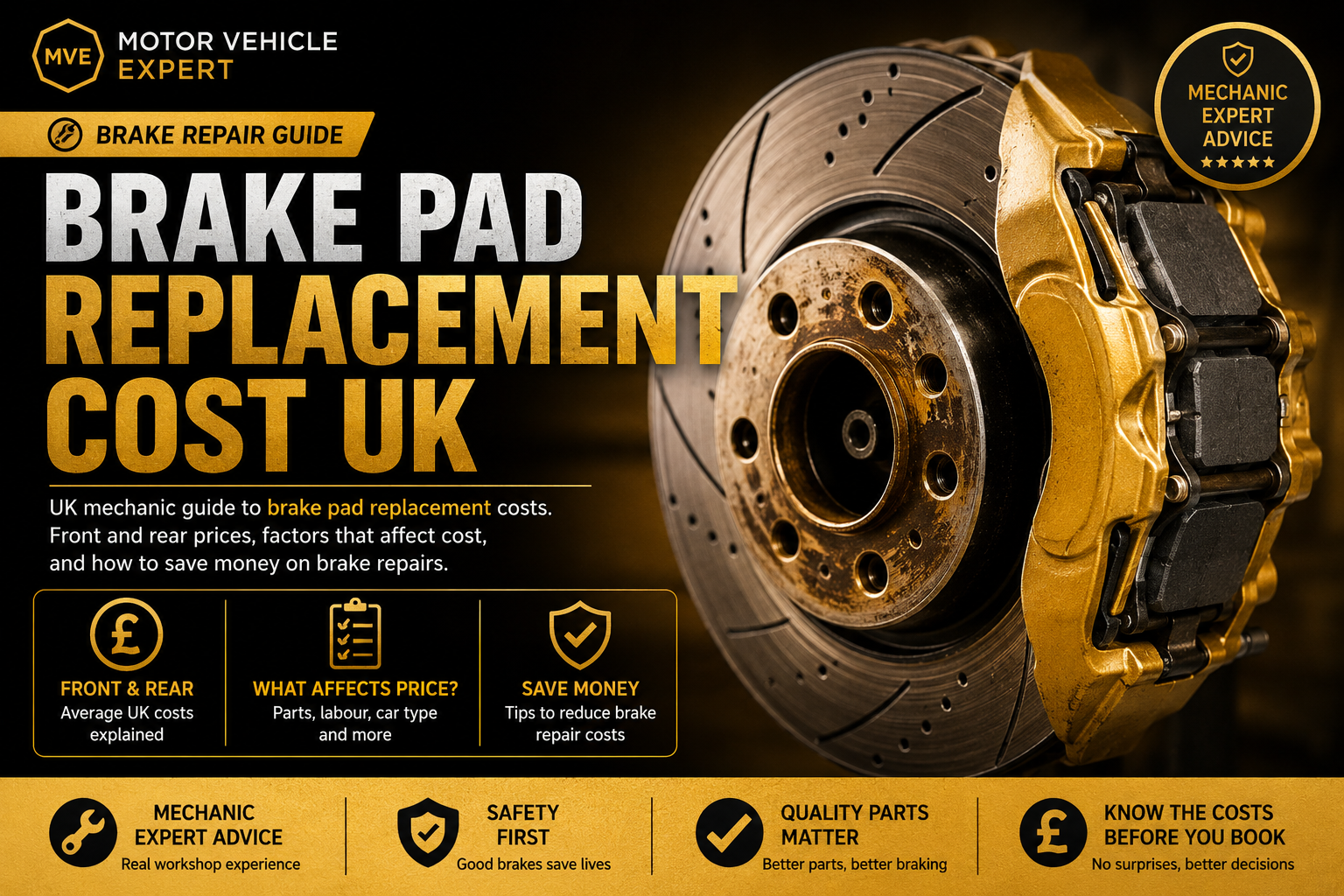
Brake Pad Replacement Cost UK

Brake pad replacement costs in the UK can vary depending on vehicle type, labour rates and pad quality. This UK mechanic-style guide explains front and rear brake costs, warning signs, repair factors and how to avoid overpaying for brake work.

Brake pad replacement cost guide UK with premium brake system
Quick answer

How much does brake pad replacement cost?

For many UK cars, brake pad replacement costs around £90 to £250 per axle. Smaller cars are often cheaper, while SUVs, vans, premium cars and performance models usually cost more.

If the brake discs are worn, scored, corroded or below safe limits, the garage may recommend replacing pads and discs together. That can increase the bill to around £220 to £500+, depending on the vehicle.

Typical prices

Typical brake pad replacement costs UK

These are guide prices only. The final cost depends on the car, parts, labour rate, brake setup and whether any seized or damaged parts are found.

Small car

Small hatchback

Often around £90 to £140 per axle for brake pads, depending on parts and labour.

Family car

Family car

Often around £120 to £180 per axle for front or rear brake pads.

Premium/SUV

Large SUV or premium car

Often around £180 to £250+ per axle, especially with larger brake systems.

Pads and discs together

Often around £220 to £500+, depending on vehicle size, parts quality and labour.

Rear brakes with electronic parking brake

Can cost more if diagnostic equipment or extra reset procedures are needed.

Performance brake systems

Performance models can be more expensive due to larger discs, specialist pads or premium parts.

Price factors

Why brake pad quotes can vary

Two brake quotes can look very different because they may include different parts, labour, VAT or extra repair work.

Vehicle

Vehicle make and model

Larger, heavier and premium vehicles often use more expensive brake parts.

Axle

Front or rear axle

Front pads often wear faster because they handle more braking force, but rear systems can be more complex on some cars.

Parts

Parts quality

Budget pads may cost less, while better-quality pads can reduce noise and improve lifespan.

Labour rate

Garage labour costs vary by area, vehicle type and repair complexity.

Disc condition

Worn, scored, warped or badly corroded discs may need replacing with the pads.

Seized parts

Rusted sliders, bolts or calipers can increase labour time.

Brake wear sensors

Some cars need wear sensors replaced when pads are changed.

Electronic parking brake

Some rear brake jobs need diagnostic equipment or service mode.

VAT and quote detail

Always check whether the quote includes VAT, parts, labour and disposal charges.
Warning signs

Signs your brake pads may need replacing

  • 1Squealing, squeaking or scraping when braking.
  • 2Grinding noise from the wheels.
  • 3Longer stopping distances or weaker braking feel.
  • 4Brake warning light or pad wear warning message on some cars.
  • 5Very thin brake pads visible through the wheel.
  • 6Vibration, pulling or uneven braking.
Front vs rear

Front vs rear brake pad costs

Brake pads are normally replaced in axle pairs, meaning both front pads or both rear pads are changed together.

Front brakes

Front brake pads

Front pads usually wear out first because the front brakes do most of the work when the car slows down. They are commonly replaced more often than rear pads.

Rear brakes

Rear brake pads

Rear pads can last longer, but some modern cars with electronic parking brakes may need extra labour or diagnostic equipment during replacement.

Pads and discs

Do brake discs need replacing too?

Not always. If the discs are still in good condition, a brake pad replacement may be enough. However, pads and discs may need replacing together if the discs are badly worn, heavily scored, cracked, warped, heavily corroded or below safe limits.

Replacing new pads onto poor discs can cause noise, vibration, poor bedding-in and reduced braking performance. A garage should inspect both parts before quoting.

Lifespan

How long do brake pads last?

Brake pad life depends heavily on driving style, road type, vehicle weight and brake quality.

Typical lifespan

Many brake pads last around 20,000 to 50,000 miles, but this is only a broad guide.

Town driving

Stop-start town driving usually wears brakes faster than steady motorway driving.

Heavy use

Towing, hills, heavy loads and harsh braking can reduce brake pad life.

MOT advice

Can worn brake pads fail an MOT?

Yes. Brake pads can fail an MOT if they are excessively worn, contaminated, missing, incorrectly fitted or causing poor braking performance. Thin pads may also receive an advisory if they are not yet bad enough to fail.

Brake problems can also fail because of poor efficiency, imbalance, leaks, damaged discs, insecure parts or warning lights depending on the fault.

Quote checklist

Best advice before booking brake work

Before accepting a quote, make sure you understand exactly what the garage is replacing.

  • Ask whether the quote is for one axle or all four wheels.
  • Check whether the quote includes parts, labour and VAT.
  • Ask if the discs have been inspected, not just assumed.
  • Ask whether wear sensors, clips or fitting kits are included if needed.
  • Ask whether seized sliders, calipers or bolts could add labour.
  • Do not keep driving if brakes are grinding or feel unsafe.
  • Keep invoices as useful service history for resale.
FAQs

Brake pad replacement cost questions

Common questions UK drivers ask before booking brake pad replacement.

Do all four brake pads need replacing together?

Not usually. Brake pads are normally replaced in axle pairs, meaning both front pads or both rear pads are changed together.

Can I drive with worn brake pads?

It is not recommended. Worn pads can reduce braking performance, damage discs and make the car unsafe.

Is £250 expensive for brake pads?

It depends on the vehicle. For a small car it may be high, but for a premium vehicle, SUV or more complex rear brake setup, it may be normal.

Why are rear brake pads sometimes expensive?

Some vehicles have electronic parking brakes or more labour-intensive rear brake systems, which can increase the fitted price.

Should I replace discs with pads?

Only if the discs are worn, damaged, badly corroded or unsuitable for new pads. A proper inspection should confirm this.

Can worn brake pads fail an MOT?

Yes. Excessively worn, missing, contaminated or incorrectly fitted pads can fail an MOT.

Motor Vehicle Expert publishes practical UK-focused vehicle diagnostics, maintenance, MOT, used car and repair cost guidance based on common driver symptoms and real-world garage questions.