
Quick answer
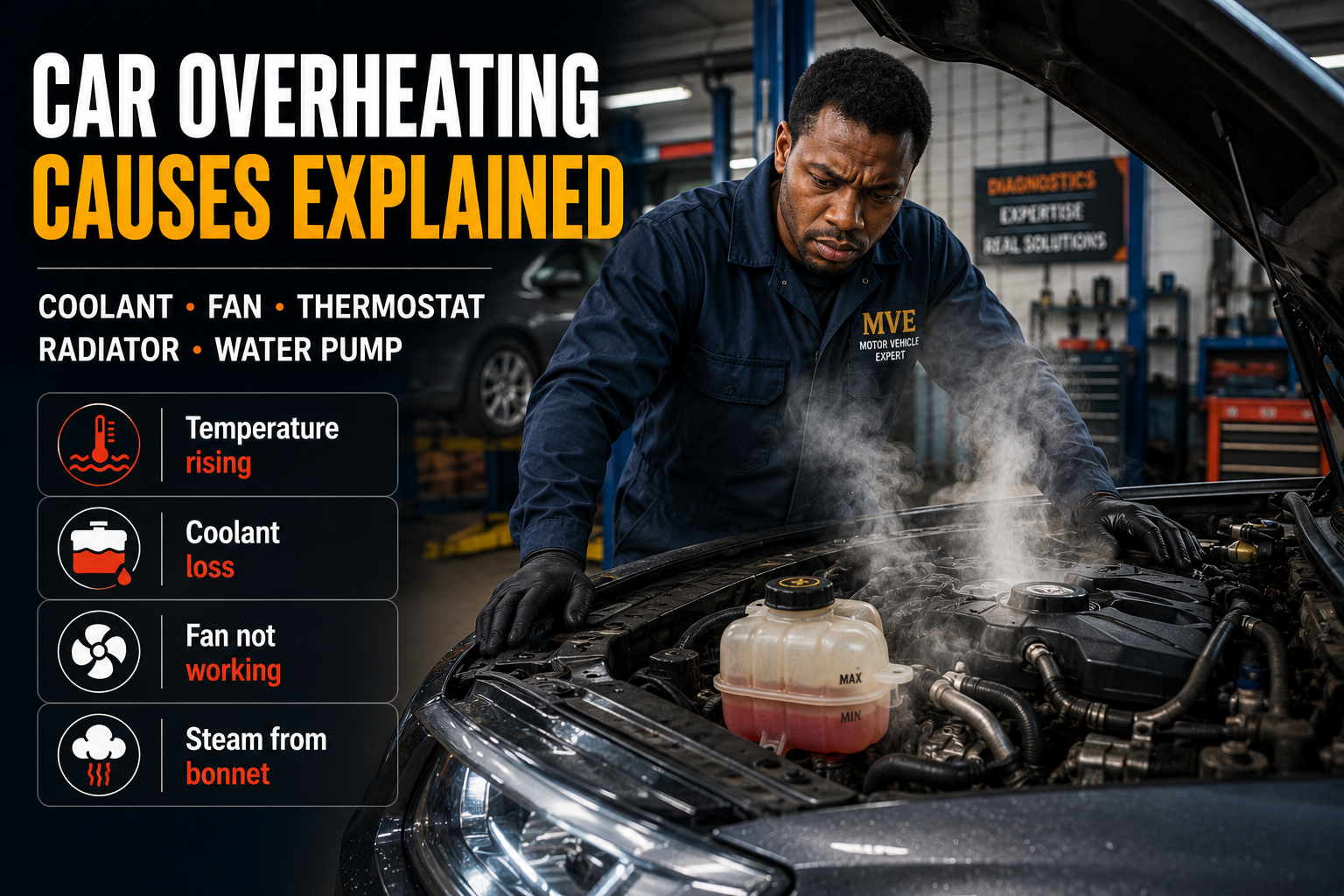
Cars overheat because the cooling system cannot move enough heat away from the engine. The most common causes are low coolant, coolant leaks, poor coolant circulation, blocked radiator airflow, thermostat faults, radiator fan failure, weak water pumps, trapped air and internal engine pressure problems.
Overheating should always be taken seriously. Driving while the gauge is high or in the red can damage the head gasket, cylinder head, engine oil and cooling-system components.
Do not diagnose overheating from one symptom alone. The pattern matters: traffic, idle, motorway, coolant loss, heater temperature, fan behaviour and bubbling coolant all point in different directions.
For complete cooling system diagnostics including coolant loss, radiator faults, overheating and repair costs, visit Cooling System Guides UK.
What I normally look for first when a car overheats
In real workshop life, I do not start by throwing parts at an overheating car. I first ask when it overheats. Does it happen sitting in traffic? Only at idle? On the motorway? After topping up coolant? With the heater blowing cold? That pattern usually tells you where to start.
A car that overheats in traffic often sends me towards the fan, relay, fuse, airflow or coolant level. A car that overheats while driving at speed makes me think more about coolant flow, thermostat restriction, radiator blockage, water pump weakness or pressure issues.
The biggest mistake drivers make is topping up coolant again and again without finding out where it is going. A cooling system should not need regular top-ups. If coolant keeps dropping, the fault is still there.
If the gauge rises high, steam appears, the heater blows cold while the engine is hot or coolant keeps disappearing, stop treating it as a minor issue. Find the cause before the engine gets damaged.
Common overheating warning signs
- !Temperature gauge rising higher than normal.
- !Coolant warning light appears.
- !Steam from under the bonnet.
- !Heater suddenly blowing cold while the engine is hot.
- !Sweet coolant smell after driving.
- !Coolant level repeatedly dropping.
- !Coolant bubbling in expansion tank.
- !White smoke from exhaust with coolant loss.
Useful related guides: coolant warning light on, car smells like coolant and car losing coolant but no leak.
Find the likely overheating cause
Overheats in traffic
Often radiator fan, airflow, coolant level or circulation related.
Traffic overheating guide →Overheats at idle
Usually linked to cooling fan operation, coolant circulation or airlocks.
Idle overheating guide →Overheats while driving
More likely thermostat, radiator restriction, pump weakness or head gasket related.
Driving overheating guide →Coolant warning light on
Low coolant, leaks, overheating or pressure problems.
Coolant warning guide →Losing coolant but no leak
Possible hidden leaks, evaporation, heater matrix leaks or internal coolant loss.
Coolant loss guide →White smoke with overheating
Possible internal coolant leak or head gasket pressure problem.
White smoke guide →Most common overheating causes
Low coolant
Low coolant reduces the system's ability to remove heat properly and can introduce air into the system.
Coolant warning guide →Coolant leak
Leaks from hoses, radiators, pumps or expansion tanks are common overheating causes.
Coolant leak repair cost →Radiator fan failure
Usually shows up most in traffic, at idle or with air conditioning switched on.
Radiator fan guide →Thermostat fault
A stuck or restricted thermostat can stop coolant flowing through the radiator properly.
Thermostat guide →Blocked radiator
Blocked coolant flow or damaged fins reduce cooling efficiency, especially under load.
Radiator blockage guide →Water pump failure
Weak coolant circulation can cause overheating even when the coolant level looks correct.
Water pump guide →Airlocks
Air trapped after repairs or coolant loss can stop coolant circulating properly through the heater and radiator.
Coolant bubbling guide →Pressure cap fault
Weak caps can allow coolant to boil or escape too early, especially when the engine is hot.
Expansion tank bubbling →Head gasket problems
Internal pressure and coolant loss can cause repeated overheating and white exhaust smoke.
Head gasket guide →Car overheats in traffic
If the temperature rises mainly while sitting in traffic or stationary, the cooling fan becomes one of the first things to check. At low speed there is less natural airflow through the radiator, so the fan has to do the work.
Typical clue
Gauge rises while stopped but drops once driving faster again.
Likely causes
Fan motor, relay, fuse, airflow restriction, low coolant or poor circulation.
Read more: car overheats in traffic.
Engine overheating at idle
Idle overheating often points towards cooling fan operation, low coolant or weak coolant circulation because the engine is generating heat without strong airflow through the radiator.
Fan never starts
Possible electrical, sensor, relay, fuse or fan-control issue.
Fan runs constantly
Possible temperature sensor, cooling-system or airflow issue.
Heater changes temperature
Can suggest airlocks, low coolant or poor coolant circulation.
Read more: engine overheating when idle.
Engine overheating while driving
Overheating while driving or on the motorway usually points more towards coolant flow problems than simple airflow problems. At road speed, air is already passing through the radiator.
Typical clue
Temperature rises under load, uphill, towing or at motorway speed.
Likely causes
Thermostat restriction, blocked radiator, water pump weakness, pressure loss or severe coolant loss.
Read more: engine overheating while driving.
Coolant loss and overheating
Coolant loss is one of the strongest overheating clues. A healthy cooling system should not need repeated top-ups.
- ✓Sweet coolant smell after driving.
- ✓Puddles or coloured residue around hoses or radiator.
- ✓Coolant warning light appearing repeatedly.
- ✓Coolant disappearing with no obvious leak.
- ✓Heater blowing cold while engine runs hot.
- ✓Steam, bubbling or coolant being pushed out.
Related pages: car losing coolant no leak, car smells like coolant and coolant leak repair cost UK.
Could overheating be a head gasket problem?
Not every overheating car has a blown head gasket, but repeated overheating combined with coolant loss, bubbling coolant, pressure build-up or white smoke needs proper testing.
Bubbling coolant
May indicate trapped gases, boiling coolant, airlocks or pressure trouble.
Bubbling coolant guide →White smoke
Persistent white smoke can suggest coolant entering the combustion chamber.
White smoke guide →Repeated overheating
Cars that repeatedly overheat after topping up need proper diagnosis.
Head gasket symptoms →What to check first
1. Let the engine cool
Never open the coolant cap while hot. Hot coolant can spray out under pressure.
2. Check coolant level
Low coolant is one of the strongest overheating clues. Check only when the engine is cool.
3. Look for leaks
Check hoses, radiator, expansion tank, thermostat housing, water pump area and underneath the car.
4. Watch the heater
Cold heater plus overheating often points to coolant circulation problems or low coolant.
5. Notice when overheating happens
Traffic, idle and motorway overheating patterns help narrow the cause quickly.
6. Arrange diagnosis
Repeated overheating needs cooling-system pressure testing, fan checks and flow checks.
When to stop driving immediately
- !Temperature gauge enters the red.
- !Steam comes from under the bonnet.
- !Coolant warning light stays on.
- !Coolant is leaking heavily.
- !Heater blows cold while engine gets hotter.
- !Engine loses power or runs roughly.
- !Coolant is being pushed out or bubbling badly.
Read: car overheating: what to do.
Best mechanic-style advice
Do not guess parts based on overheating alone. The pattern matters: traffic overheating, idle overheating, motorway overheating, coolant loss, sweet smells, cold heater behaviour and bubbling coolant all point in different directions.
Start with coolant level, leak checks, fan operation and heater behaviour before assuming the worst. If coolant level is low, find out why. If the fan never cuts in, test the fan circuit. If it overheats at speed, look harder at coolant flow, radiator restriction and thermostat operation.
A cooling system should hold pressure, keep coolant level stable and control temperature in traffic and at road speed. If one of those three things is not happening, the car needs diagnosis before it is driven normally.
Related overheating and coolant guides
Frequently asked questions
What is the most common cause of car overheating?
Low coolant or coolant loss is one of the most common causes, followed by fan faults, thermostat issues, radiator problems and coolant circulation faults.
Can I drive if my car is overheating?
It is risky. Stop driving if the gauge rises high, steam appears or the coolant warning light stays on.
Why does my car overheat in traffic?
Traffic overheating often points to radiator fan problems, airflow issues, low coolant or coolant circulation faults.
Why does my heater blow cold while overheating?
This often happens when coolant is low, air is trapped or coolant is not circulating properly through the heater matrix.
Can low coolant cause overheating?
Yes. Low coolant reduces the system's ability to remove heat properly and can create air pockets.
Can a thermostat cause overheating?
Yes. A thermostat stuck closed or restricted can stop coolant circulating through the radiator properly.
Can a blocked radiator cause overheating?
Yes. Blocked coolant flow or damaged radiator fins can reduce cooling efficiency.
Can a water pump cause overheating?
Yes. Weak coolant circulation from a failing water pump can cause overheating, even if the coolant level looks correct.
Can a head gasket cause repeated overheating?
Yes. Internal pressure and coolant loss can create repeated overheating problems.
Should I just keep topping up coolant?
No. Repeated coolant loss means the fault still needs diagnosing properly.