
Quick answer
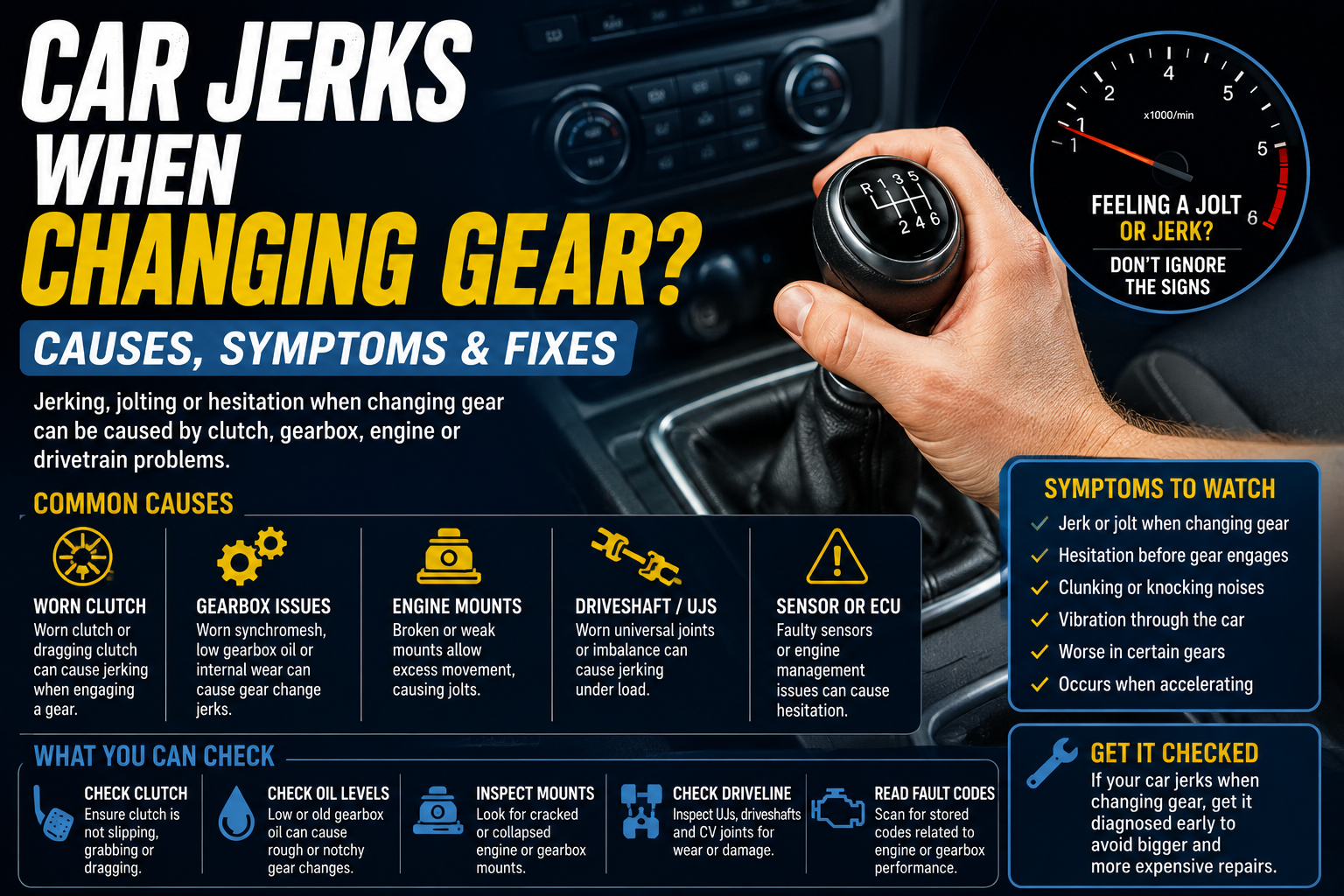
A car jerking during gear changes usually means drive is being removed and reapplied too harshly. This can happen because the clutch is not engaging smoothly, the engine response is uneven, the gearbox is shifting harshly or the engine and gearbox mounts are allowing too much movement.
If the problem is new, getting worse, comes with a burning clutch smell, slipping, grinding, warning lights or rough running, it should be checked before it damages more parts.
The key clue is the exact moment of the jerk: clutch release, throttle reapplication, automatic shift, lifting off, or selecting Drive/Reverse.
Why gear-change jerking is often misunderstood
Drivers often blame the gearbox when a car jerks between gears, but the gearbox is only one part of the chain. The clutch, engine response, engine mounts, gearbox mounts, driveshafts and throttle control all affect how smoothly power is removed and reapplied.
A worn mount can make a normal gear change feel like a thump. A small misfire can feel like the gearbox has snatched. A clutch that engages unevenly can feel like the whole car is jolting forward.
That is why a proper diagnosis separates clutch engagement, engine smoothness, mount movement, drivetrain play and gearbox behaviour instead of guessing one part straight away.
Quick gear-change diagnosis map
Jerks when lifting clutch
Think clutch control, clutch wear, clutch contamination, bite point or dual mass flywheel behaviour.
Clutch wear signs →Jerks when reapplying throttle
Think throttle delay, engine mounts, misfire, hesitation or drivetrain movement.
Hesitation guide →Clunks on lift-off
Think engine mounts, gearbox mounts, driveshaft play or drivetrain looseness.
Jerks in first and second
Low gears multiply torque, so clutch, throttle and mount issues feel stronger.
Low-speed jerk guide →Automatic bangs into gear
Think gearbox behaviour, fluid condition where serviceable, adaptations, mounts or engine running faults.
Jerks with warning light
Scan for engine, EPC, gearbox or emissions faults before replacing parts.
Engine light guide →Manual car jerks when changing gear
Manual gear-change jerking is often about clutch take-up, engine movement or how smoothly power comes back in.
Clutch wear
A worn or grabby clutch can make engagement harsh, especially in first, second or reverse.
Clutch wear signs →Clutch control
Releasing the clutch too quickly or applying throttle unevenly can create a sharp lurch.
High bite point
A very high bite point may suggest clutch wear, especially with slipping or burning smells.
Clutch cost guide →Engine mounts
Weak mounts allow the engine to rock as drive is taken up, causing jolts or clunks.
Gearbox mount wear
A worn gearbox mount can make normal shifting feel harsh and loose.
Misfire or hesitation
If the engine stumbles as you reapply throttle, the gear change can feel jerky.
Misfire symptoms →Automatic car jerks when changing gear
In an automatic, jerking may feel like a harsh shift, delayed engagement, thump between gears or snatch at low speed. The cause can be gearbox-related, but engine running and mount problems can also make shifts feel rough.
Gearbox behaviour
Harsh shifts, delayed engagement, slipping or banging into gear may need gearbox-specific diagnosis.
Mount movement
Weak mounts can make normal automatic shifts feel far harsher than they really are.
Engine running faults
A misfire, hesitation or rough idle can make an automatic feel like it is shifting badly.
Low-speed dual-clutch feel
Some dual-clutch systems can feel snatchy in traffic, especially if there is wear or adaptation trouble.
If the gearbox warning light appears, gears slip, the car bangs into gear or the fault worsens quickly, arrange gearbox-specific diagnosis.
Common causes of jerking during gear changes
Worn or grabby clutch
Can cause judder, slipping, snatching, high bite point or harsh take-up.
Pull-away judder guide →Engine or gearbox mount wear
Allows excessive drivetrain movement when drive is removed and reapplied.
Throttle response issue
Delayed or uneven throttle response can make shifts feel abrupt.
Hesitation guide →Misfire or rough running
Uneven power delivery can feel like drivetrain jerk, especially after shifting.
Rough idle guide →Gearbox fault
Harsh, delayed, slipping or clunky shifts may need transmission diagnosis.
Driveshaft or drivetrain play
Wear in CV joints, shafts or mountings can create clunks and lurches.
Knocking noise guide →Clutch hydraulics
Master or slave cylinder issues can affect smooth clutch release and engagement.
Low-speed drivability fault
Throttle body, EGR, fuel or sensor faults can make slow driving jerky.
Low-speed jerking guide →Driver input
Fast clutch release, wrong gear choice or uneven throttle can cause jerking even with no fault.
When does the gear-change jerk happen?
Jerks in first and second gear
Low gears multiply torque, so clutch, throttle and mount issues often feel stronger here.
Jerks in reverse
Reverse can expose clutch judder, mount movement or poor low-speed control.
Worse when cold
Can point to cold engine running, gearbox behaviour, clutch drag or mount stiffness.
Cold sluggishness guide →Worse when hot
Can suggest clutch slip, gearbox fluid issues, heat-related sensors or worsening drivability faults.
Clunk when lifting off throttle
Often points towards worn mounts, drivetrain play, driveshaft wear or suspension movement.
Jerking with warning lights
Engine or gearbox codes should be scanned before replacing parts.
Use diagnostic app →Symptoms to note before diagnosis
- 1Jerks only between certain gears.
- 2Feels worse in first, second or reverse.
- 3Happens more when cold, hot, in traffic or uphill.
- 4Comes with a burning clutch smell.
- 5Engine revs rise but road speed does not match.
- 6There is a clunk when lifting off or reapplying throttle.
- 7Warning lights, limp mode, rough idle or hesitation appear too.
- 8Gear changes feel delayed, harsh, slipping or grinding.
Is it clutch, gearbox or mounts?
A useful way to think about gear-change jerk is to separate the feel of the fault. A clutch problem often happens at the bite point. A mount problem often feels like a thump as power comes on or off. A gearbox problem often feels like delayed, harsh or slipping gear engagement.
Clutch clue
Jerk happens as the clutch pedal is lifted, especially in first, second or reverse.
Mount clue
A heavy thump happens when lifting off or reapplying throttle.
Gearbox clue
Gear engagement is delayed, harsh, slipping, grinding or inconsistent.
What to check first
1. Identify when it happens
Upshifts, downshifts, cold starts, traffic, reverse and hill starts all give useful clues.
2. Check clutch behaviour
Look for slipping, judder, high bite point, burning smells or difficulty selecting gears.
3. Listen for clunks
Clunks can point to worn mounts, driveshafts, suspension movement or drivetrain play.
4. Notice engine smoothness
Rough idle, hesitation or misfire can make gear changes feel jerky.
5. Check warning lights
Engine, EPC or gearbox warning lights should be scanned for fault codes.
6. Compare warm and cold
Cold-only or hot-only jerking can help narrow clutch, gearbox or engine management faults.
Can you keep driving?
If the jerking is mild and clearly related to clutch technique, you may be able to continue carefully while improving gear-change smoothness. But if the fault is new, worsening or mechanical-feeling, arrange inspection.
Do not ignore jerking with slipping, grinding, burning smell, gearbox warning lights, misfire, heavy clunking, harsh automatic shifts or difficulty selecting gears.
- !The clutch smells burnt or slips under load.
- !The gearbox bangs, slips or delays engagement.
- !The car clunks heavily when taking up drive.
- !Warning lights appear.
- !The engine misfires or shakes.
- !The fault is getting worse quickly.
Repair advice
Avoid assuming the clutch or gearbox is definitely at fault without diagnosis. Engine running faults, worn mounts, throttle response problems and drivetrain play can feel very similar from the driver’s seat.
A proper inspection should separate clutch engagement, engine smoothness, mount movement, gearbox behaviour and drivetrain play.
Manual checks
Clutch bite point, slip, judder, hydraulics, engine mounts, gearbox mounts and driveshaft play.
Automatic checks
Fault codes, live data, shift behaviour, fluid condition where serviceable, mounts and engine running quality.
Best mechanic-style advice
Do not diagnose gear-change jerk from the gearbox alone. Look at the whole power path: engine, clutch, gearbox, mounts, driveshafts and throttle response.
The most useful observation is the timing. If the jerk happens at clutch bite, start with clutch and mounts. If it happens as throttle comes back in, check engine response and mounts. If it happens during an automatic shift, check gearbox behaviour and engine smoothness together.
A gear-change jerk is usually a take-up problem: clutch take-up, gearbox take-up, engine torque take-up or drivetrain movement.
Related clutch, gearbox and drivability guides
Frequently asked questions
Why does my car jerk when I change gear?
Common causes include clutch wear, harsh clutch take-up, worn mounts, gearbox faults, misfires or throttle response issues.
Is gear-change jerking always the clutch?
No. Engine mounts, misfires, throttle delay, driveshaft play and gearbox problems can feel similar.
Why does it jerk in first and second gear?
Low gears multiply torque, so clutch, mount and throttle issues often feel stronger there.
Can an automatic jerk between gears?
Yes. Harsh shifts may come from transmission fluid, adaptations, dual-clutch wear, mounts or engine faults.
Can worn engine mounts cause jerking?
Yes. Weak mounts let the drivetrain move sharply when power is removed and reapplied.
Can bad driving technique cause jerking?
Yes, especially in manual cars. But if it happens suddenly, worsens or happens with different drivers, check for a fault.
Can a misfire feel like gearbox jerk?
Yes. Uneven engine power delivery can feel like the gearbox or clutch is snatching.
When should I get it checked?
If it is new, worsening, clunking, slipping, showing warning lights, grinding or causing unsafe driving.