Quick answer: how do you know if your clutch is worn?
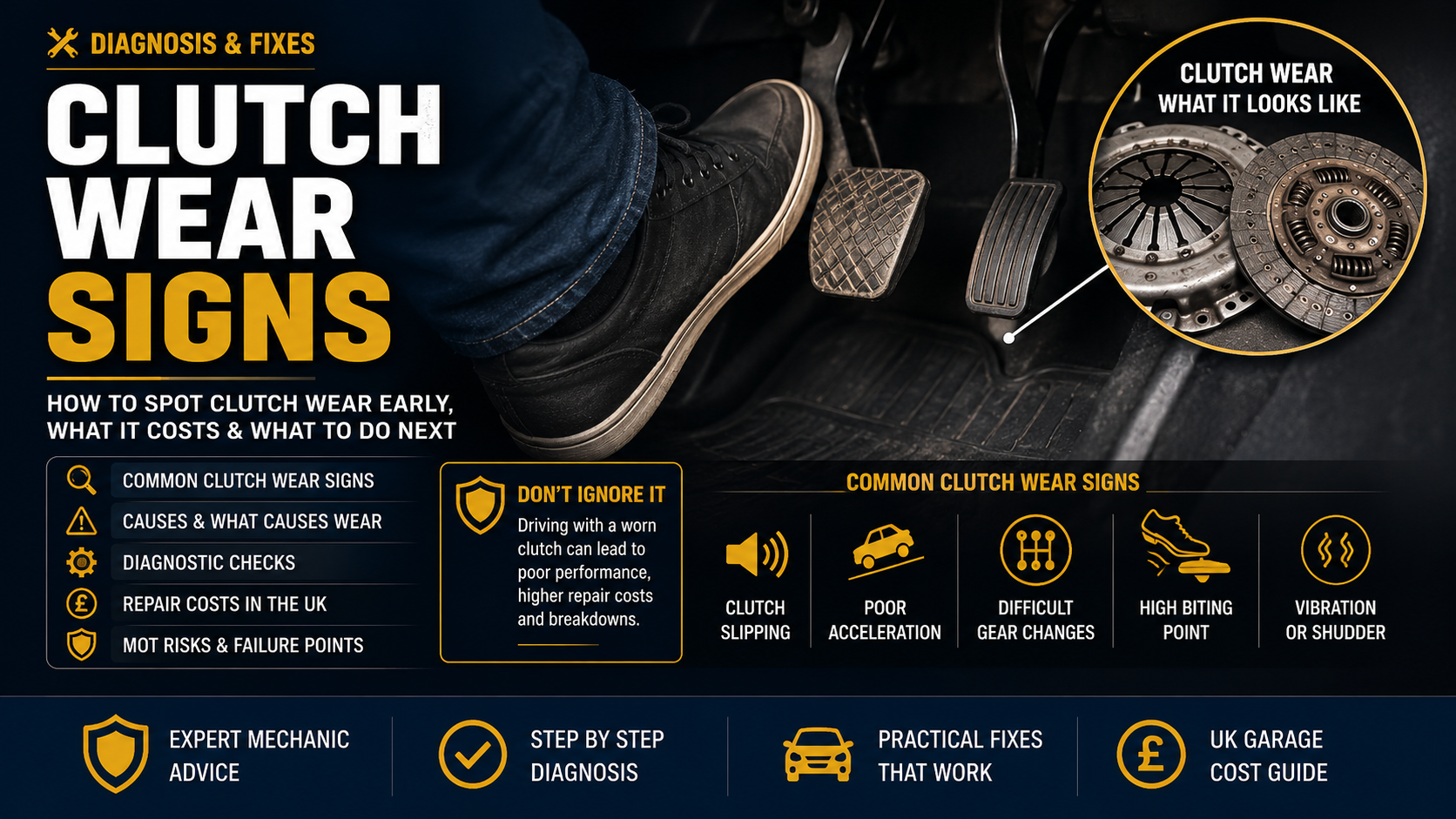
The clearest sign of a worn clutch is clutch slip. This is when the engine revs rise, but the car does not accelerate properly. It often appears first in higher gears, when driving uphill, carrying load or accelerating hard.
Other common signs include a high clutch bite point, burning smell, judder when moving off, difficulty selecting gears, poor acceleration and a clutch pedal that feels unusually heavy, soft or inconsistent.
If the engine revs but the car does not pick up speed, read car revs but won’t accelerate. For repair pricing, see clutch replacement cost UK.
9 common signs your clutch is wearing out
1. Clutch slipping
Engine revs rise, but road speed does not increase properly.
2. High bite point
The clutch only starts to engage near the top of the pedal travel.
3. Burning smell
A sharp hot smell after hills, traffic, reversing or heavy clutch use.
Burning clutch smell →4. Judder moving off
The car shakes, shudders or vibrates as the clutch engages.
Juddering guide →5. Gear problems
Gears feel stiff, notchy, reluctant or hard to engage.
6. Poor acceleration
The car feels slow even though the engine sounds busy.
Slow acceleration →7. Weak uphill pull
The clutch slips most under load, especially on hills or when overtaking.
Loses power uphill →8. Pedal feel changes
The clutch pedal feels heavy, soft, spongy, low, high or inconsistent.
9. Clutch noise
Whining, rattling or grinding can point to release bearing, flywheel or gearbox-related faults.
What clutch slipping feels like
Clutch slipping usually feels like the engine is working harder than normal, but the car is not moving faster in the way it should. You may press the accelerator, hear the revs rise quickly, but the vehicle speed increases slowly.
It is often most noticeable in fourth, fifth or sixth gear, especially uphill, when overtaking or when the car is loaded. The more the clutch slips, the more heat it creates.
- ✓Engine revs rise faster than road speed.
- ✓Car feels weak uphill or under load.
- ✓Burning smell may appear after slipping.
- ✓Problem gets worse when accelerating hard.
- ✓Fuel economy may suffer because power is being wasted.
If your engine revs rise without matching acceleration, read Clutch Slipping Symptoms. If you notice overheating or a hot friction smell, read Burning Clutch Smell. If you are worried about MOT testing, read Can A Clutch Fail MOT?.
High clutch bite point
A high bite point can be a sign that the clutch friction material is wearing thin, especially if the bite point has moved higher over time. However, bite point position varies between cars, so it should be judged alongside other symptoms.
More likely clutch wear
High bite point with slipping, burning smell or poor acceleration.
Could be adjustment
Some older cable clutch systems can have cable or adjustment issues.
Could be hydraulic
Hydraulic clutch faults can affect pedal feel and engagement point.
Burning clutch smell
A burning clutch smell is usually caused by excess heat from friction. It can happen after hill starts, reversing uphill, heavy traffic, towing or holding the car on the clutch instead of using the handbrake.
One brief smell after a difficult manoeuvre does not always mean the clutch has failed. But if the smell returns often, or appears with slipping or poor acceleration, the clutch should be checked.
Read more in Burning Clutch Smell.
Clutch judder when pulling away
Clutch judder is when the car shakes, shudders or vibrates as you release the clutch. It can be caused by clutch wear, oil contamination, a warped pressure plate, dual mass flywheel wear, worn engine mounts or uneven clutch engagement.
Judder only when cold
Can sometimes be mild contamination, dampness or early clutch/flywheel wear.
Judder every time
More likely a mechanical issue such as clutch, flywheel, mount or contamination fault.
If judder is your main symptom, see car judders when pulling away.
Gear selection problems
A worn or dragging clutch can make gears difficult to select. However, stiff gears can also be caused by gearbox oil, clutch hydraulics, gear linkage or internal gearbox wear.
Hard to select first gear
Can suggest clutch drag, linkage issues or gearbox wear.
Crunching gears
May involve clutch release problems, synchro wear or poor gear engagement.
Reverse difficult
Often noticed when the clutch is not fully disengaging.
Useful guide: car jerks when changing gear.
Clutch pedal feel changes
The clutch pedal can give useful clues. A worn clutch is not the only possible cause, but a sudden change in pedal feel should not be ignored.
Heavy clutch pedal
Can suggest clutch mechanism wear, cable issues or pressure plate problems.
Soft or spongy pedal
Often points towards hydraulic fluid, air in the system, master cylinder or slave cylinder faults.
Pedal stays down
Can indicate a serious hydraulic or mechanical clutch fault needing urgent attention.
Dual mass flywheel clues
Some clutch symptoms are actually linked to the dual mass flywheel. A worn flywheel can cause vibration, rattling, judder, poor engagement or noise when starting and stopping the engine.
- ✓Rattle at idle that changes when the clutch is pressed.
- ✓Judder when pulling away even if the clutch is new.
- ✓Vibration through the drivetrain.
- ✓Knocking or clattering when switching engine off.
- ✓Flywheel wear found during clutch replacement.
For pricing, read clutch replacement cost UK.
Other faults that can feel like clutch wear
Not every clutch-like symptom means the clutch itself is worn out. Several other faults can create similar behaviour, so proper diagnosis matters before replacing expensive parts.
Hydraulic clutch fault
Master cylinder, slave cylinder or fluid problems can affect pedal feel and gear selection.
Gear linkage issue
Worn or badly adjusted linkage can make gears hard to select.
Engine power loss
Misfires, fuel problems or sensor faults can be mistaken for clutch issues.
Engine light guide →Worn engine mounts
Mounts can cause judder, knocking or vibration when setting off.
Gearbox fault
Gearbox oil, synchros or internal wear can cause notchy gear changes.
Flywheel wear
Dual mass flywheel wear can cause vibration, rattle or poor engagement.
When clutch repair becomes urgent
- !The clutch slips badly in higher gears or uphill.
- !The car struggles to move off from a stop.
- !A burning clutch smell keeps returning.
- !Gears become difficult to select or crunch.
- !The clutch pedal suddenly feels very different.
- !The car revs but barely accelerates.
- !There is loud rattling, grinding or vibration from the clutch area.
A badly worn clutch can eventually stop transmitting power properly. The engine may run, but the car may not drive. If the car is becoming unreliable, avoid long journeys and arrange inspection.
What a garage may check
Road test
Checks for slipping, judder, bite point, gear selection and acceleration under load.
Clutch slip test
Confirms whether engine speed rises without matching road speed.
Hydraulic system
Checks fluid level, leaks, master cylinder, slave cylinder and pedal behaviour.
Gear linkage and gearbox
Checks whether the fault is clutch related or gear-selection related.
Noise diagnosis
Listens for release bearing, input bearing, flywheel or gearbox noises.
Flywheel inspection
Usually done properly once the gearbox is removed during clutch replacement.
Clutch repair cost guide
If the clutch is confirmed worn, the usual repair is clutch replacement. Costs vary by car, engine, labour time, clutch kit, flywheel type and whether extra parts are needed.
Clutch replacement
Often around £500 to £1,000 for many UK manual cars.
Full cost guide →Clutch and flywheel
Can rise significantly if a dual mass flywheel is worn or damaged.
Hydraulic repair
Master or slave cylinder faults may cost less than full clutch replacement, depending on access.
How to make a clutch last longer
1. Avoid riding the clutch
Do not rest your foot on the clutch pedal while driving. Even light pressure can increase wear.
2. Use the handbrake on hills
Holding the car still using the clutch creates heat and wears the friction material.
3. Change gear smoothly
Smooth gear changes reduce shock through the clutch, gearbox and drivetrain.
4. Do not ignore clutch slip
A slipping clutch usually gets worse. Early inspection can reduce the risk of being stranded.
Best mechanic-style advice
The most useful clutch symptom is not just where the pedal bites — it is whether the engine revs rise without the car accelerating properly. That is classic clutch slip and should be checked before the car becomes unreliable.
If your main problem is hard gear selection, do not assume the clutch is worn straight away. Clutch hydraulics, gear linkage, gearbox oil and gearbox wear can feel similar.
Related clutch and driving fault guides
Frequently asked questions
What are the first signs of a worn clutch?
Early signs include a high bite point, clutch slipping under acceleration, burning smell, judder when pulling away and difficulty selecting gears.
What does clutch slipping feel like?
Clutch slipping feels like the engine revs are rising but the car is not accelerating properly. It is often worse in higher gears, uphill or under heavy acceleration.
Can I drive with clutch slip?
Only as little as necessary, ideally to a garage. Continued slipping creates heat and can make the clutch and flywheel damage worse.
Does a high bite point always mean the clutch is worn?
Not always. A high bite point is common with clutch wear, but hydraulic, cable or adjustment issues can also affect pedal feel.
Can a burning smell mean clutch wear?
Yes. A hot burning smell after clutch use can mean the friction material is overheating, especially if it happens repeatedly.
Can clutch problems affect gear changes?
Yes. If the clutch does not release correctly, gears may become hard to select or feel notchy.
Can a worn clutch cause poor acceleration?
Yes. When the clutch slips, engine power is not transferred properly to the wheels, so acceleration can feel weak.
Can clutch judder mean the clutch is worn?
Yes, but judder can also be caused by flywheel wear, oil contamination, engine mounts or uneven clutch engagement.
How much does clutch replacement cost?
Many UK clutch replacements cost around £500 to £1,000, but the final price depends on the vehicle, labour time, clutch kit and whether the flywheel needs replacing.
Can a clutch fail suddenly?
Yes. Some clutch faults develop gradually, but hydraulic failure, release bearing problems or severe clutch wear can make the fault feel sudden.