UK car selling guide

Can You Sell A Car Without MOT?

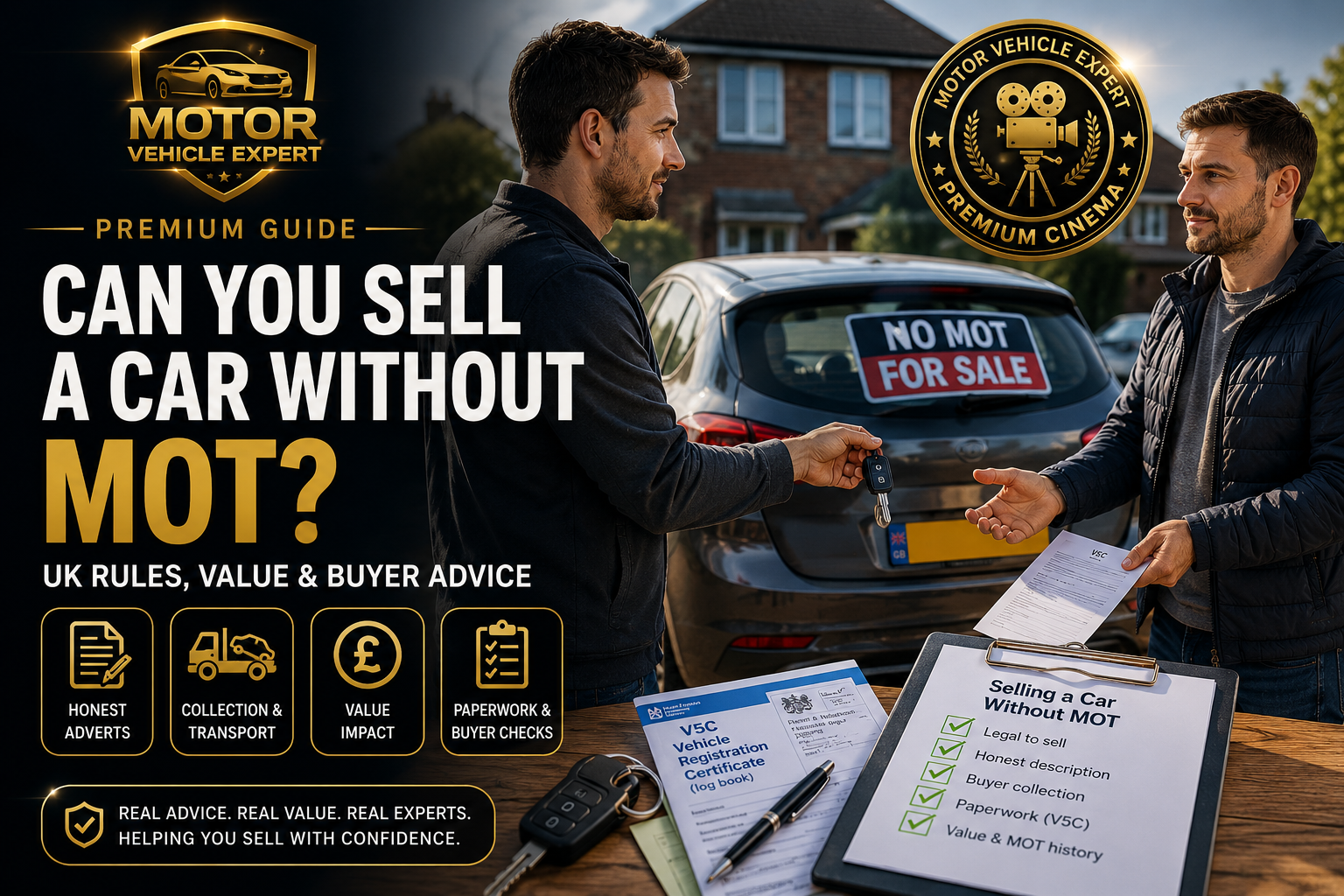
Yes, you can usually sell a car without a valid MOT in the UK, but you must be honest with the buyer. A no-MOT car is usually worth less, harder to sell and needs clear paperwork, collection planning and accurate advert wording.

Can you sell a car without MOT UK guide
Quick answer

Can you sell a car with no MOT?

Yes. You can sell a car without MOT, but make it clear in the advert, messages and receipt that the vehicle has no current MOT.

Do not imply it is road-ready if it is not. If there are known faults, mention them clearly. That protects you and gives the buyer a fair picture of what they are buying.

Mechanic view

No MOT means unknown repair risk

A car with no MOT may only need a bulb and a wiper blade, or it may need tyres, brakes, welding, emissions work or suspension repairs.

That uncertainty is why buyers normally offer less for a no-MOT car.

Collection

How can the buyer collect a car with no MOT?

A car without MOT should not be used for normal driving on public roads. The safest collection method is a trailer, recovery truck or transport service.

There is a limited situation where a vehicle may be driven to a pre-booked MOT appointment, but it still needs to be insured and roadworthy enough to drive safely.

Important

Make collection clear before payment

Before the buyer pays, make sure they understand how the car will be moved. If the car has no MOT, it should not be treated like a normal road-ready vehicle.

If the car has obvious dangerous faults, recovery or transport is the sensible answer.

Collection options

Safe ways to move a no-MOT car

The right collection method depends on the car’s condition and whether the buyer has arranged an MOT.

Best

Trailer or recovery truck

Usually the safest option because the car is not being driven on the road.

Limited

Pre-booked MOT journey

May be possible if the MOT is genuinely pre-arranged, the vehicle is insured and it is safe to drive.

Insurance

Buyer must be insured

If the buyer drives it, valid insurance is still needed.

Safety

Unsafe cars should not be driven

Dangerous tyres, brakes, steering, lights or rust should be dealt with before road use.

Useful related guide: can you drive to an MOT without tax?

Value impact

How selling without MOT affects value

No MOT usually means lower value because the buyer takes on unknown risk.

Price

Lower offers

Most buyers discount the price to cover repair and transport risk.

Demand

Smaller buyer pool

Many private buyers avoid cars they cannot legally drive away for normal use.

Trade

More trade interest

Traders and mechanics may buy if the price reflects the risk.

Repair uncertainty

Failed emissions, rust, tyres, brakes or warning lights can become expensive.

Transport costs

Recovery or trailer collection may reduce what the buyer offers.

Good history helps

Receipts, service history and honest detail can improve buyer confidence.

Seller decision

Should you get an MOT before selling?

Often, yes. If the car is likely to pass or only needs small repairs, a fresh MOT can make it easier to sell and may increase the price by more than the test cost.

A fresh MOT gives buyers more confidence because the car has recently met the minimum test standard on the day.

When not to

When MOT may not be worth it

If the car has obvious major faults, severe rust, engine problems, gearbox issues or warning lights, paying for an MOT may simply create a public failed MOT record.

In that case, selling honestly as “spares or repairs” or “no MOT” may be more realistic.

Paperwork

Paperwork when selling without MOT

Clear paperwork reduces arguments after the sale.

1

Give the green new keeper slip

Give the buyer the correct new keeper slip from the latest V5C logbook.

2

Tell DVLA you sold it

Notify DVLA when the vehicle is sold so you are no longer responsible as keeper.

3

Write a proper receipt

Include date, time, mileage, price, registration, buyer details and payment method.

4

State the MOT position

Write clearly: “Sold without current MOT” or “No current MOT”.

5

List known faults

Mention known defects or attach a copy of the advert description.

6

Keep evidence

Keep copies of messages, advert wording, receipt and payment evidence.

Buyer checks

What buyers usually check

Most serious buyers will check the MOT history before viewing.

Trade buyers

Selling to a trader or mechanic

A trader, mechanic or breaker may still buy a no-MOT car if the price makes sense. They will usually price it based on parts value, repair cost, resale risk and collection cost.

Do not expect retail money for a no-MOT car unless it is desirable, rare or very easy to repair.

Scrap or repair

When scrap may be more realistic

If the car has severe corrosion, engine failure, gearbox problems, expensive emissions faults or multiple MOT failures, scrap or spares-and-repairs sale may be more realistic than a private sale.

Be honest in the advert so the right buyers contact you.

FAQs

Selling a car without MOT questions

Common questions about no-MOT sales, buyer collection, paperwork and value.

Can I legally sell a car with no MOT?

Yes, usually, as long as you describe the car honestly and do not mislead the buyer.

Can the buyer drive it away?

Not for normal road use. They may need transport, recovery or a genuine pre-booked MOT journey with insurance.

Will no MOT reduce the price?

Usually yes. Buyers often deduct for unknown repairs, MOT risk and collection costs.

Should I MOT it before selling?

Often yes if it is likely to pass. A fresh MOT can make the car easier to sell.

Can I sell a failed MOT car?

Yes, but disclose the failure and known defects clearly.

What should I put on the receipt?

Include date, time, mileage, price, buyer details and a note that it is sold without current MOT.

Should I say “spares or repairs”?

Use that wording only if it accurately describes the car’s condition and sale intention.

Do I need to tell DVLA?

Yes. Tell DVLA when the vehicle is sold so you are no longer shown as the keeper.

Motor Vehicle Expert publishes practical UK-focused vehicle diagnostics, maintenance, MOT, warning light, used car and repair cost guidance based on common driver questions and real-world garage situations.