
Quick answer
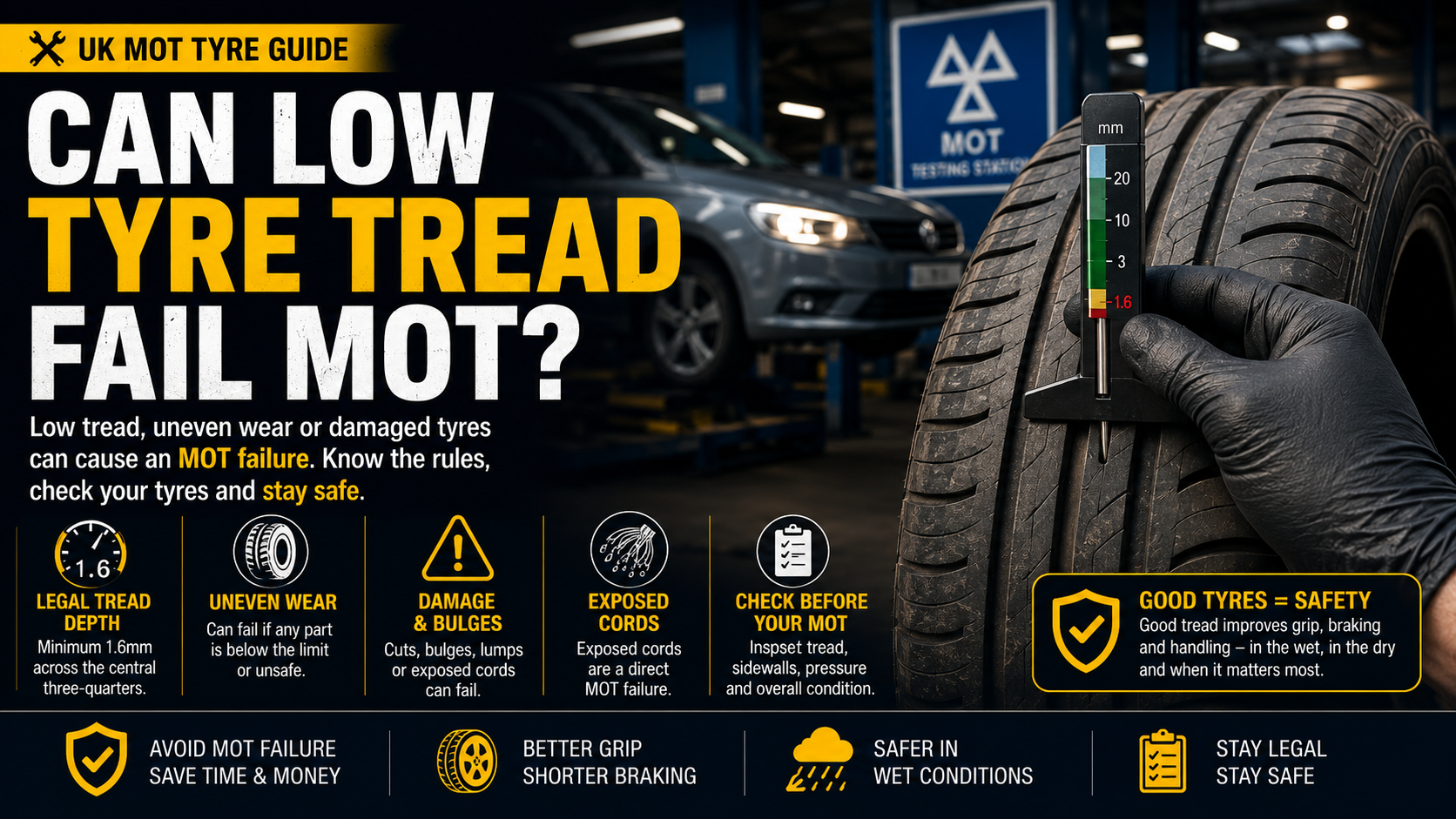
For most cars in the UK, the legal minimum tyre tread depth is 1.6mm across the central three-quarters of the tyre around the full circumference. If a tyre is below this, it can fail the MOT.
A tyre can also fail even if some tread remains, if it has exposed cords, serious cuts, bulges, unsafe sidewall damage, severe uneven wear, incorrect fitment or fouling against bodywork or suspension.
What tyre MOT problems look like in real life
Inner edge is bald
The outside may look fine, but the inside edge can be below the limit from poor alignment or worn suspension.
Pulling to one side →Tyre looks legal at a glance
A quick look from the side is not enough. You need to check across the tread and around the tyre.
Bulge in sidewall
A sidewall bulge is unsafe and should be dealt with quickly, not left until the MOT.
Tyre bulge MOT guide →Repeated tyre advisories
If tyres are advised year after year, the car may be maintained only at MOT time.
MOT advisory meaning →Steering wheel shakes
Vibration can come from tyre wear, balancing, wheel damage or suspension faults.
Steering wheel shake →Tyre pressure light on
Pressure warnings may not mean tread failure, but they still need checking before the test.
TPMS MOT guide →When tyres can fail an MOT
- !Tread depth is below the legal minimum.
- !Tyre cords or canvas are exposed.
- !There are bulges, lumps, deep cuts or structural damage.
- !Severe uneven wear makes part of the tyre unsafe or below the limit.
- !Incorrect tyre size, speed rating or load rating creates an unsafe fitment.
- !Tyres foul bodywork, suspension or brake components.
- !Tyres are fitted incorrectly or unsuitable for the axle.
- !A tyre is visibly damaged enough to be considered unsafe.
For a wider tyre MOT guide, read can bald tyres fail MOT? and car fails MOT on tyres.
Legal tread depth explained
1.6mm minimum
For most passenger cars, tread must be at least 1.6mm.
Central three-quarters
The legal tread depth applies across the central three-quarters of the tread width.
Full circumference
The tyre must meet the requirement around the whole tyre, not just one small section.
Replace before the limit
Wet grip reduces as tyres wear, so many drivers replace tyres before they reach 1.6mm.
Mechanic tip: check the inner edge properly. Many cars fail because the inner edge is bald while the visible outer edge still looks acceptable.
Simple tyre checks before MOT
- 1Check tread depth with a gauge or tyre wear indicators.
- 2Turn the steering and inspect the inner edges of the front tyres.
- 3Inspect outer edges for shoulder wear caused by alignment or pressure issues.
- 4Look for cuts, cracks, nails, bulges, lumps or exposed cords.
- 5Check tyre pressures when cold and reset TPMS if needed.
- 6Make sure tyre sizes match the vehicle requirements.
- 7Check for uneven wear that could point to suspension or tracking faults.
- 8Replace borderline or damaged tyres before the MOT rather than hoping they pass.
If the car pulls or tyres wear unevenly, see can wheel alignment fail MOT? and car pulls left after tracking.
Can uneven tyre wear fail an MOT?
Yes. Uneven tyre wear can fail an MOT if any required tread area is below the legal limit or if the tyre is unsafe. This is common on cars with alignment, suspension, pressure or steering issues.
Inner edge wear
Often linked to tracking, camber, worn bushes, lower arms or suspension geometry.
Lower arm MOT guide →Outer edge wear
Can come from under-inflation, cornering style, alignment or suspension wear.
Centre wear
Can happen when a tyre has been over-inflated for long periods.
Both edges worn
Often seen with under-inflation or heavy tyre loading.
Patchy wear
Can point to wheel balance, shock absorber or suspension issues.
Shock absorber MOT guide →Saw-tooth wear
Can create noise and may point to alignment or suspension problems.
Tyre damage that can fail an MOT
- !Bulge in the sidewall or tread area.
- !Deep sidewall cut exposing cords or weakening the tyre.
- !Cracking severe enough to show tyre deterioration.
- !Nails, screws or puncture damage that makes the tyre unsafe.
- !Tyre cords visible on the inner edge or shoulder.
- !Tyre rubbing against bodywork or suspension.
Do not ignore sidewall damage. A tyre can look like it has enough tread but still fail because the structure is unsafe.
When low tread becomes an advisory instead of a fail
If the tyre is still legal but getting close to the limit, the tester may record an advisory. This means it has passed the test on the day but may need attention soon.
Advisory likely
Tyres legal but close to the limit, starting to crack, ageing or wearing unevenly.
Failure likely
Tyres below the legal limit, showing cords, bulging, deeply cut or unsafe.
Buyer warning
If buying a used car, tyre advisories can mean you need new tyres soon after purchase.
Buy car with advisories? →Repeated advisory
The same tyre issue appearing yearly can suggest poor maintenance habits.
Check MOT history →Tyre pressure and warning light checks
Tyre pressure itself is not the same as tread depth, but under-inflation and over-inflation can cause uneven wear. A tyre pressure warning light may also point to a puncture, pressure loss or sensor issue.
- ✓Check tyre pressures when cold before the MOT.
- ✓Look for a slow puncture if one tyre keeps losing pressure.
- ✓Reset the tyre pressure monitoring system only after pressures are correct.
- ✓Do not ignore pressure warnings because they can lead to tyre damage and uneven wear.
Useful guides: tyre pressure warning light reset UK and can tyre pressure light fail MOT?
Will tyres close to 1.6mm pass?
They may pass if the tyre is still legal and safe, but tyres close to 1.6mm are near the end of their useful life. In wet weather, worn tyres usually give less grip, so replacing them before the MOT can be the safer choice.
If you are buying a used car and the tyres are close to the limit, use that as a price and safety point. A fresh MOT does not mean the tyres will last long.
Can one tyre fail the whole MOT?
Yes. A single tyre below the legal standard, badly damaged or showing cords can fail the MOT. The car does not need all four tyres to be bad.
Possible costs and what to budget for
Single tyre replacement
Cost depends on tyre size, brand, speed rating and vehicle type.
Pair of tyres
Often sensible if both tyres on an axle are worn or aged.
Wheel alignment
Useful if tyres are wearing on one edge or the car pulls to one side.
Wheel alignment MOT →Suspension repair
Needed if tyre wear is caused by worn bushes, arms, joints or shocks.
Suspension MOT guide →Wheel balancing
May be needed if the steering wheel shakes at speed.
Shakes at high speed →TPMS repair
May be needed if the tyre pressure warning system has a sensor fault.
Best mechanic-style advice
Do not only look at the outside edge of the tyre. Turn the steering, get low, check the inner edge, and look across the full tread. That is where many MOT tyre failures are missed by drivers.
If one edge is wearing badly, replacing the tyre without fixing the cause can waste money. Check alignment, suspension and tyre pressure, otherwise the new tyre may wear the same way.
Related MOT and tyre guides
Frequently asked questions
Can low tyre tread fail MOT?
Yes. If tread is below the legal minimum or the tyre is unsafe, it can fail the MOT.
What is the minimum tyre tread depth in the UK?
For most cars, the minimum is 1.6mm across the central three-quarters of the tyre around the full circumference.
Can 2mm tyres pass MOT?
Usually yes if the tyre is otherwise safe, but it may receive an advisory and replacement may be sensible soon.
Can uneven tyre wear fail MOT?
Yes. If part of the required tread area is below the legal limit, cords are exposed or the tyre is unsafe, it can fail.
Can sidewall damage fail MOT?
Yes. Bulges, deep cuts, exposed cords or structural sidewall damage can fail an MOT.
Can one tyre fail the whole MOT?
Yes. One unsafe or illegal tyre is enough to fail the MOT.
Do spare tyres count for MOT?
Normally the tyres fitted to the vehicle are the main concern during the MOT.
Can tyre pressure warning light fail MOT?
A tyre pressure monitoring fault can be an MOT issue on vehicles where the system is required. Pressure warnings should be checked before the test.
Should I replace tyres before MOT?
Replace them if they are close to the limit, damaged, bulging, cracked, showing cords or wearing unevenly.
Are tyres a common MOT fail?
Yes. Tyres are a common MOT problem because tread depth, damage, uneven wear and pressure-related issues are often left until test day.