Quick answer
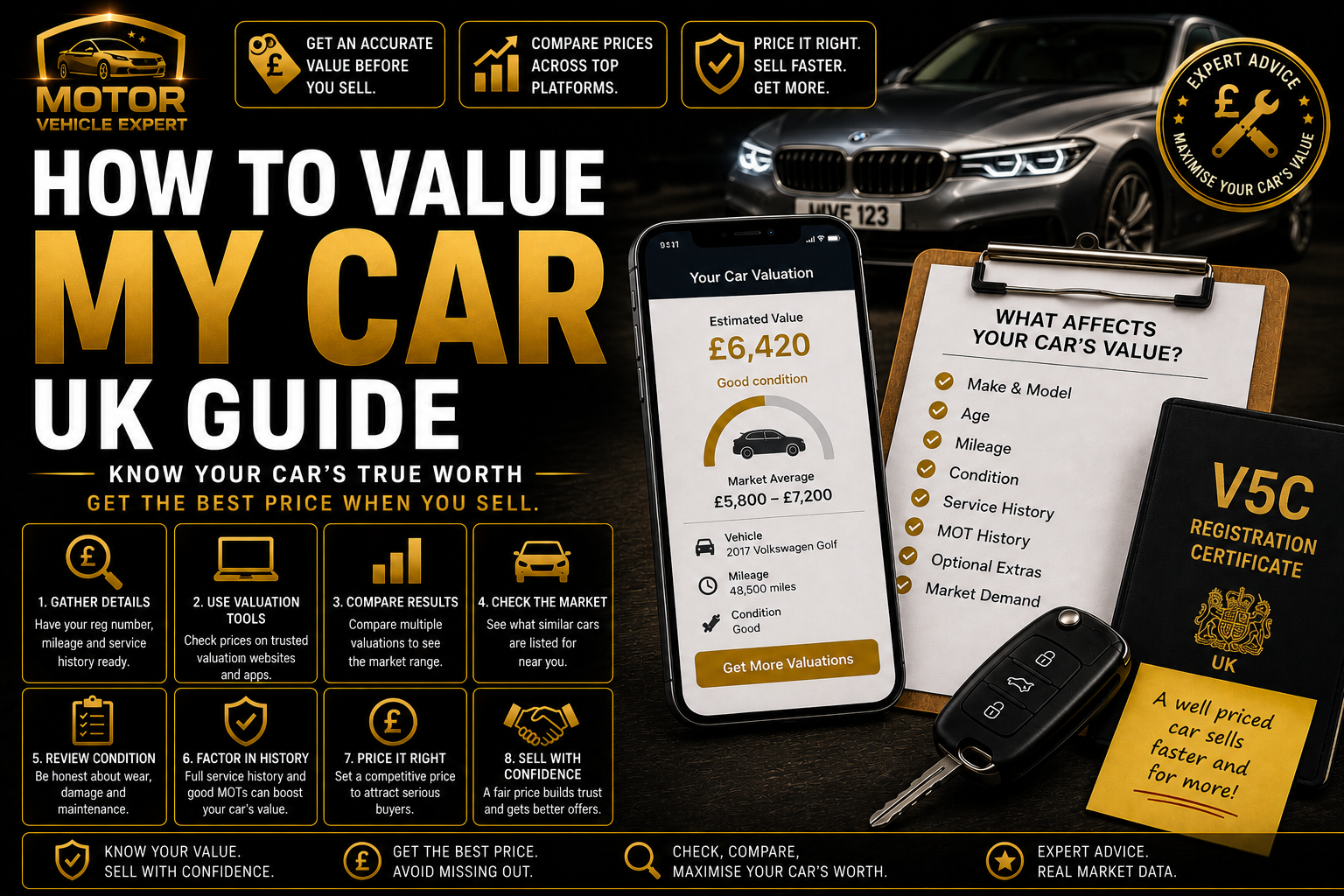
To value your car accurately, compare similar vehicles for sale, check real market prices, review mileage, service history, MOT history, condition and specification, then compare dealer and private-sale estimates.
What affects your car’s value most?
Mileage
Higher mileage usually lowers resale value, especially above common market averages.
Service history
Full maintenance records increase trust and usually improve selling price.
Condition
Rust, dents, warning lights and interior damage reduce buyer confidence quickly.
MOT history
Repeated MOT failures or advisories can reduce value significantly.
Engine and gearbox
Noisy engines, slipping gearboxes or smoke reduce value heavily.
Market demand
Popular economical cars often hold value better than thirsty luxury models.
Free vs paid car valuation methods
Free valuation tools
Useful for rough estimates, but they may not reflect condition or hidden problems accurately.
Paid valuation reports
Can provide more detailed market comparisons and dealer pricing information.
Dealer quotes
Trade-in prices are normally lower because dealers need resale profit margins.
Private sale value
Private buyers may pay more, but selling privately takes more effort and risk.
How mileage affects car value
Mileage affects resale value because buyers associate higher mileage with wear and future repairs. However, maintenance history matters more than mileage alone.
Low mileage
Usually attracts stronger prices if supported by genuine service history.
Average mileage
Generally easiest to sell because buyers see it as normal use.
High mileage
Can still sell well if the car has excellent maintenance records.
Related guide: best mileage to buy a used car.
Why service history matters so much
Service history reassures buyers the vehicle was maintained properly. Missing history makes buyers worry about skipped oil changes, timing belt neglect, hidden faults and future repair bills.
- 1Stamped service book.
- 2Invoices for repairs and servicing.
- 3MOT records matching mileage.
- 4Evidence of cambelt or chain maintenance.
- 5Receipts for tyres, brakes and major repairs.
Dealer value vs private sale value
Dealer trade-in
Usually lower because dealers prepare, advertise and warranty the car before resale.
Private sale
Usually achieves higher value if the car is clean, well-maintained and correctly priced.
Problems that reduce car value quickly
Warning lights
Dashboard warning lights instantly reduce buyer confidence.
Poor MOT history
Repeated failures suggest neglect or unresolved faults.
Smoke or noises
Engine smoke and knocking noises scare buyers immediately.
Rust
Visible rust lowers value and worries buyers about MOT failures.
Bad tyres
Worn tyres suggest corners were cut on maintenance.
Missing paperwork
Lack of documents creates suspicion around ownership and maintenance.
How to improve your car’s value before selling
- 1Fix obvious warning lights.
- 2Clean the interior properly.
- 3Repair small cosmetic damage.
- 4Gather all service records.
- 5Make sure the MOT is current.
- 6Photograph the car honestly in daylight.
Best mechanic-style advice
Most buyers care about trust more than polish. A car with honest history, proper servicing and no hidden faults usually sells faster than one trying too hard to look perfect.
Do not focus only on the highest possible value. A realistic price with clear history usually attracts better buyers and fewer problems.
Related used car guides
Frequently asked questions
How can I value my car properly?
Compare real advertised prices, check condition carefully and review mileage and history before setting a value.
Does mileage matter more than service history?
No. Buyers often prefer well-maintained higher-mileage cars over neglected lower-mileage ones.
Should I repair warning lights before selling?
Usually yes because warning lights reduce buyer trust immediately.
Why are dealer valuations lower?
Dealers need room for repairs, warranty costs and profit before reselling the car.