
MOT tyre guide

Can Bald Tyres Fail MOT UK?

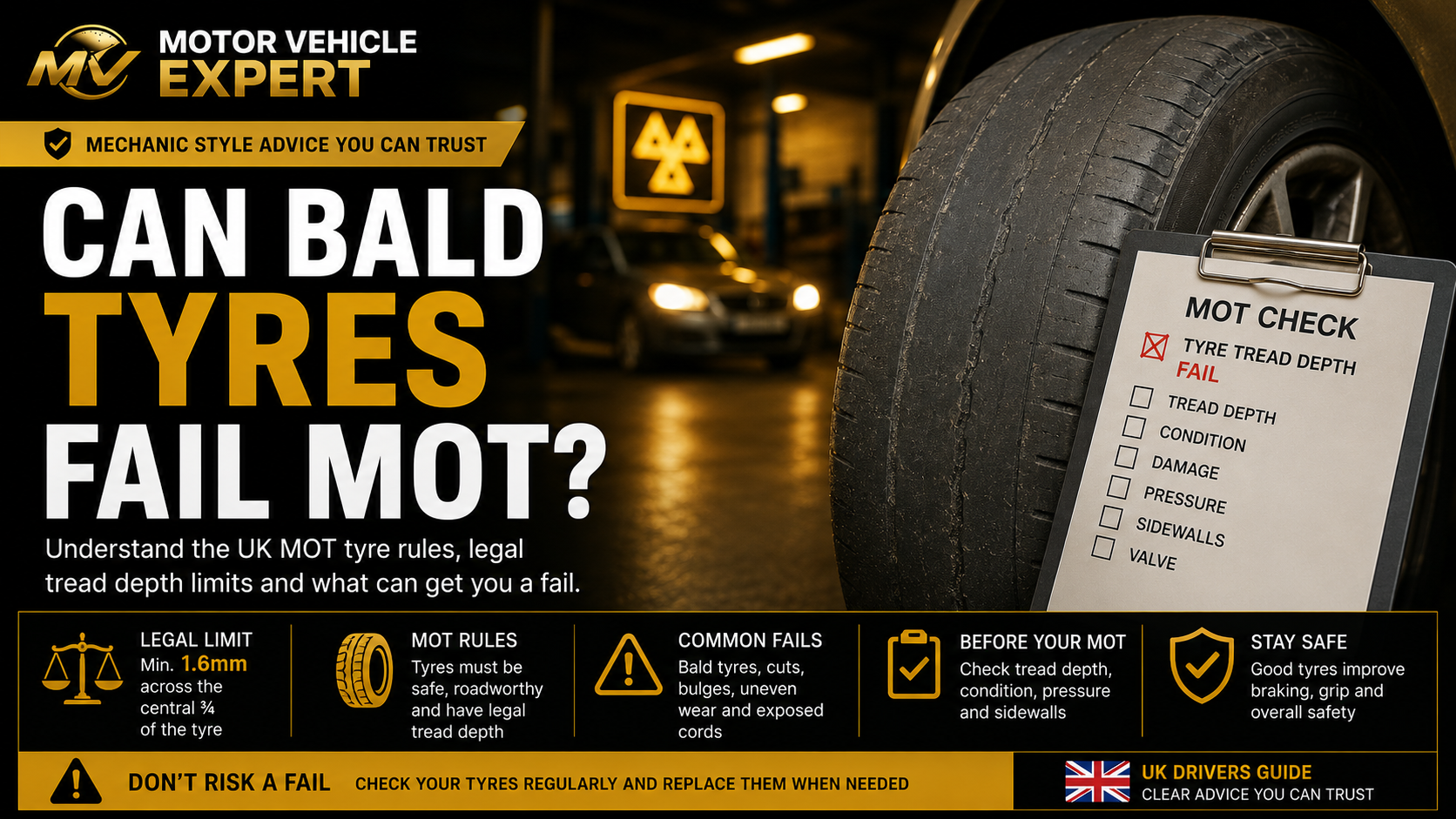
Yes, bald tyres can fail an MOT in the UK. Tyres must have enough legal tread and be safe across the whole tyre. If a tyre is worn smooth, bald on one edge, damaged, bulging, cracked badly or showing cords, it can fail the test and may be unsafe to drive.

Can bald tyres fail MOT UK guide
Quick answer

Will bald tyres fail an MOT?

A bald tyre can fail an MOT if the tread is below the legal minimum, the tyre is unsafe, or there is serious damage such as exposed cords, bulges, deep cuts or severe uneven wear.

For most cars in the UK, the legal minimum tread depth is 1.6mm across the central three-quarters of the tyre, around the full circumference.

Tread depth

UK legal tyre tread depth for MOT

During an MOT, tyres are checked for tread depth, condition, correct fitment and obvious safety defects. A tyre below the legal tread limit can cause a test failure.

  • ✓Minimum tread depth: 1.6mm for most cars.
  • ✓Measurement area: central three-quarters of the tyre width.
  • ✓Full circumference: the legal tread depth must be present around the whole tyre.
  • ✓One tyre is enough: one illegal tyre can fail the MOT.
Bald tyre signs

What counts as a bald tyre?

A tyre does not have to look completely smooth across the whole width to be a problem.

Illegal tread

Below 1.6mm

If the tread is below the legal limit in the required area, the tyre is illegal.

Wear bars

Wear bars visible

If the tread is level with the wear indicators, the tyre is usually at or close to the limit.

Smooth tread

Slick-looking tread

If the tread pattern is barely visible, the tyre should be checked immediately.

Uneven edge wear

A tyre can be illegal on one edge even if the rest of the tread looks acceptable.

Centre wear

Overinflation or heavy motorway use can wear the centre faster than the shoulders.

Patchy wear

Suspension, alignment or braking faults can cause uneven tread wear.

More than tread

Tyres can fail for more than tread depth

A tyre does not need to be completely bald to fail an MOT. Damage, incorrect fitment or structural problems can also be serious.

Sidewall

Sidewall cuts

Deep cuts or damage can make the tyre unsafe, especially if the structure is affected.

Serious

Exposed cords

Visible cords are a serious safety defect and the tyre should not be ignored.

Incorrect fitment

Wrong size, load rating, speed rating or tyre structure can cause problems.

Severe cracking

Aged or perished tyres may be unsafe even if tread depth looks acceptable.

Very uneven wear

Can point to alignment, suspension, pressure or braking issues.

Wear pattern clues

What tyre wear can tell you

As a mechanic, I use tyre wear as a clue. The tyre often shows what the car has been doing.

Both edges worn

Often linked to underinflation, heavy cornering or running tyres too soft.

Centre worn

Often linked to overinflation or long motorway use with high pressure.

Feathered tread

Can point towards tracking or toe alignment issues.

One tyre wearing fast

Check alignment, suspension, braking drag and tyre pressure on that corner.

Pre-MOT checks

Pre-MOT tyre checks

These simple checks can prevent an avoidable MOT failure.

Step 1

Check tread depth

Use a tread depth gauge, or ask a tyre shop or garage to check all four tyres.

Step 2

Inspect inner edges

Inner tyre edges often wear unnoticed, especially if wheel alignment is out.

Step 3

Look for bulges

Bulges, lumps or sidewall damage should be treated seriously.

Step 4

Check tyre pressures

Incorrect pressure can increase wear and affect braking and handling.

Step 5

Check for cracking

Older tyres can crack even if tread depth looks acceptable.

Step 6

Replace early if close

If tyres are very close to the limit, replacing them before MOT is usually sensible.

Replace advice

Can you still drive with bald tyres?

You should not keep driving on bald or unsafe tyres. If they are below the legal limit, badly worn on one edge, cracked, bulging or damaged, the car may be unsafe and could also be illegal to drive on the road.

A tyre may technically pass while still being close to the legal limit, but wet grip and stopping distance can already be reduced. Replacing worn tyres early is often safer than waiting for a fail.

Root causes

What causes tyres to wear bald quickly?

If a tyre wears bald too quickly, replacing the tyre may not fix the reason it wore out.

Alignment

Wheel alignment

Poor alignment can wear one edge of the tyre quickly and may cause pulling.

Car pulling guide →
FAQs

Bald tyre MOT questions

Common questions UK drivers ask before an MOT when tyres are worn or close to the limit.

Can one bald tyre fail the MOT?

Yes. One illegal or unsafe tyre can be enough to fail the vehicle.

What is the legal tyre tread depth in the UK?

For most cars, it is 1.6mm across the central three-quarters of the tyre around the full circumference.

Can a tyre pass MOT but still need replacing soon?

Yes. A tyre can pass while being close to the limit or performing poorly in wet conditions.

Can uneven tyre wear fail MOT?

Yes, if part of the tyre is below the legal limit or the tyre condition is unsafe.

Can cracked tyres fail MOT?

They can if cracking is severe, structural or makes the tyre unsafe.

Should I replace tyres before MOT?

Yes, if tread is near the limit, damage is visible or tyre condition is questionable.

Motor Vehicle Expert publishes practical UK-focused vehicle diagnostics, maintenance, MOT, used car and repair cost guidance based on common driver questions and real-world garage situations.