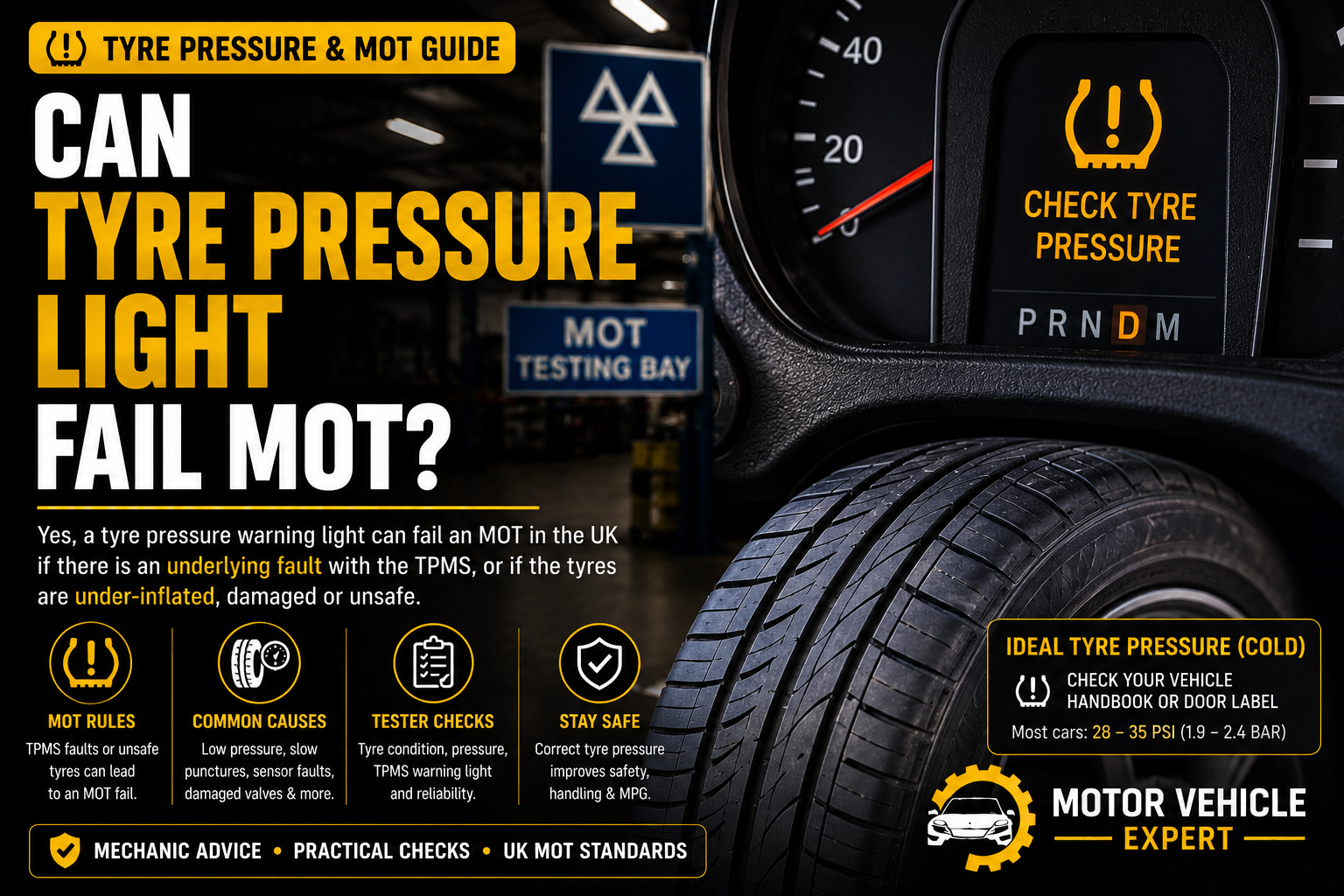
Quick answer
If the tyre pressure light is on because tyre pressures are low, the issue may be simple to fix by inflating tyres correctly and resetting the system. If the light is on because the TPMS itself has a fault, it can fail an MOT on relevant vehicles.:contentReference[oaicite:0]{index=0}
The safest approach is to fix the warning before your MOT rather than hoping it passes.
What does the tyre pressure light mean?
The tyre pressure warning light usually looks like a horseshoe-shaped tyre symbol with an exclamation mark. It can indicate:
- 1One or more tyres are under-inflated.
- 2A slow puncture or air leak.
- 3A faulty TPMS sensor battery.
- 4Sensor communication fault.
- 5System needs recalibration or reset.
- 6Incorrect tyre pressures after tyre replacement.
When can it fail an MOT?
If the tester can determine the warning lamp indicates a TPMS malfunction rather than simply low tyre pressure, it can be a reason for MOT failure on applicable vehicles.:contentReference[oaicite:1]{index=1}
Likely fail
Light flashing, permanent warning, sensor fault message or TPMS malfunction warning.
May be simple fix
Cold weather pressure drop or one tyre slightly low.
Best action
Check pressures first, then reset system if your vehicle allows it.
Why TPMS matters
Correct tyre pressure improves braking, steering response, tyre life and fuel economy. Under-inflated tyres can overheat and wear faster, while over-inflated tyres reduce grip.
That is why tyre pressure monitoring systems are treated seriously on newer vehicles.
What to check before your MOT
1. Check all tyre pressures cold
Use the sticker inside the door shut, fuel flap or handbook.
2. Inspect tyres
Look for punctures, nails, sidewall damage or cracking.
3. Reset TPMS
Some cars need a manual reset after inflation.
4. Drive the car
Many systems need a short drive before the light clears.
5. If light stays on
Book tyre or diagnostic inspection before MOT.
6. Check spare if fitted
Some vehicles monitor the spare wheel too.
Common causes of TPMS faults
Sensor battery failure
Many TPMS sensors contain sealed batteries that weaken with age.
Damaged sensor valve
Often happens during tyre fitting or corrosion around valve stems.
Winter temperature drop
Cold weather naturally lowers tyre pressure.
Wheel change
New wheels may need sensors or relearning.
Slow puncture
Tyre may lose pressure over days or weeks.
Control module issue
Less common but possible on some vehicles.
Typical UK repair costs
Air top-up
Usually very low cost or free at home.
Puncture repair
Often modest cost depending on tyre condition.
TPMS sensor replacement
Varies widely by vehicle, brand and programming needs.
Always diagnose before replacing multiple sensors unnecessarily.
Related MOT and tyre guides
Frequently asked questions
Will low tyre pressure fail MOT?
Incorrect tyre pressure itself may not be the only issue, but TPMS warnings and tyre condition can matter.
Can I reset the light myself?
Many cars allow a manual reset after pressures are corrected.
How long do TPMS sensors last?
Often several years, depending on battery life and usage.
Can cold weather trigger the light?
Yes. Lower temperatures often reduce tyre pressure enough to trigger warnings.
Should I ignore the warning?
No. It may indicate unsafe tyre pressure or a system fault.
Best fix before MOT?
Check pressures, inspect tyres, reset system and repair faults before the test.