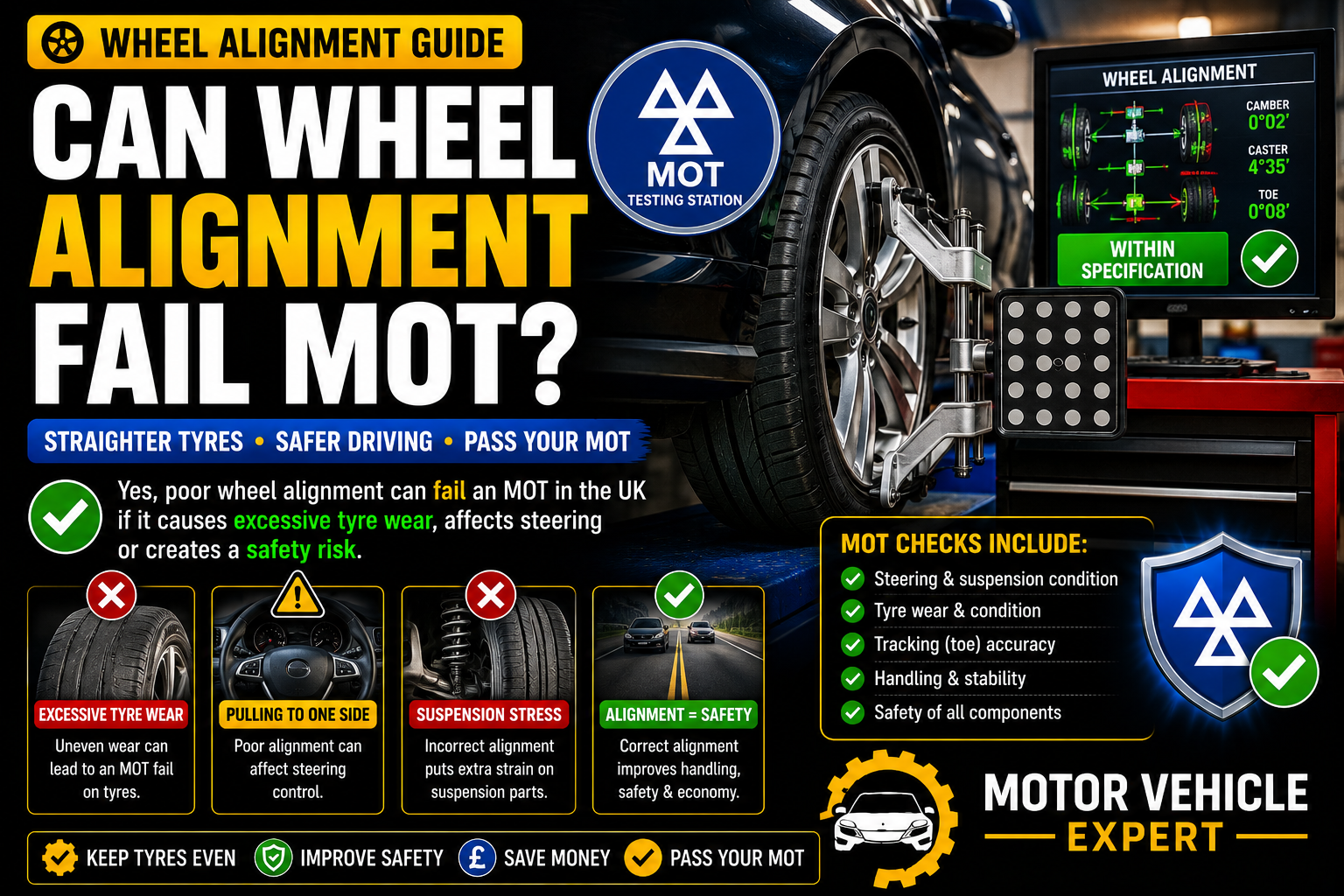
Wheel alignment MOT guide

Can Wheel Alignment Fail MOT?

Yes, wheel alignment problems can contribute to an MOT failure in the UK if they cause dangerous tyre wear, affect steering control, suspension safety or create unstable vehicle handling.

Can wheel alignment fail MOT UK guide
Quick answer

Will wheel alignment fail an MOT?

Poor wheel alignment alone does not usually fail an MOT because testers do not normally carry out a full alignment measurement during the test.

However, if poor alignment has caused severe tyre wear, exposed cords, unsafe handling, pulling, worn steering parts or suspension defects, the vehicle may fail on those related items.

Tester view

What the MOT tester actually checks

The tester checks tyre condition, steering play, suspension security, visible damage and whether the vehicle is safe. They are not normally setting the car on a four-wheel alignment machine.

So a car can have poor tracking and still pass if the tyres, steering and suspension are safe. But if the tracking has damaged the tyres or points to worn parts, that is where the MOT problem starts.

Failure link

How poor alignment can lead to MOT issues

Alignment is usually an indirect MOT problem. The damage it causes is what gets noticed.

Pulling

Pulling to one side

Pulling may indicate steering, tyre, brake or suspension faults.

Pulling guide →
Steering

Off-centre steering wheel

Often a sign of tracking, geometry issues, previous impact or poor adjustment.

Track rod wear

Loose steering joints can fail the MOT and can also prevent accurate alignment.

Track rod guide →
Tyre wear

Tyre wear caused by bad alignment

One of the most common MOT risks from poor alignment is abnormal tyre wear. Even if the tread looks acceptable in the centre, the inner or outer shoulders may be worn out.

This is why drivers get caught out. From the side of the car the tyre may look fine, but the inside edge can be bald or showing cords.

Mechanic tip

Check the inner edge properly

Turn the steering and inspect the inner tyre shoulders with a torch. Poor tracking often destroys the inside edge before the rest of the tyre looks badly worn.

If you find serious edge wear, do not just fit tyres. Find out why the alignment went out.

Tyre patterns

Tyre wear patterns linked to alignment

Different wear patterns can point to different causes.

Inside edge wear

Often linked to toe or camber problems and easy to miss without turning the steering.

Outside edge wear

Can happen with incorrect geometry, low pressure, cornering stress or suspension wear.

Feathered tread

Tyre blocks feel sharp one way and smooth the other, often linked to toe problems.

Rapid tyre wear

Misalignment can shorten tyre life significantly.

One tyre worse than the other

May suggest impact damage, worn suspension parts or a previous repair issue.

Cords visible

If cords are visible, the tyre is unsafe and likely to fail regardless of the cause.

Warning signs

Signs wheel alignment may be out

These symptoms are worth checking before tyres become damaged.

Steering wheel not straight

The wheel sits off-centre while the car is travelling straight.

Car drifts left or right

A steady drift can come from alignment, tyres, brakes or suspension faults.

Rapid shoulder wear

The tyre edges wear faster than the middle of the tread.

Vague steering

The steering feels unstable, delayed or less precise than usual.

Recent pothole strike

Impact damage can alter tracking or bend steering and suspension parts.

Recent suspension repair

New arms, joints, shocks, struts or track rods can change alignment.

Pre-MOT checks

What to check before your MOT

These checks help spot alignment-related MOT risks before the test.

1

Inspect tyre edges

Check inner and outer shoulders for heavy wear, cords, cuts or cracking.

2

Check steering position

See if the wheel sits straight when driving normally on a level road.

3

Listen for knocks

Noises over bumps may suggest worn suspension joints, bushes or steering parts.

4

Check tyre pressures

Incorrect pressures can mimic alignment symptoms and cause edge wear.

5

Review advisories

Previous tyre, steering or suspension advisories can be clues.

6

Inspect before aligning

A garage should check worn parts before setting alignment.

Repair advice

Should you fix alignment before the MOT?

Yes, especially if tyres are wearing unevenly or the car pulls noticeably. Correct alignment can help prevent tyre failure items and improve handling.

If the tyres are already worn below the legal limit, alignment alone will not fix the MOT issue. The tyres will still need replacing.

Important

If alignment cannot be set correctly

If alignment cannot be set correctly, that often suggests worn, seized or bent steering or suspension parts.

Fitting new tyres without fixing the worn parts can mean the new tyres wear out the same way.

Impact damage

Can potholes knock alignment out?

Yes. Hitting potholes or kerbs can alter tracking, damage tyres, bend wheels or damage steering and suspension components.

If symptoms start after an impact, have the vehicle checked promptly rather than waiting until the tyre edges are worn out.

After impact

What to check after a kerb or pothole hit

  • ✓Check tyre sidewalls for bulges or cuts.
  • ✓Check if the steering wheel is now off-centre.
  • ✓Listen for new suspension knocks.
  • ✓Check for vibration at speed.
Real-world faults

Alignment problems drivers often miss

These are the common situations that lead to tyre and steering MOT problems.

Tracking done without checking parts

If joints or bushes are worn, the alignment may not hold.

Inner tyre edge missed

A tyre can look legal from outside while the inner edge is below the limit.

Steering wheel slightly off-centre

Drivers often ignore this until tyres start wearing unevenly.

Pulling blamed on tracking only

Pulling can also come from tyres, brakes, suspension or steering faults.

New tyres fitted too early

If alignment and worn parts are not fixed, new tyres can wear quickly.

Alignment skipped after repairs

Track rods, arms, struts and suspension repairs can all affect geometry.

FAQs

Wheel alignment MOT questions

Common questions about tracking, tyre wear, pulling and MOT failure.

Is wheel alignment tested on MOT?

Not usually as a direct measurement item.

Can tyres fail from bad alignment?

Yes, if tread wear becomes excessive, unsafe or exposes cords.

Should I align after suspension repair?

Usually yes, especially after steering or suspension work.

Can potholes affect alignment?

Yes, impacts commonly knock geometry out or damage parts.

Will pulling to one side fail MOT?

Not automatically, but the cause may be a fail item.

Can an off-centre steering wheel fail MOT?

Not usually by itself, but the cause may be steering, tyre or suspension related.

Should I replace tyres before alignment?

Unsafe or illegal tyres should be replaced, but worn parts and alignment issues should also be fixed.

Best next step before MOT?

Inspect tyres and book steering or suspension checks if symptoms exist.

Motor Vehicle Expert publishes practical UK-focused vehicle diagnostics, maintenance, MOT, warning light, used car and repair cost guidance based on common driver questions and real-world garage situations.