MOT tyre safety guide

Can Tyre Bulge Fail MOT?

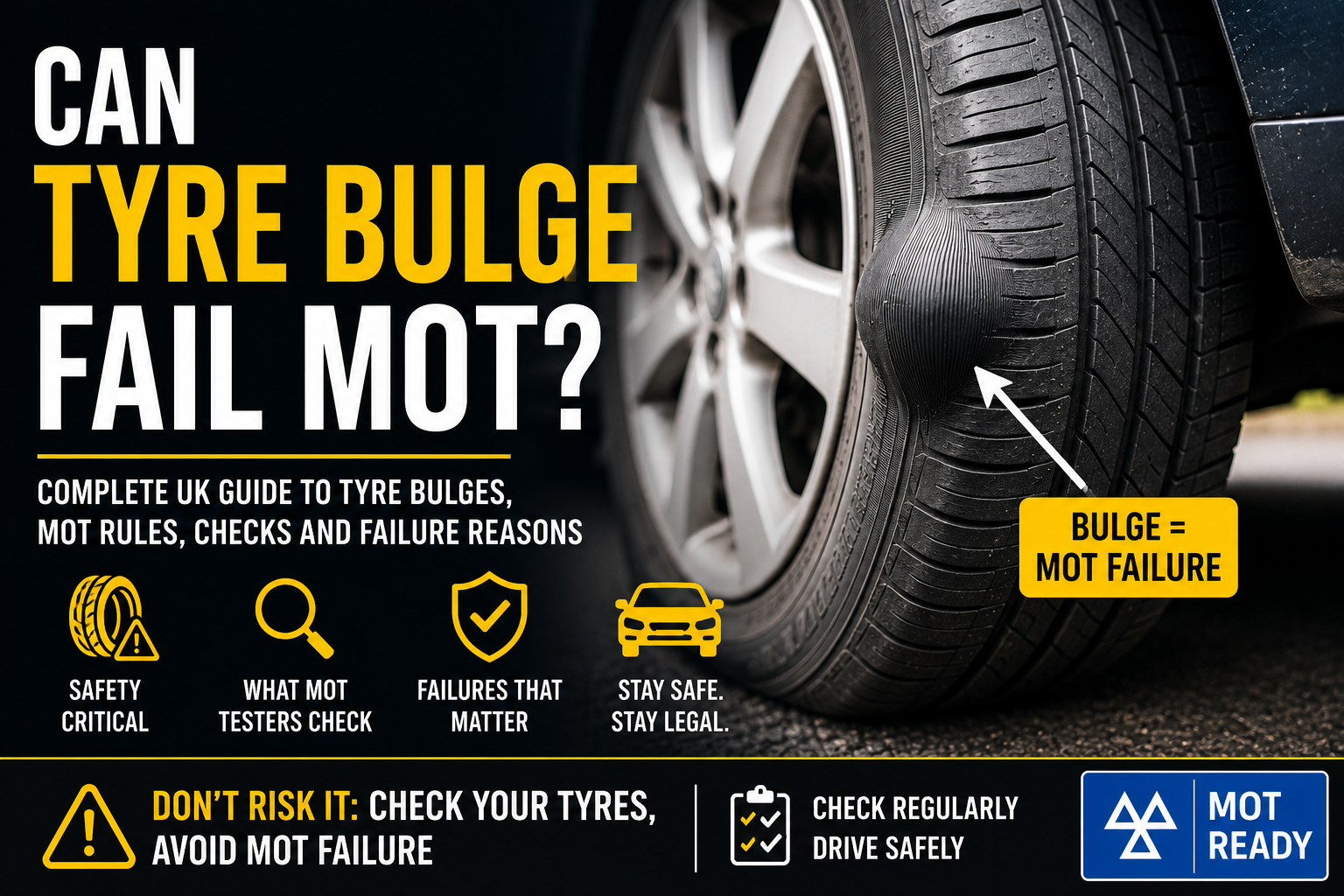
A tyre bulge is considered a serious tyre safety issue in the UK and can quickly lead to MOT failure. Bulges usually indicate internal tyre damage, weakened sidewalls or structural failure that can increase the risk of sudden blowouts.

Can tyre bulge fail MOT UK guide
Quick answer

Will a tyre bulge fail an MOT?

A tyre with a visible bulge, lump, bubble or sidewall deformation is likely to fail an MOT because it suggests internal structural damage to the tyre casing.

Do not wait for the MOT if you find one. A bulged tyre should normally be replaced as soon as possible, especially if the car is used at speed, on motorways or with heavy loads.

Tester view

Why testers treat bulges seriously

A tyre bulge is not judged like normal tread wear. The problem is inside the tyre structure. If the sidewall or casing has weakened, air pressure can push the damaged area outward and create a visible bubble.

MOT tester checks

What testers check with tyre bulges

These are the practical tyre safety points that matter during the MOT.

Shape

Is the tyre deformed?

A visible lump, bubble or raised area on the sidewall or tread area can indicate casing damage.

Structure

Is the casing weakened?

A bulge normally suggests the internal cords or structure are no longer supporting the tyre correctly.

Safety

Is the tyre unsafe?

Any tyre defect that makes the tyre unsafe can fail, even if the tread depth is still legal.

Sidewall condition

Cuts, cracks, bulges, exposed cords or impact marks around the sidewall are important.

Tread distortion

A raised or uneven section in the tread can also suggest internal tyre damage.

Other tyres

If one tyre has impact damage, the opposite tyre and wheel should also be checked.

Failure points

When a tyre bulge can fail an MOT

These are the tyre conditions that make a bulge more than a cosmetic issue.

Sidewall

Sidewall bulge

A lump on the tyre sidewall is a serious safety defect and is not something to ignore.

Tread

Tread distortion

A raised or distorted area in the tread can also indicate internal damage.

Cords

Cord damage suspected

Bulges often mean the internal cords or tyre casing have been weakened.

Impact damage

Kerb strikes, potholes and road debris can damage the tyre structure.

Cracking or cuts nearby

Cracks, cuts or exposed material around the bulge increase the risk.

Unsafe tyre condition

Any tyre defect that affects safety can cause an MOT failure.

Safety risk

Why tyre bulges are dangerous

A tyre bulge is different from normal tyre wear. It usually means the tyre’s internal structure has weakened, allowing air pressure to push part of the tyre outward.

The tyre may still hold air, but that does not mean it is safe. The damaged area can worsen with heat, speed, load or another pothole impact.

Real-world risk

Why you should not leave it

  • !The tyre may be more likely to fail suddenly.
  • !The risk can increase at higher speeds.
  • !Heavy loads put extra stress on the damaged area.
  • !Another pothole or kerb impact can make it worse quickly.
Common causes

What causes tyre bulges?

Most tyre bulges come from impact damage, pressure problems or age-related weakness.

Pothole impact

A hard pothole strike can pinch the tyre between the road and wheel rim, damaging the inner structure.

Kerb damage

Hitting or scraping kerbs can weaken the sidewall, especially during parking.

Overloading

Too much weight can increase stress on damaged tyres and weak sidewalls.

Age-related weakness

Older tyres can harden, crack and become more vulnerable to impact damage.

Previous hidden damage

A tyre may be damaged before the bulge becomes obvious from outside.

Pre-MOT checks

Pre-MOT tyre bulge checks

Do this check before your MOT and after any heavy pothole or kerb hit.

1

Inspect outer sidewalls

Look carefully for lumps, bubbles, cuts or unusual raised areas.

2

Check inner sidewalls

Inner sidewall damage is easy to miss. Turn the steering where possible and use a torch.

3

Check after potholes

Inspect tyres after a heavy pothole strike, kerb impact or road debris hit.

4

Check tyre pressures

Incorrect pressure can worsen tyre damage, sidewall flex and uneven wear.

5

Inspect tread condition

Check tread depth, uneven wear, cracking, cuts and exposed cords.

6

Replace unsafe tyres

Do not rely on the MOT to decide if a visibly bulged tyre is safe.

Repair advice

What should you do if you find a tyre bulge?

A bulged tyre normally needs replacing. It is not usually safe to repair because the problem is structural, not just a puncture in the tread area.

If the bulge is large, the tyre looks badly damaged, or you feel vibration or pulling, avoid regular driving and arrange recovery or mobile tyre fitting where possible.

One tyre?

Can one bulged tyre fail the whole MOT?

Yes. One unsafe tyre can be enough to fail the vehicle. The rest of the car may be in good condition, but tyres are safety-critical and are checked closely during the MOT.

If one tyre has a bulge, inspect the other tyres too. Impact damage can affect more than one tyre or wheel.

Used car warning

Tyre bulges when buying a used car

A bulged tyre on a used car is a red flag because it points to impact damage or poor tyre care.

Check carefully

Do not only look at tread depth

A tyre can have legal tread and still be unsafe because the sidewall or casing is damaged.

Impact clues

Look at the wheel rim too

A bulged tyre may be linked to a bent alloy, kerb strike or pothole damage.

Price point

Budget for replacement

Do not treat a bulged tyre as a small advisory. It normally needs replacing.

History

Check MOT tyre advisories

Repeated tyre advisories can suggest poor maintenance or alignment problems.

Helpful next reads: used car inspection checklist, how to check MOT history before buying and should you buy a car with advisories?

Real-world examples

Tyre bulge situations drivers often miss

These are the situations where a bulge is found before MOT or after a tyre issue.

Bulge only visible when parked

The bulge may sit low on the tyre and only show clearly when the wheel is turned or the car is moved.

Inner sidewall damage

The outer sidewall can look fine while the inner sidewall has a lump from pothole impact.

Legal tread but unsafe tyre

A tyre can have plenty of tread depth but still fail because the casing is damaged.

Bulge after kerbing

A parking kerb strike can damage the sidewall even at low speed.

Pressure light after damage

A pressure warning after impact may point to tyre or wheel damage that needs checking.

TPMS MOT guide β†’
FAQs

Tyre bulge MOT questions

Common questions about sidewall bulges, tyre bubbles, pothole damage and MOT failure.

Will a small tyre bulge fail MOT?

Yes, even a small visible bulge can be treated as structural tyre damage.

Can a tyre bulge be repaired?

Usually no. A bulge normally means internal damage, so replacement is the safest option.

Is a tyre bulge dangerous?

Yes. It can increase the risk of sudden tyre failure, especially at speed.

Can potholes cause tyre bulges?

Yes. Pothole and kerb impacts are common causes of sidewall bulges.

Can I drive to the garage?

Only if the tyre appears stable and the journey is short and cautious. Severe bulges may need recovery or mobile fitting.

Should I replace it before MOT?

Yes. A bulged tyre should be replaced before the test and before further regular driving.

Can one bulged tyre fail the whole MOT?

Yes. One unsafe tyre is enough to fail the vehicle.

Can a tyre have legal tread and still fail?

Yes. Legal tread depth does not make a structurally damaged tyre safe.

Motor Vehicle Expert publishes practical UK-focused vehicle diagnostics, maintenance, MOT, warning light, used car and repair cost guidance based on common driver questions and real-world garage situations.