Charging system guide

Alternator Not Charging Battery Signs

If the alternator is not charging properly, the battery warning light may appear and the car can begin losing electrical power while driving. This UK mechanic-style guide explains charging-system symptoms, dim lights, repeated flat batteries, belt faults and what drivers should check next.

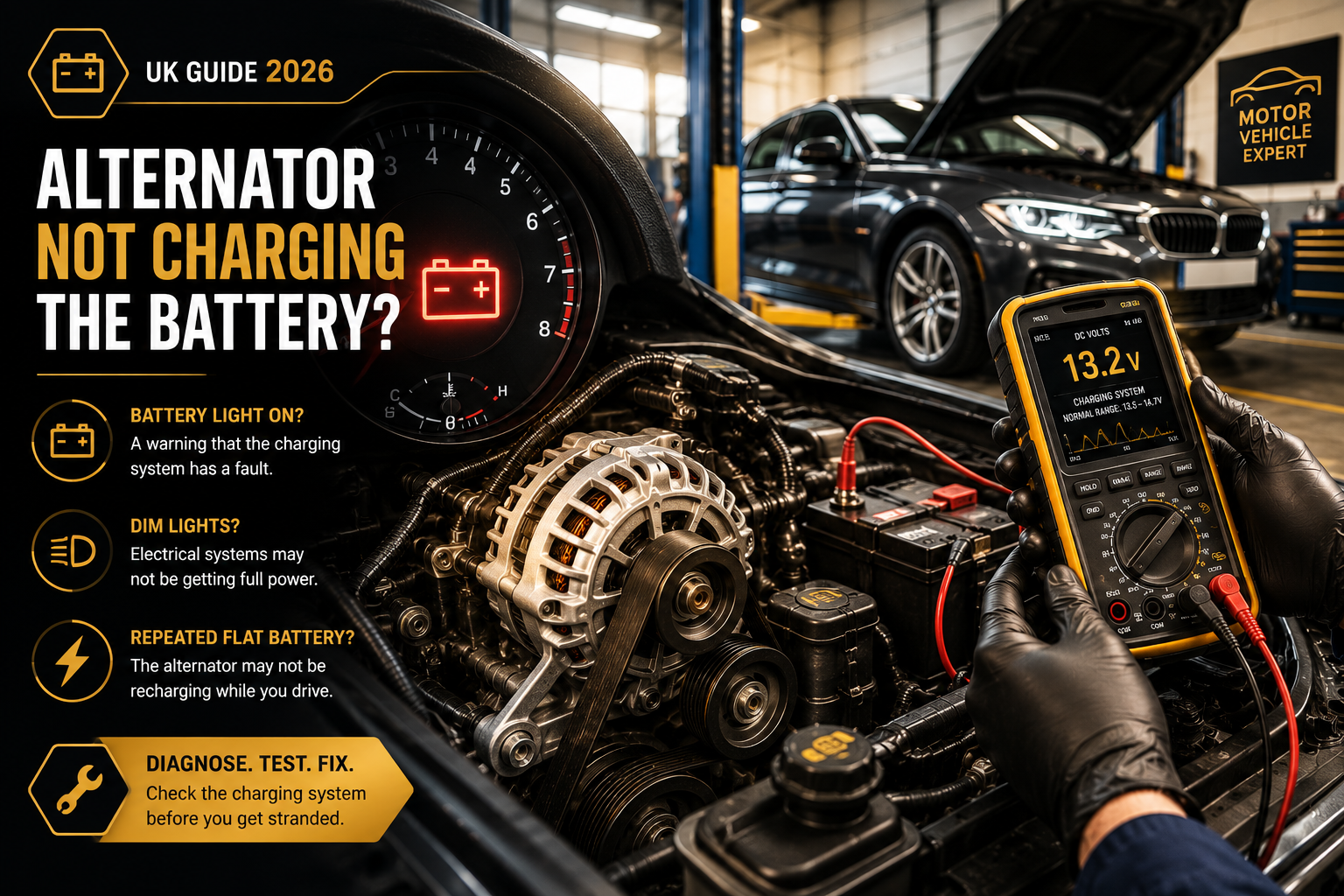
Alternator charging fault diagnostic test with battery warning light
Quick answer

What are the signs of an alternator not charging?

The most common signs are the battery warning light staying on, dim headlights, flickering dashboard lights, repeated flat batteries, slow cranking, electrical glitches and the engine eventually cutting out when the battery reserve runs low.

A charging fault should be tested before parts are replaced. If the alternator is good but the battery, belt, wiring or earth connection is bad, replacing the alternator will not fix the problem.

Symptoms

Symptoms of an alternator charging problem

Charging faults often show as electrical symptoms first. The car may still drive for a while, but the battery is slowly being drained instead of recharged.

Warning light

Battery warning light

Often the clearest sign that the charging system is not working correctly while the engine is running.

Battery light guide β†’
Lights

Dim or flickering headlights

Headlights and dashboard lights may weaken or flicker as system voltage falls or becomes unstable.

Starting

Repeated flat battery

The battery may keep going flat because it is not being recharged properly while driving.

Flat battery guide β†’

Slow cranking

Low battery charge can make the engine turn over slowly when starting.

Electrical glitches

Windows, radio, dashboard screens or warning messages may behave strangely.

Burning smell

A slipping belt, overheated pulley or alternator issue can sometimes create a hot smell.

Whining noise

Some alternator or pulley faults create a whining, grinding or bearing-type noise.

Multiple warning lights

ABS, power steering, traction control or engine lights may appear when voltage drops.

Engine cuts out

If voltage drops too far, the engine and electronic systems may stop working.

On the road

Signs while driving

  • !The battery warning light comes on after startup or while driving.
  • !Headlights dim when idling, slowing down or using electrical loads.
  • !Power steering assistance may reduce on some vehicles.
  • !ABS, traction control or engine warning lights appear together.
  • !The car restarts poorly after a short stop.
  • !Electrical systems begin shutting down or the vehicle cuts out.
Diagnosis

It is not always the alternator

Charging problems can look like alternator failure, but several other faults can create the same symptoms. Testing matters before buying parts.

Battery

Weak battery

An old or failing battery may not hold charge even when the alternator works correctly.

Check battery health β†’
Belt

Loose or damaged auxiliary belt

If the belt slips, breaks or becomes contaminated, the alternator may not spin properly.

Wiring

Poor terminals, earths or cables

Corroded battery clamps, poor earth straps, damaged cables or fuse issues can interrupt charging.

Parasitic drain

A battery that goes flat while parked may have an electrical drain instead of an alternator fault.

Short journeys

Repeated short trips can leave the battery undercharged, especially in cold weather.

Battery light after new battery

If the battery light comes on after replacement, the fault may be charging, coding, terminals or wiring.

Read guide β†’
Testing

How to confirm the alternator is not charging

A proper charging-system check looks at alternator output, battery condition, belt condition, terminals, earths and wiring.

Check battery light behaviour

If the battery light stays on while the engine is running, a charging fault is more likely.

Measure charging voltage

A voltage test can show whether the alternator is supplying power to the battery.

Inspect the belt

Look for a loose, cracked, contaminated, noisy or broken auxiliary belt.

Load test the battery

A weak battery can confuse diagnosis and should be checked under load.

Check terminals and earths

Corrosion, looseness or damaged cables can stop charging current flowing properly.

Get a charging-system test

A garage can confirm alternator output, battery health and wiring condition quickly.

Safety

Can you drive if the alternator is not charging?

The car may continue running briefly, but once the battery reserve drops too low, electrical systems can fail and the engine may stop. The risk is being stranded or losing important assistance systems while driving.

  • !Reduce unnecessary electrical use where safe.
  • !Do not switch the engine off unless you are somewhere safe.
  • !Stop safely if steering becomes heavy or lights become very dim.
  • !Arrange recovery if multiple warning lights appear or the car starts losing power.
Repair costs

Typical UK repair costs for charging faults

The final cost depends on whether the fault is the alternator, battery, belt, wiring, pulley, fuse or earth connection.

Alternator

Alternator replacement

Can vary widely depending on vehicle, alternator type, labour access and whether new or remanufactured parts are used.

Alternator cost guide β†’
Battery

Battery replacement

Cost depends on battery size, stop-start type, registration/coding needs and fitting access.

Battery health guide β†’
Belt/wiring

Belt, terminal or wiring repair

Sometimes the cheaper repair is a belt, pulley, terminal, earth strap, fuse or charging cable issue.

FAQs

Alternator not charging questions

Common questions drivers ask when the battery light comes on or the battery keeps going flat.

Can a car run with a bad alternator?

Yes, but only until the battery charge drops too low. Then the car may cut out.

Will jump starting fix an alternator problem?

No. A jump start may get the engine running, but it will not fix a charging fault.

Can a new battery solve it?

Not if the alternator, belt or wiring is the real issue. The new battery will go flat too.

Should I drive with the battery light on?

Only if necessary and only briefly. A charging fault can leave you stranded unexpectedly.

Can a belt cause charging failure?

Yes. A slipping, loose or broken auxiliary belt can stop the alternator charging.

Can alternators fail suddenly?

Yes. Some fail gradually, while others stop charging with little warning.

Motor Vehicle Expert publishes practical UK-focused vehicle diagnostics, maintenance, MOT and used car guidance based on common driver symptoms, dashboard warning lights and real-world repair questions.