
Quick answer
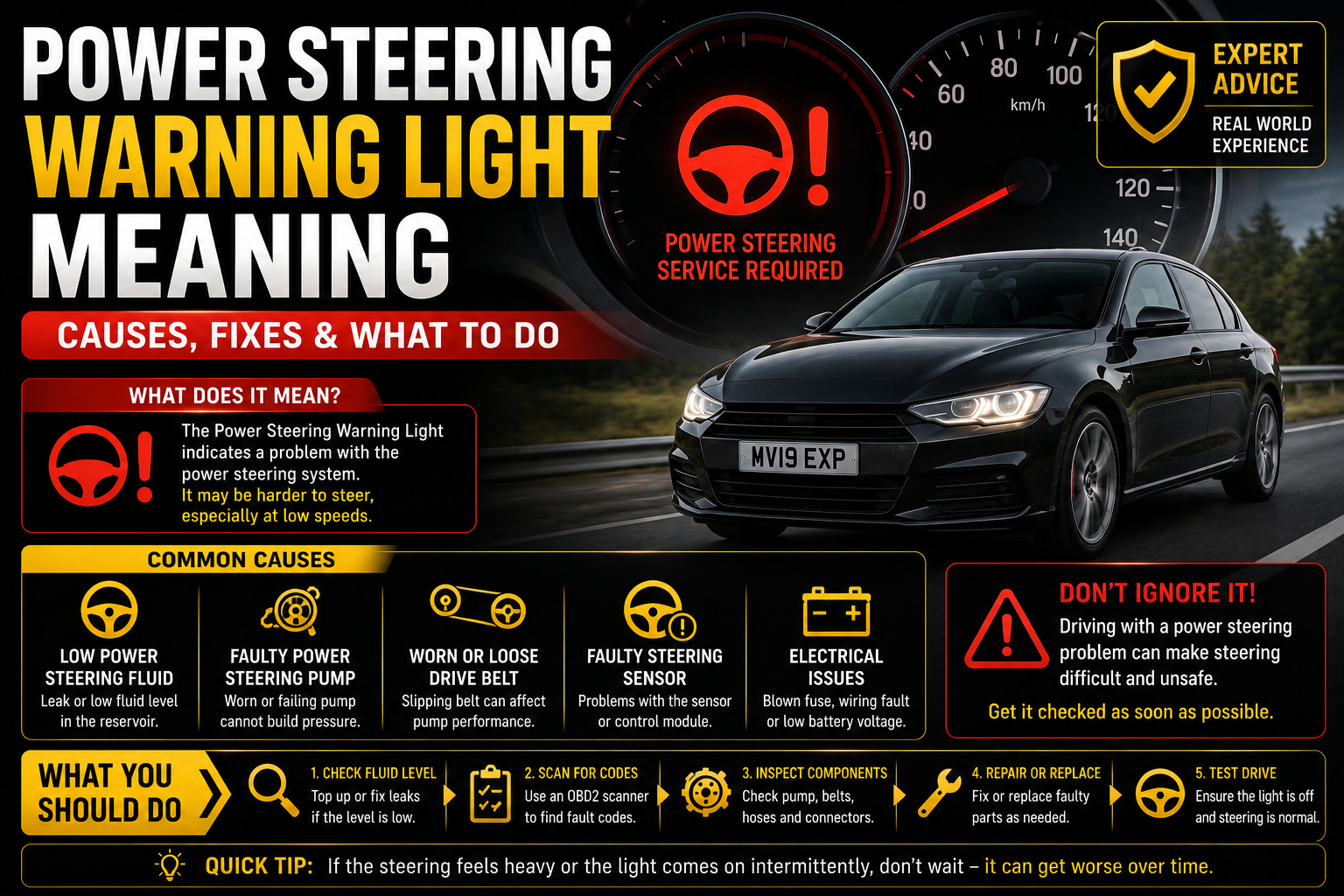
The power steering warning light usually means the steering assistance system has detected a fault. On many modern cars this involves electric power steering, low battery voltage, charging issues, steering angle sensor faults, wiring problems or an EPS control module issue.
On older hydraulic steering systems, heavy steering may be caused by low power steering fluid, a leak, a worn pump, a slipping belt or damaged hoses.
If the steering feels normal, the fault still needs checking. If the steering becomes heavy, jerky or unpredictable, stop driving and arrange inspection.
What I normally check first with a power steering warning
In real garage diagnosis, I would not assume the steering rack has failed straight away. On many modern cars, low battery voltage, alternator output, steering angle calibration, wiring or an EPS fault code can trigger the warning.
If the warning appeared after a flat battery, jump start, battery replacement, wheel alignment, suspension work or tyre work, that history matters. Some cars need steering angle calibration or a proper diagnostic scan after related work.
The biggest concern is steering feel. A light on the dash with normal steering is one thing. Steering that suddenly becomes heavy, cuts in and out or feels unpredictable is much more serious.
What does the power steering warning light mean?
Power steering reduces the effort needed to turn the steering wheel. When the warning light appears, the system may have reduced or disabled steering assistance.
The car may still steer, but it may feel much harder to turn, especially at low speeds. This can make parking, roundabouts, junctions, tight turns and emergency manoeuvres more difficult.
Light only
The system has detected a fault, even if the steering still feels normal.
Heavy steering
Assistance may be reduced or unavailable.
Multiple warnings
Battery, ABS, traction or steering lights together can suggest electrical or sensor issues.
Find the closest symptom
Light on but steering feels normal
A fault may be stored even if assistance still works. Arrange a scan before it worsens.
Heavy steering at low speed
Assistance may be reduced, especially when parking, reversing or turning slowly.
Warning after flat battery
Low voltage, jump starts or battery replacement can trigger steering-related warnings.
Battery health guide →Steering feels jerky
Assistance may cut in and out. Treat this as urgent because control can become unpredictable.
Whining noise when turning
On hydraulic systems, this can point to low fluid, air in the system or pump trouble.
Fluid under the car
Hydraulic steering leaks may leave oily fluid around the rack, pump or hoses.
Power steering leak MOT guide →Common causes of a power steering warning light
Low battery voltage
Electric steering systems can trigger warnings if battery voltage is weak or unstable.
Check battery health →Alternator fault
Charging problems can affect voltage-sensitive systems, including electric steering assistance.
Alternator signs →Electric steering fault
EPS motor, rack, column or control module faults can reduce steering assistance.
Steering angle sensor issue
Incorrect steering position data can trigger warnings or affect calibration.
Service ESC guide →Hydraulic fluid leak
On hydraulic systems, low fluid or leaks can make steering heavy and noisy.
Leak and MOT guide →Wiring or connector fault
Damaged wiring, poor connections or module communication faults can cause intermittent warnings.
Fault after wheel alignment
Some steering angle sensors may need calibration after steering or suspension work.
Wheel alignment MOT guide →ABS or traction fault
Some steering warnings appear with stability, ABS or traction control faults.
ABS warning guide →Software or module issue
Some vehicles need diagnostic calibration, reset or module testing.
Electric vs hydraulic power steering
The checks depend on which steering system your vehicle uses. Many modern cars use electric power steering, while some older vehicles use hydraulic assistance.
Electric power steering
Common causes include low voltage, alternator faults, EPS motor problems, steering angle sensor issues, wiring faults, control module problems or calibration errors.
Hydraulic power steering
Common causes include low fluid, leaks, worn pump, slipping belt, air in the system, damaged hoses or steering rack problems.
If your car has no power steering fluid reservoir, it may use electric power steering. Always check the vehicle handbook before topping up any fluid.
Is it safe to drive with the power steering light on?
If the steering still feels normal and the warning has just appeared, a short careful journey may be possible. However, the fault should still be checked because steering assistance can fail suddenly or become inconsistent.
If the wheel becomes very heavy, the steering feels jerky, or the car feels difficult to control, stop driving and arrange inspection or recovery.
Less urgent
Light on, steering feels normal, no other warning lights.
More urgent
Steering feels heavier, warning keeps returning or battery light appears too.
Stop driving
Very heavy steering, jerky steering, unsafe control or multiple warnings.
When to stop driving immediately
- !The steering suddenly becomes very heavy.
- !The steering assistance cuts in and out.
- !The car is difficult to control at junctions or roundabouts.
- !Steering feels jerky, loose, notchy or unpredictable.
- !Battery warning light appears at the same time.
- !ABS, ESP, traction or brake warning lights appear too.
- !You hear grinding, knocking or whining when turning.
- !Power steering fluid is leaking heavily on a hydraulic system.
Steering is safety-critical. If the car does not steer predictably, stop somewhere safe and arrange recovery rather than trying to continue.
What to check first
1. Notice steering feel
Check whether the steering is heavier than normal, especially at parking speed.
2. Check other warnings
Battery, alternator, ABS, ESP or traction warnings can help point towards the cause.
3. Think about battery history
A recent flat battery, jump start or weak battery can sometimes trigger steering warnings.
4. Check hydraulic fluid
If your car uses hydraulic power steering, check the correct fluid level when safe and look for leaks.
5. Avoid forcing the steering
Do not repeatedly turn the wheel against resistance if the system feels faulty.
6. Arrange diagnosis
Fault-code reading and live data checks can identify sensor, module, voltage or steering unit problems.
How garages diagnose power steering warnings
Diagnostic fault scan
Checks EPS, ABS, battery, steering angle and communication fault codes.
Battery and charging test
Confirms whether low voltage or alternator output is causing the warning.
Live steering data
Checks steering angle, torque sensor readings and assistance commands where available.
Calibration checks
Some steering angle sensors need recalibration after battery, suspension or steering work.
Fluid and leak check
Hydraulic systems are checked for fluid level, leaks, pump noise, belt condition and hose damage.
Rack, column and wiring inspection
Confirms whether the fault is mechanical, electrical or module-related.
Possible UK repair costs
Power steering repair costs vary widely because the warning can be caused by anything from weak voltage to a failed steering rack or EPS module.
Battery or charging fault
Often lower to moderate cost if the steering unit itself is not faulty.
Alternator cost guide →Sensor or calibration issue
May involve diagnostic work, calibration or sensor replacement.
Hydraulic leak repair
Cost depends on whether the leak is from a hose, pump, reservoir or steering rack.
Leak guide →Power steering pump
Applies to hydraulic systems and varies depending on access and part cost.
EPS column or motor
Can become expensive, especially if programming or calibration is needed.
Steering rack or control unit
Often one of the higher-cost steering repairs, especially on newer vehicles.
For wider budgeting, see the car repair costs guide UK.
Can a power steering warning light affect an MOT?
A steering-related warning light and any underlying steering defect can affect the MOT outcome if the system is not working correctly, the steering is unsafe or there is a serious power steering leak.
If the warning light is on before an MOT, it is sensible to diagnose it first rather than hoping it will clear during the test.
Best mechanic-style advice
- ✓Do not assume the steering rack has failed just because the warning light is on.
- ✓Check battery voltage and alternator output before replacing expensive steering parts.
- ✓If the warning appeared after battery work, check calibration and stored fault codes.
- ✓If the steering is jerky or assistance cuts in and out, treat it as urgent.
- ✓On hydraulic systems, never ignore low fluid or leaks.
- ✓If ESP, ABS or battery lights appear too, scan all related systems.
- ✓Do not force the wheel if the steering feels abnormal.
Related steering, warning light and battery guides
Frequently asked questions
Can a weak battery cause the power steering warning light?
Yes. Many electric power steering systems are sensitive to low voltage and charging problems.
Will the steering still work?
Usually yes, but without normal assistance the wheel may feel much heavier, especially at low speed.
Can the warning clear on its own?
Sometimes, especially after a voltage issue, but recurring warnings should still be investigated.
Can I drive with heavy steering?
It is not recommended. Heavy steering can make the car difficult to control in traffic, at junctions or during emergency manoeuvres.
Can low power steering fluid cause the light?
On hydraulic systems, yes. Many newer cars use electric steering and do not have power steering fluid.
Why did the power steering light come on after a jump start?
Low voltage, battery disconnection or voltage disturbance can sometimes trigger steering warnings. If the light stays on, the battery, alternator and steering system should be checked.
Can a steering angle sensor cause this warning?
Yes. Steering angle sensor faults or calibration issues can trigger steering, ESP or traction-related warnings.
Can this fail an MOT?
Yes, if the steering system has a fault, assistance is not working correctly, the steering is unsafe or a serious leak is present.
What is the best next step?
Check whether the steering feels normal, look for other warning lights, then arrange proper diagnosis if the warning remains or returns.