Quick answer
What Are Brake Pipes?
Brake pipes are rigid metal hydraulic lines that carry pressurised brake fluid from the brake master cylinder towards each wheel. They form the fixed part of the braking system pipework and work alongside flexible brake hoses, brake calipers, brake pads and brake discs to slow the vehicle safely.
Quick Answer
Brake pipes are safety-critical hydraulic lines. If they become badly corroded, damaged, insecure or start leaking, braking performance can be reduced and the vehicle may fail its MOT.
Main Job
Hydraulic Pressure
Carry brake fluid pressure from the master cylinder to the braking components at each wheel.
Common Material
Steel or CuNiFer
Most vehicles use coated steel or copper-nickel brake pipes depending on age, design and repair history.
Main Failure
Corrosion
Rust, road salt and trapped moisture can weaken the pipe wall and eventually cause leaks.
MOT Relevance
Safety Critical
Corroded, leaking or insecure brake pipes are common MOT advisory and failure items.
Contents
What's Covered In This Brake Pipe Guide
Hydraulic pipework
What Are Brake Pipes?
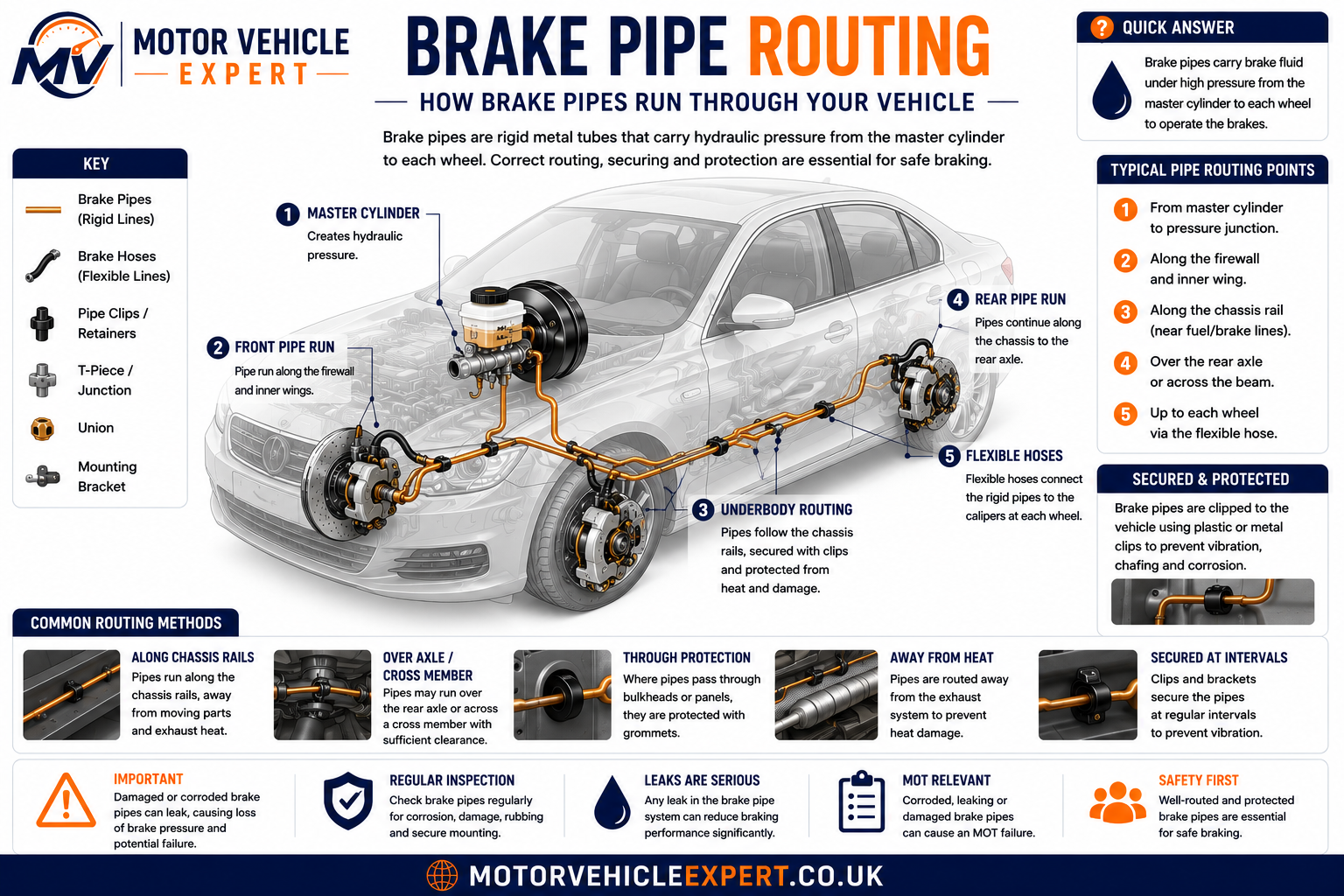
Brake pipes are rigid metal tubes used to carry brake fluid through the fixed parts of the vehicle. When you press the brake pedal, the brake servo assists pedal effort and the brake master cylinder generates hydraulic pressure. That pressure then travels through the brake pipes before reaching flexible brake hoses and brake calipers at each wheel.
Unlike flexible brake hoses, brake pipes are designed to stay fixed to the body or chassis. They are routed along the engine bay, bulkhead, floorpan, chassis rails, rear axle area and inner arches depending on the vehicle design. Because they are exposed underneath the vehicle, they are vulnerable to corrosion, road salt, impact damage and poor previous repairs.
Why Brake Pipes Matter
The braking system depends on sealed hydraulic pressure. If a brake pipe leaks or bursts, pressure can be lost from part of the braking system, resulting in reduced braking performance, longer stopping distances or serious brake failure.
Pipe routing
Brake Pipe Routing Explained
Brake pipe routing varies between vehicles, but the principle is the same. Brake fluid pressure leaves the master cylinder, travels through rigid brake pipes along protected areas of the body or chassis, then passes through flexible brake hoses near the wheels where suspension and steering movement must be allowed.
Engine Bay
Master Cylinder Area
Pipes start near the master cylinder and ABS unit before running towards the vehicle body.
Chassis & Floorpan
Exposed Areas
Long pipe runs are clipped to the underside, where road salt and moisture can collect.
Wheel Arches
Corrosion Hotspot
Rear wheel arches, clips, brackets and unions are common places for corrosion to develop.
Mechanic Tip
Brake pipes should be routed away from exhaust heat, sharp edges and moving components. They must also be secured correctly with clips or brackets to prevent vibration, rubbing and metal fatigue.
Hydraulic system
How Brake Pipes Work
Brake pipes form the rigid hydraulic network that connects the brake master cylinder to the flexible brake hoses at each wheel. Every time the brake pedal is pressed, hydraulic pressure is generated inside the master cylinder and transferred almost instantly through the brake fluid contained inside the brake pipes. Because brake fluid is virtually incompressible, the pressure reaches each brake caliper evenly, allowing the brake pads to clamp the brake discs with considerable force.
Modern vehicles use dual-circuit braking systems, meaning the brake pipes are divided into two separate hydraulic circuits. If one circuit develops a fault, the second circuit can still provide partial braking performance, significantly improving safety compared with older single-circuit systems.
Brake pipes themselves contain no moving parts, but they operate under extremely high hydraulic pressures every time the brakes are applied. This is why corrosion, physical damage, poor repairs or incorrectly manufactured replacement pipes should never be ignored.
Why Brake Pipes Must Remain Sealed
The hydraulic braking system depends entirely on maintaining pressure. Even the smallest leak from a brake pipe can allow brake fluid to escape, reduce hydraulic pressure and dramatically increase stopping distances.
Brake pipe materials
Steel vs Copper-Nickel (CuNiFer) Brake Pipes
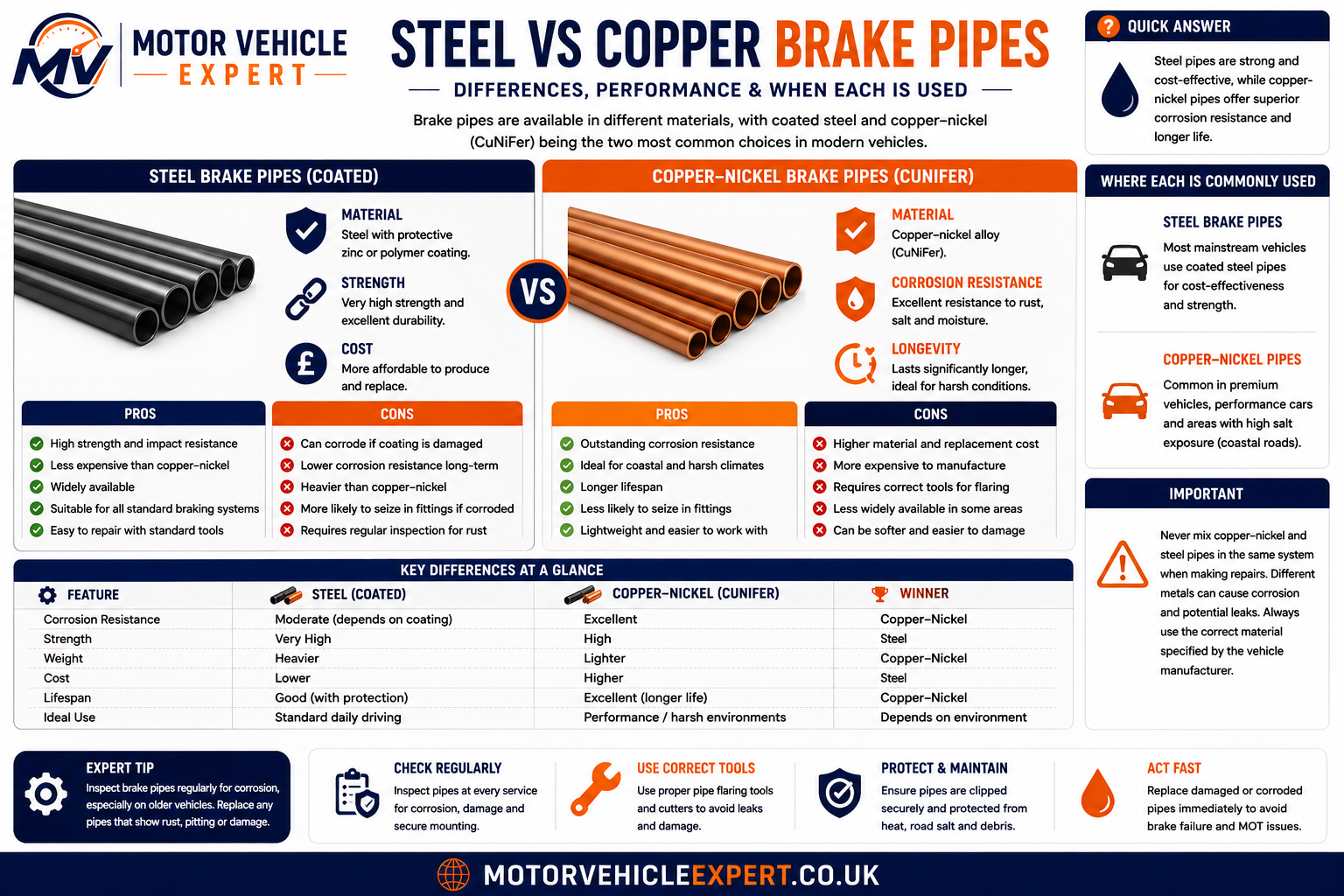
Modern brake pipes are manufactured from materials designed to withstand extremely high hydraulic pressures while resisting corrosion from water, road salt and harsh weather conditions. Although traditional coated steel brake pipes remain common on factory-built vehicles, many replacement brake pipes fitted in the UK are manufactured from copper-nickel alloy, often referred to as CuNiFer, because of its excellent corrosion resistance and ease of installation.
Coated Steel
Factory Standard
Strong and durable but can eventually corrode if protective coatings become damaged or road salt remains trapped against the pipe.
Copper-Nickel
Excellent Corrosion Resistance
Widely used for replacement brake pipes because it resists corrosion extremely well while remaining easy to bend accurately during installation.
Stainless Steel
Specialist Applications
Occasionally used on specialist or performance vehicles where maximum corrosion resistance and long service life are priorities.
Mechanic Insight
Many independent UK workshops now manufacture replacement brake pipes from copper-nickel rather than coated steel because it bends more accurately during installation and offers significantly greater resistance to corrosion caused by winter road salt.
Mechanic Recommendation
Copper-nickel brake pipe has become the preferred replacement material for many UK workshops because it combines excellent corrosion resistance with long service life while fully meeting braking system safety requirements when installed correctly.
Common faults
Common Brake Pipe Problems
Although brake pipes contain no moving parts, they operate in one of the harshest environments underneath the vehicle. Constant exposure to water, grit, road salt, vibration and debris means deterioration can develop gradually over many years before becoming a serious safety issue.
Corrosion
Most Common Fault
Surface corrosion gradually weakens the pipe wall until leaks or bursting become possible under braking pressure.
Fluid Leaks
Immediate Repair
Hydraulic leaks reduce braking pressure and should never be ignored regardless of how small they appear.
Physical Damage
Inspection Required
Impact damage, crushed sections or badly kinked brake pipes restrict hydraulic flow and weaken the pipe structure.
Loose Pipe Clips
Excessive Vibration
Missing clips allow brake pipes to vibrate, rub against other components and eventually wear through.
Poor Previous Repairs
Unsafe Installation
Incorrect unions, poor flaring or badly routed replacement pipes may compromise braking system safety.
Pipe Unions
Corrosion Hotspot
Connections between pipes, hoses and hydraulic components often corrode faster than the pipe itself.
Workshop Advice
Brake pipe corrosion often begins underneath retaining clips where moisture and road salt become trapped. A pipe that looks acceptable from one angle may be heavily corroded underneath, which is why a full inspection is essential.
Corrosion guide
Brake Pipe Corrosion Explained
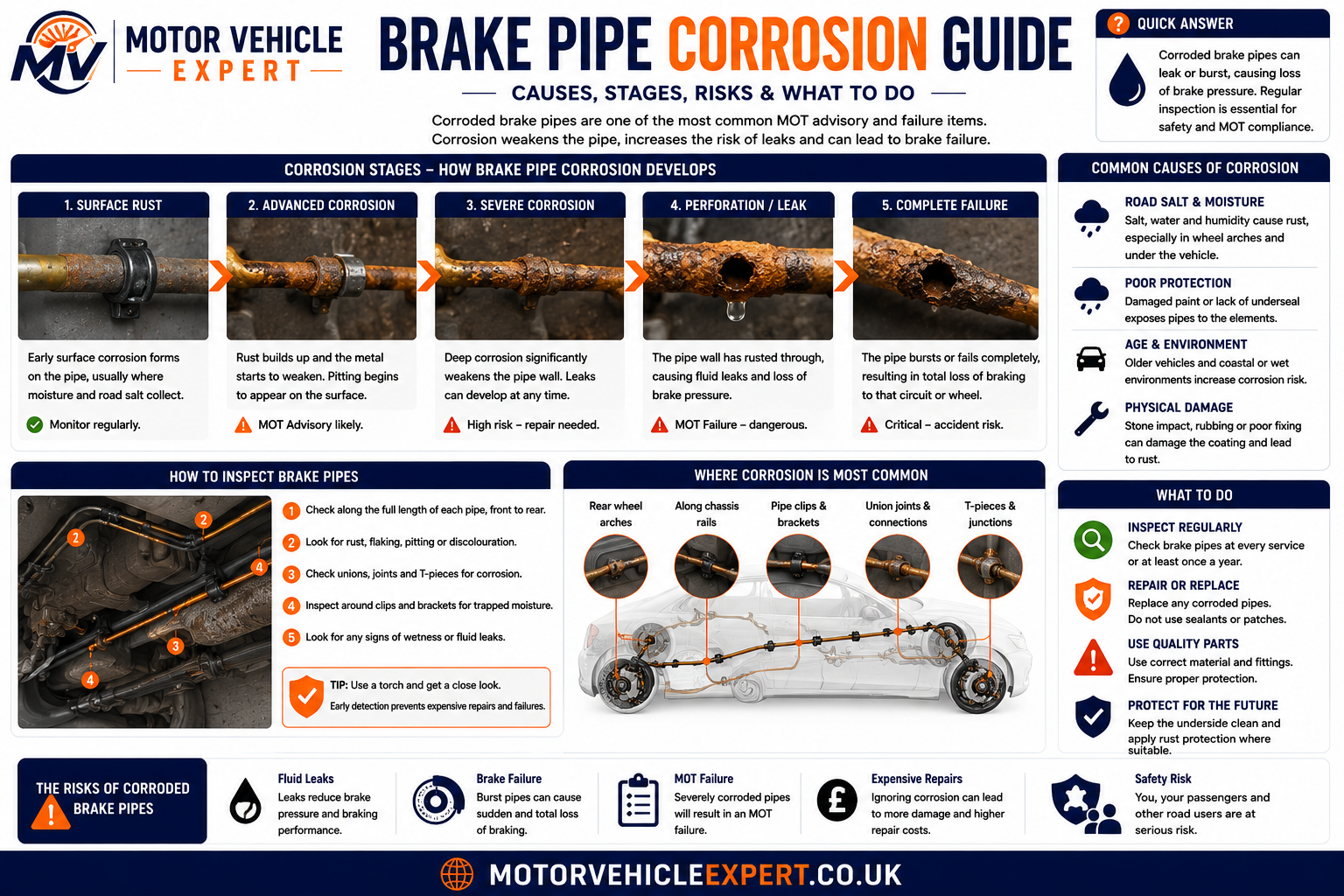
Corrosion is by far the leading cause of brake pipe replacement in the UK. Moisture, winter road salt and trapped dirt gradually attack exposed metal surfaces until the pipe wall becomes dangerously thin. Because corrosion usually develops underneath the vehicle, it often goes unnoticed until an MOT inspection or routine service.
Surface Rust
Monitor
Early surface corrosion should be monitored closely during servicing before it develops further.
Heavy Corrosion
Replacement Likely
Deep rust, flaking metal and pitting indicate the brake pipe is approaching the end of its safe service life.
Fluid Leak
Do Not Drive
Any hydraulic leak from a brake pipe is a serious safety defect requiring immediate professional repair.
Safety Warning
Brake pipes rarely fail without warning. Regular inspections allow corrosion to be identified before hydraulic pressure is lost. Waiting until a brake pipe bursts under heavy braking places both the driver and other road users at significant risk.
Inspection guide
Brake Pipe Inspection Guide
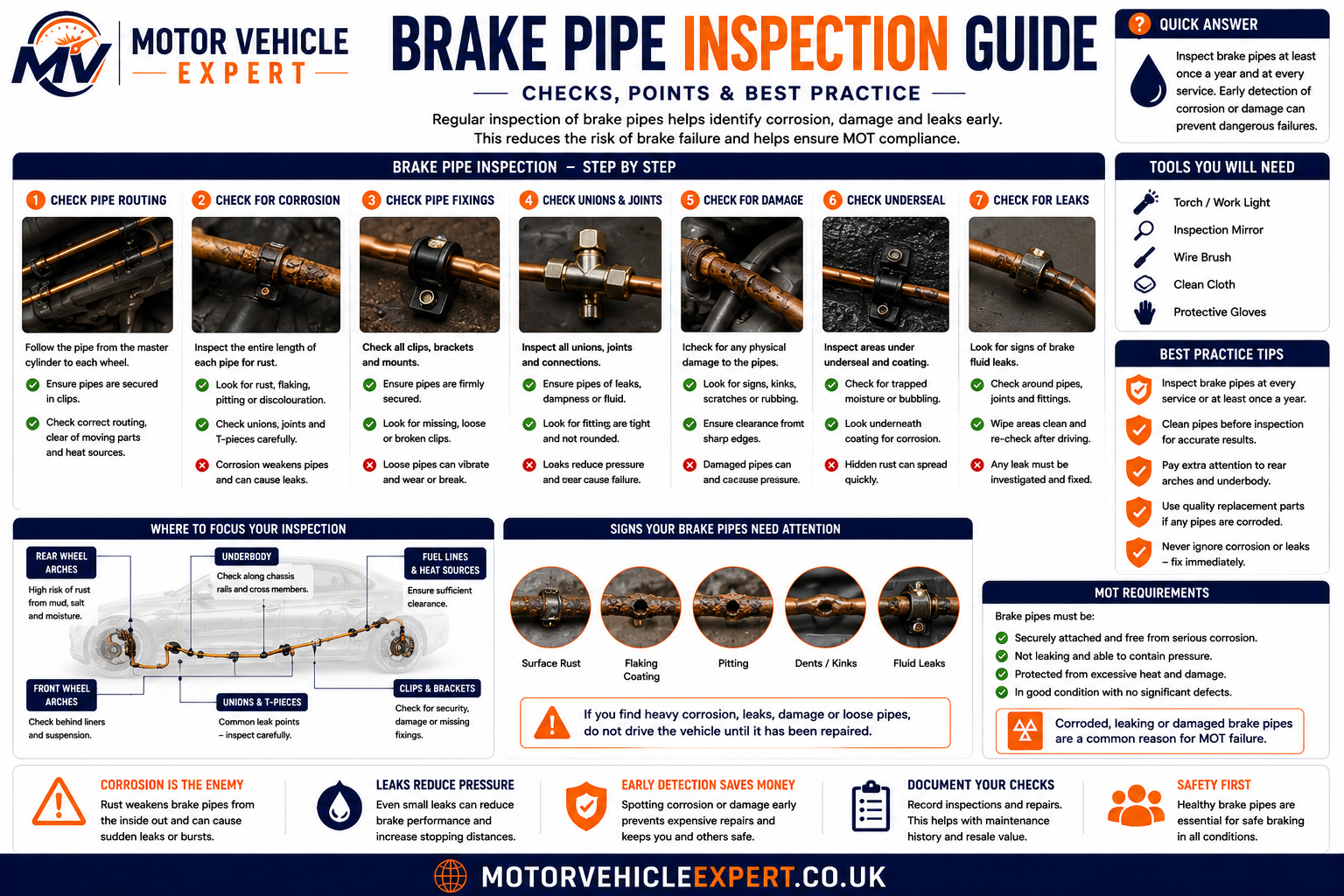
Brake pipes should be inspected during every routine service and before every MOT. Because most brake pipes run underneath the vehicle, corrosion often develops gradually without being noticed by the driver. Regular inspections help identify deterioration before it becomes a dangerous hydraulic leak.
Check The Full Pipe Length
Complete Inspection
Follow every visible brake pipe from the engine bay to each wheel, checking for corrosion, damage or poor previous repairs.
Inspect Pipe Clips
Secure Mounting
Ensure every retaining clip securely supports the brake pipe. Loose pipes can vibrate, rub against bodywork and eventually fail.
Check Pipe Unions
Corrosion Hotspot
Examine every pipe union carefully for corrosion, dampness or signs of hydraulic brake fluid leakage.
Inspect Wheel Arches
Salt Exposure
Rear wheel arches are common corrosion areas because water, mud and road salt become trapped around the brake pipes.
Look For Fluid Leaks
Immediate Repair
Any sign of fresh brake fluid requires immediate investigation before the vehicle is driven again.
Professional Inspection
Annual Check
A professional inspection during servicing often identifies developing corrosion long before it becomes an MOT failure.
Mechanic Tip
Never clean heavily corroded brake pipes using aggressive wire brushes or grinding tools. Removing surface rust can expose dangerously thin metal underneath. If corrosion is severe enough to flake away, replacement is normally the safest option.
Expert guide
Can Brake Pipes Be Repaired Or Must They Be Replaced?
One of the most common questions asked by vehicle owners is whether a corroded brake pipe can simply be repaired instead of replaced. The answer depends entirely on the extent of the damage, the location of the corrosion and whether the remaining brake pipe still meets modern safety standards. Because brake pipes carry hydraulic pressure that can exceed 1,000 psi during heavy braking, even small weaknesses can become dangerous under emergency braking conditions.
Localised damage can sometimes be repaired by replacing only the affected section of brake pipe. Professional technicians manufacture a new section using approved brake pipe material, create the correct double flares and install new hydraulic unions before bleeding the braking system. This approach is only suitable where the remaining brake pipe is in excellent condition and free from corrosion.
However, many vehicles develop corrosion over long sections of brake pipe rather than at a single isolated point. In these situations, replacing only the visibly damaged section may leave other weakened areas hidden beneath protective coatings or mounting clips. For this reason, many garages recommend replacing the complete brake pipe rather than carrying out multiple short repairs.
Modern copper-nickel replacement pipe has become the preferred repair material in many UK workshops because it provides excellent corrosion resistance while remaining easier to bend accurately around the vehicle chassis. Correct routing, secure pipe clips and professionally formed hydraulic flares are just as important as the pipe material itself.
Temporary repairs such as compression fittings, unsuitable pipe connectors or improvised repairs should never be used on hydraulic brake pipes unless specifically approved for the braking system. These repairs may not withstand full braking pressure and can compromise vehicle safety.
Following replacement, the braking system must always be bled correctly using fresh brake fluid to remove trapped air and restore full hydraulic pressure. The completed repair should then be inspected carefully for leaks before the vehicle returns to the road.
Professional Workshop Recommendation
If several areas of corrosion are present or the vehicle has extensive brake pipe deterioration, replacing the complete pipe is usually the safest long-term solution. Although a complete replacement may cost more initially, it significantly reduces the likelihood of further hydraulic failures in the near future.
Minor Local Damage
Section Repair
Small isolated defects may be repaired professionally if the remaining brake pipe is in excellent condition.
Extensive Corrosion
Full Replacement
Widespread corrosion usually makes complete brake pipe replacement the safest and most economical long-term repair.
After Every Repair
Brake Bleeding
The hydraulic braking system must always be bled and tested before the vehicle is returned to service.
Mechanic Advice
Brake pipes are one of the few components where "good enough" repairs are never acceptable. Correct materials, professional flaring, secure routing and proper hydraulic bleeding are essential to restore the braking system to its original level of safety.
MOT guide
Brake Pipes And The UK MOT Test
Brake pipes are classified as safety-critical components and receive close attention during every MOT inspection. Testers examine all visible brake pipes, unions and hydraulic connections for corrosion, damage, leaks, insecure mountings and poor previous repairs. Because brake pipes carry high-pressure hydraulic brake fluid, any defect capable of affecting braking performance can result in an MOT failure.
MOT testers also assess whether corrosion is likely to affect the structural integrity of the brake pipe. Heavy rust close to unions, flexible hoses or mounting clips receives particular attention because these areas experience high hydraulic loads during braking.
Pass
Good Condition
Brake pipes are secure, free from excessive corrosion, undamaged and show no signs of hydraulic fluid leakage.
Advisory
Early Corrosion
Light corrosion or deterioration may receive an advisory if the tester believes the pipe remains structurally sound but should be monitored.
Fail
Dangerous Defect
Excessive corrosion, hydraulic leaks, damaged brake pipes or insecure mountings are likely to result in an MOT failure.
MOT Expert Tip
Many brake pipe MOT failures occur around retaining clips, unions and rear axle sections where corrosion is hidden beneath dirt and protective coatings. Annual inspections help identify these problems before MOT time.
Repair costs
Brake Pipe Replacement Costs UK
Brake pipe replacement costs vary depending on the length of pipe being replaced, the complexity of the routing, the number of hydraulic unions involved and whether complete brake bleeding is required after installation. Vehicles with long chassis-mounted brake pipes generally require more labour than replacing a short front brake pipe.
Single Brake Pipe
£120–£220
Typical UK Cost
Suitable for replacing one damaged or corroded brake pipe including hydraulic bleeding.
Front Brake Pipes
£180–£320
Moderate Labour
Labour varies depending on access around the engine bay, ABS unit and front suspension.
Full Brake Pipe Replacement
£350–£700+
Extensive Repairs
Required where several brake pipes have deteriorated or complete hydraulic pipework replacement is recommended.
Typical UK Brake Pipe Repairs
Replacing brake pipes before severe corrosion develops is considerably cheaper than repairing additional hydraulic components damaged by leaking brake fluid or repeated MOT failures.
Brake Pipe Inspection
£30–£60
Preventative Check
Includes inspection of visible brake pipes, unions, clips and hydraulic connections.
Brake System Bleeding
£50–£90
After Repairs
Hydraulic bleeding removes trapped air after brake pipe replacement or repairs.
Copper-Nickel Upgrade
£250–£500+
Long-Term Value
Replacing older steel brake pipes with copper-nickel pipework improves corrosion resistance and service life.
Cost-Saving Advice
Replacing brake pipes during the early stages of corrosion often prevents repeat labour costs. When several sections show corrosion, replacing complete pipe runs usually offers better long-term value than repairing individual areas over multiple MOTs.
Buying advice
Used Car Buying Checks
Brake pipes reveal a great deal about how a vehicle has been maintained. Cars regularly driven on salted winter roads often develop corrosion underneath long before it becomes visible elsewhere. Spending a few minutes inspecting the brake pipes can prevent expensive repairs after purchase.
When inspecting a used vehicle, brake pipes can reveal how well the underside has been maintained. Heavy corrosion, repeated MOT advisories or poor-quality repairs may indicate that other safety-critical components have also been neglected.
Inspect Underneath
Torch Recommended
Examine as much of the visible brake pipework as possible for corrosion, dampness or poor repairs.
Review MOT History
Previous Advisories
Repeated brake pipe corrosion advisories usually indicate further repairs may soon be required.
Check Service Records
Maintenance Evidence
Look for invoices confirming professional brake pipe replacement or hydraulic brake servicing.
Buyer Tip
Fresh copper-nickel brake pipes fitted professionally are often a positive sign rather than a concern. They usually provide better corrosion resistance than the original factory steel pipes and can improve long-term reliability.
Frequently asked questions
Brake Pipe FAQs
What do brake pipes do?
Brake pipes carry pressurised brake fluid from the brake master cylinder through the hydraulic braking system before connecting to the brake hoses and brake calipers. They allow braking force to reach every wheel safely and efficiently.
Can rusty brake pipes pass an MOT?
Light surface corrosion may receive an advisory, but excessive corrosion that weakens the brake pipe or affects its structural integrity is likely to result in an MOT failure.
Can brake pipes be repaired instead of replaced?
Small sections can sometimes be replaced professionally if the remaining brake pipe is in excellent condition. However, extensive corrosion usually makes complete brake pipe replacement the safest long-term solution.
Are copper brake pipes better than steel?
Copper-nickel brake pipes are highly resistant to corrosion and are widely used throughout the UK as replacement brake pipes. They generally provide a longer service life than traditional coated steel pipes.
How long do brake pipes last?
Service life depends on climate, road salt exposure and vehicle maintenance. On well-maintained vehicles brake pipes can last many years, while cars regularly driven during winter may develop corrosion much sooner.
How much does brake pipe replacement cost in the UK?
Typical repairs range from around £120 for a single brake pipe to more than £700 where several brake pipes require replacement across the vehicle.
Continue Learning
Explore the Complete Braking System Knowledge Centre
Brake pipes carry hydraulic pressure safely from the master cylinder to the braking components at each wheel. Continue exploring our complete UK braking guides covering brake components, hydraulic braking, electronic braking systems, MOT inspections, repair costs and practical driver safety advice.
Brake Components
Hydraulic Braking
Electronic Braking & Warning Lights
MOT & Brake Safety
Brake Repair Costs
Driver Inspection & Safety Guides
Complete your braking knowledge
Brake pipes form the rigid hydraulic network that delivers braking pressure throughout the vehicle, but safe braking depends on every component working together. Continue through the Motor Vehicle Expert Braking System Knowledge Centre to understand brake hoses, the master cylinder, brake servo, brake fluid, ABS, electronic parking brakes, MOT requirements and realistic UK repair costs.
Final thoughts
Final Thoughts
Brake pipes may appear to be simple metal tubes, but they are one of the most important safety components fitted to any vehicle. Every press of the brake pedal depends on these hydraulic lines remaining strong, corrosion-free and capable of containing extremely high hydraulic pressures.
Regular inspections, prompt attention to corrosion and professional repairs using approved materials help ensure the braking system continues operating safely throughout the vehicle's life. Ignoring early corrosion may save money in the short term but often results in larger repairs, MOT failures and increased safety risks later.
Understanding how brake pipes work alongside the master cylinder, brake fluid, brake hoses and brake calipers makes diagnosing braking faults easier and helps drivers make informed maintenance decisions before problems become serious.
Key Takeaway
Brake pipes are designed to last for many years, but they should never be considered maintenance-free. Routine inspections and early replacement of corroded sections remain the safest and most cost-effective way to protect your vehicle's hydraulic braking system.
About this guide
About This Brake Pipe Guide
This guide has been written by the Motor Vehicle Expert Editorial Team using recognised hydraulic braking principles, UK workshop procedures and current MOT inspection standards. It is designed to help UK drivers understand brake pipe construction, recognise early warning signs of corrosion and make informed decisions about servicing and repairs. The information is intended for educational purposes and should not replace a professional inspection where braking faults are suspected.
As the Motor Vehicle Expert braking knowledge cluster expands, this guide will continue to be updated with the latest UK workshop practices, MOT guidance, manufacturer recommendations and hydraulic braking information to ensure UK drivers have access to accurate, up-to-date technical advice.