Quick answer
What Is Brake Fluid?
Brake fluid is a specialised hydraulic fluid that transfers force from the brake pedal to the brake calipers or wheel cylinders. Because brake fluid cannot be compressed under normal operating conditions, it allows your braking system to apply powerful and consistent braking force every time you press the pedal.
Quick Answer
Brake fluid is the hydraulic medium that carries pressure through the braking system. Without clean brake fluid, your brake pedal cannot efficiently transfer force to the brakes, resulting in reduced stopping performance and potentially dangerous brake failure.
Hydraulic Pressure
Primary Function
Transfers brake pedal force instantly through the entire braking system.
High Boiling Point
Heat Resistant
Designed to withstand the extreme temperatures generated during braking.
Lubricates Components
System Protection
Helps protect seals, pistons, valves and internal hydraulic components from wear.
Corrosion Protection
Essential Maintenance
Fresh brake fluid helps prevent corrosion caused by absorbed moisture inside the braking system.
Contents
What's Covered In This Guide
Hydraulic system
How Brake Fluid Works
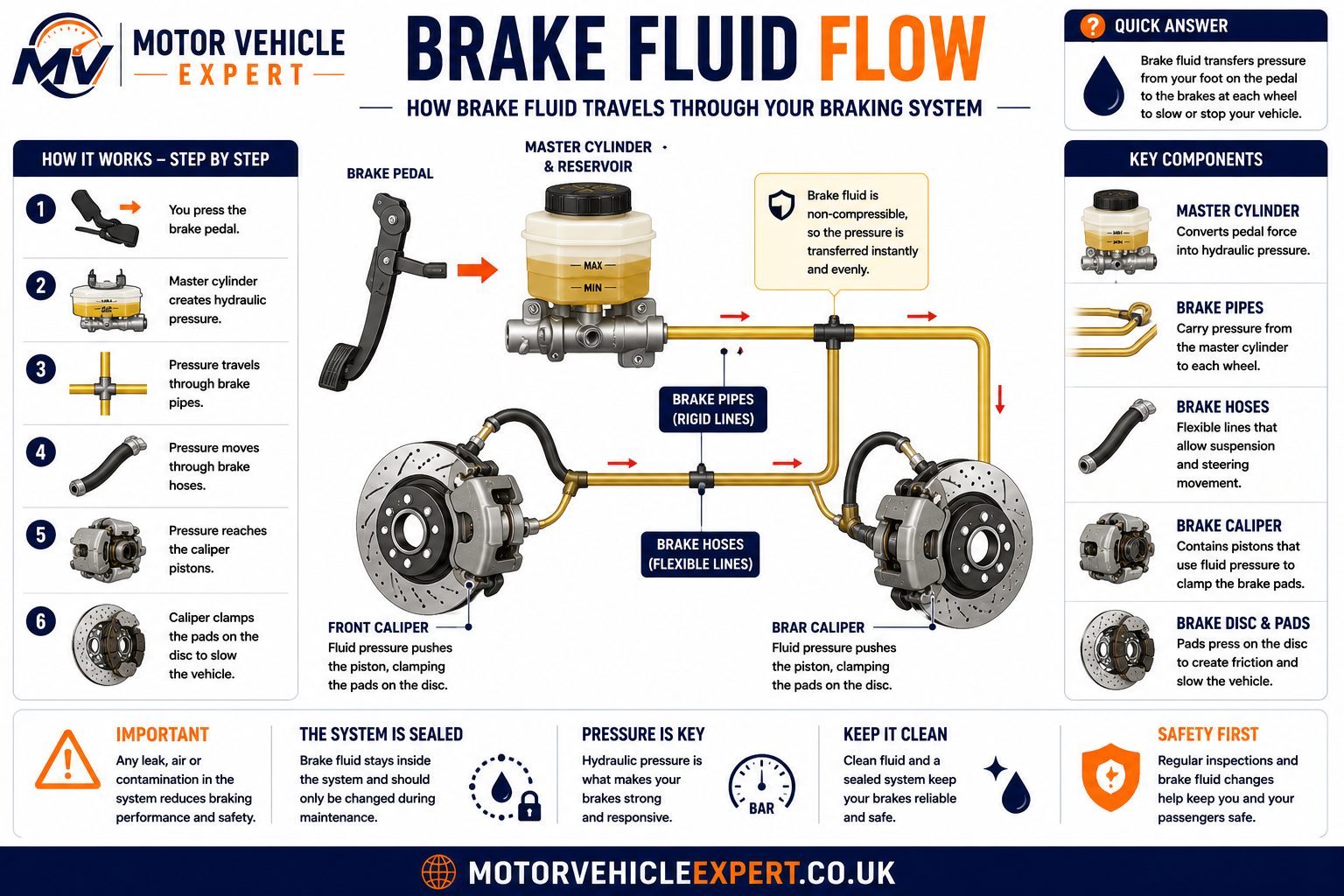
Every time you press the brake pedal, the master cylinder converts your foot pressure into hydraulic pressure. Because brake fluid is virtually incompressible, this pressure travels almost instantly through the brake pipes and flexible brake hoses before reaching the brake calipers. The caliper pistons then clamp the brake pads against the brake discs to slow the vehicle.
Unlike engine oil, brake fluid is not a lubricant for moving engine parts. Its primary role is to transmit hydraulic force while remaining stable under extremely high temperatures. Modern brake systems depend entirely on clean, uncontaminated brake fluid to deliver predictable braking performance.
Why Hydraulic Fluid Is Used
Liquids cannot normally be compressed under braking pressures, making brake fluid ideal for transferring force quickly and evenly throughout the braking system. Even a small amount of trapped air, however, can compress and cause a soft or spongy brake pedal.
Hydraulic flow
How Brake Fluid Travels Through The Braking System
Brake fluid follows a sealed hydraulic circuit from the brake pedal to each wheel. Every component in the system relies on clean fluid to transfer pressure safely and consistently. Understanding this flow also makes diagnosing braking faults much easier.
Master Cylinder
Pressure Source
Converts brake pedal movement into hydraulic pressure.
Brake Pipes & Hoses
Pressure Transfer
Carry hydraulic pressure safely to each brake caliper.
Brake Calipers
Braking Force
Hydraulic pistons clamp the brake pads against the brake discs.
Mechanic Tip
Hydraulic systems only work properly when they remain completely sealed. Even a small brake fluid leak or trapped air bubble can significantly reduce braking efficiency, increase stopping distances and create a soft brake pedal. This is why brake bleeding is essential whenever hydraulic components are replaced.
DOT ratings
Brake Fluid Types Explained
Not all brake fluids are the same. Manufacturers specify different brake fluid grades based on boiling point, hydraulic performance and compatibility with the braking system. Using the wrong specification can reduce braking performance and may damage seals or braking components.
Always Use The Manufacturer's Specification
Most modern UK vehicles use DOT 4 brake fluid, although some require DOT 5.1 for higher performance braking systems. DOT 5 silicone brake fluid should never be mixed with conventional glycol-based brake fluids unless the braking system has been specifically designed for it.
DOT 3
Older Vehicles
Lower Boiling Point
Common on older vehicles. Suitable for lighter braking demands but largely replaced by DOT 4 in modern cars.
DOT 4
Most UK Cars
Recommended
The most commonly specified brake fluid offering excellent braking performance for everyday driving.
DOT 5
Silicone Fluid
Special Applications
Silicone-based fluid that is incompatible with DOT 3, DOT 4 and DOT 5.1 systems unless specifically designed for it.
DOT 5.1
High Performance
Higher Boiling Point
Offers improved heat resistance while remaining compatible with DOT 3 and DOT 4 glycol-based systems.
Heat resistance
Brake Fluid Boiling Point Explained
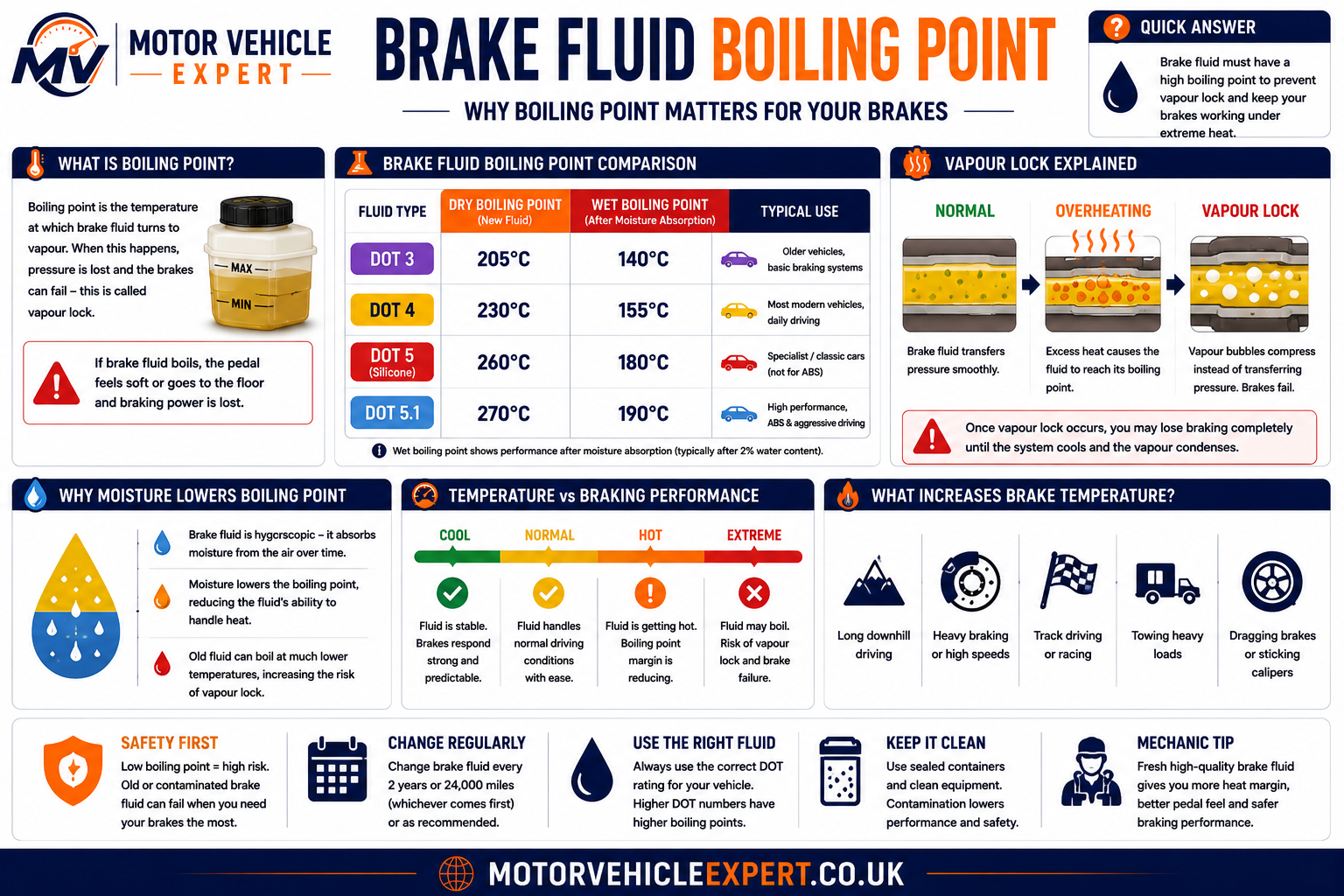
Brake systems generate enormous amounts of heat during heavy braking. If brake fluid boils, vapour bubbles form inside the hydraulic system. Unlike brake fluid, vapour can be compressed, causing the brake pedal to feel soft and significantly reducing braking performance.
Dry Boiling Point
New Fluid
The boiling temperature of fresh brake fluid before it has absorbed moisture.
Wet Boiling Point
Used Fluid
Represents brake fluid after moisture contamination, giving a much lower boiling temperature.
Vapour Lock
Dangerous
Boiling brake fluid creates vapour bubbles that reduce hydraulic pressure and braking effectiveness.
Why Moisture Is Dangerous
Brake fluid naturally absorbs moisture from the atmosphere over time. Even small amounts of water dramatically reduce the boiling point, increasing the likelihood of brake fade during repeated heavy braking or long downhill descents.
Fluid condition
Brake Fluid Contamination
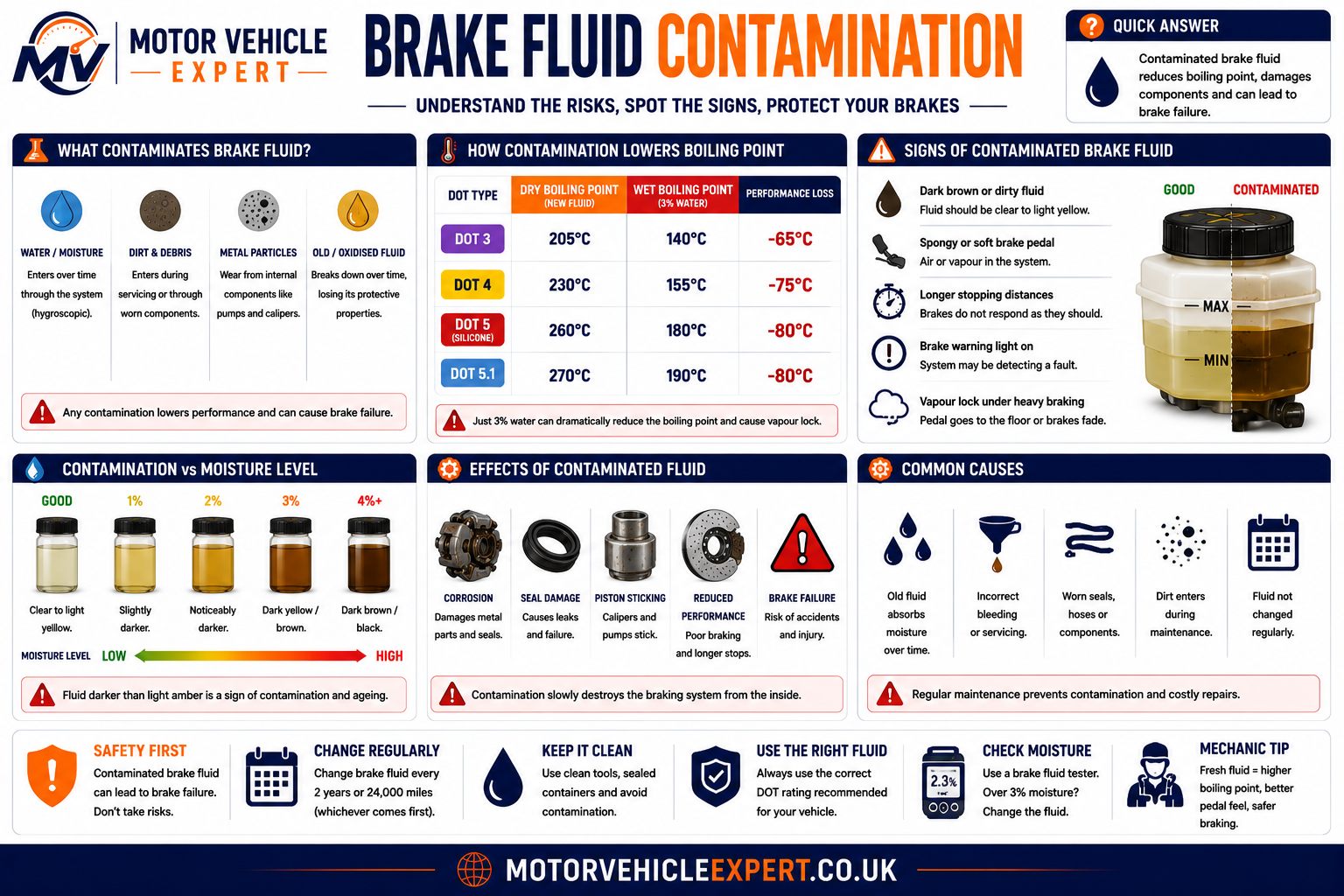
Brake fluid slowly deteriorates throughout its service life. Moisture absorption, microscopic metal particles, deteriorating rubber seals and dirt introduced during servicing gradually reduce braking performance and increase wear inside expensive hydraulic components.
Moisture
Biggest Cause
Water lowers the boiling point and promotes internal corrosion throughout the braking system.
Corrosion
Internal Damage
Rust can damage ABS valves, master cylinders, calipers and other hydraulic components.
Seal Wear
Age Related
Rubber seals gradually deteriorate, allowing contamination and reducing hydraulic efficiency.
Never Judge Brake Fluid By Colour Alone
Dark brake fluid often indicates ageing, but colour alone does not accurately measure moisture content. Professional brake fluid testers provide a much more reliable assessment of brake fluid condition.
Warning signs
Signs Your Brake Fluid Needs Changing
Brake fluid rarely fails without warning. Recognising the early symptoms allows problems to be corrected before braking performance is affected.
Soft Brake Pedal
Immediate Inspection
Often indicates moisture contamination, trapped air or hydraulic leaks.
Longer Stopping Distance
Safety Risk
Reduced hydraulic efficiency can increase the distance required to stop the vehicle safely.
Dark Fluid
Service Due
Dirty or discoloured fluid usually indicates age, contamination or internal component wear.
Brake Warning Light
Investigate Immediately
Warning lights may indicate low fluid level, hydraulic faults or excessive brake wear.
Low Fluid Level
Further Checks Needed
Falling fluid level may simply indicate pad wear, but leaks must always be ruled out.
Brake Fade
Serious Problem
Loss of braking during repeated heavy braking often indicates overheated or contaminated brake fluid.
Inspection guide
How To Inspect Brake Fluid
Checking brake fluid takes only a few minutes and should form part of every routine vehicle inspection. A quick visual inspection can identify low fluid levels, contamination and possible hydraulic problems before they become expensive repairs.
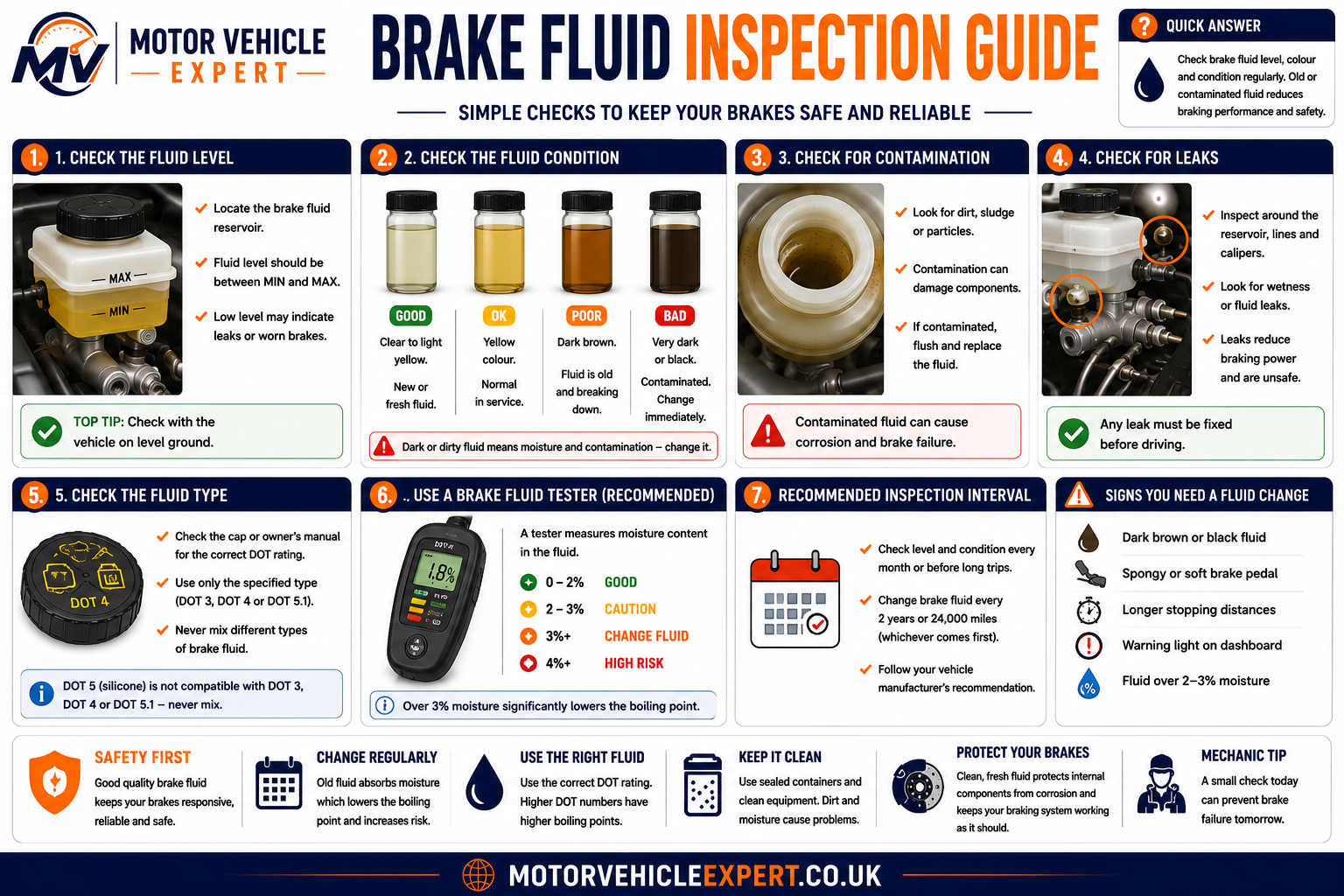
Check Fluid Level
Monthly Inspection
Ensure the brake fluid level sits between the MIN and MAX markings with the vehicle parked on level ground.
Inspect Fluid Condition
Visual Check
Fresh brake fluid is normally clear to light amber. Dark or cloudy fluid often indicates contamination or age.
Look For Leaks
Safety Critical
Inspect the master cylinder, brake pipes, flexible hoses and brake calipers for signs of hydraulic leaks.
Reservoir Cap
Keep Sealed
Always ensure the reservoir cap seals correctly to minimise moisture entering the hydraulic system.
Brake Warning Light
Investigate
Never ignore a brake warning light. Low fluid level may indicate worn brake pads or a hydraulic leak.
Professional Testing
Moisture Check
Electronic brake fluid testers accurately measure moisture content and help determine when replacement is required.
Mechanic Tip
Never leave the brake fluid reservoir open for longer than necessary. Brake fluid is hygroscopic, meaning it naturally absorbs moisture from the atmosphere. Even brief exposure during servicing increases contamination over time.
Maintenance
How Often Should Brake Fluid Be Changed?
Unlike engine oil, brake fluid does not become dirty because of combustion. Instead, it gradually absorbs moisture through microscopic pores in rubber hoses and seals. This lowers the boiling point and increases the risk of internal corrosion, which is why manufacturers specify regular replacement intervals.
Typical UK Service Interval
Most manufacturers recommend replacing brake fluid every two years, although some premium vehicles specify longer intervals. Always follow your vehicle manufacturer's maintenance schedule.
Every 2 Years
Most Common
Suitable for the majority of modern passenger cars using DOT 4 brake fluid.
Heavy Use
Earlier Replacement
Vehicles used for towing, mountain driving or track days may require more frequent brake fluid replacement.
Moisture Test
Best Practice
Professional moisture testing provides a far more accurate indication of brake fluid condition than colour alone.
Compatibility
Can You Mix Different Brake Fluids?
Mixing brake fluids should only be done when the specifications are known to be compatible. Using the wrong brake fluid may reduce braking performance or damage rubber seals and hydraulic components.
DOT 3 + DOT 4
Compatible
Both are glycol-based fluids, although the higher specification should normally be used.
DOT 4 + DOT 5.1
Compatible
DOT 5.1 is also glycol-based and is compatible with most DOT 4 systems.
DOT 5
Never Mix
Silicone-based DOT 5 must never be mixed with glycol-based brake fluids.
Manufacturer Advice
Always Follow
Use only the brake fluid specification listed in the vehicle handbook or workshop information.
Compatibility Warning
If you are unsure which brake fluid is currently in the braking system, do not top it up with another specification. A complete brake fluid replacement is often the safest solution.
Expert advice
Can Brake Fluid Be Reused?
Brake fluid should never be reused once it has been drained from the braking system. Although used brake fluid may still appear clean, it will almost always contain absorbed moisture, microscopic metal particles, rubber debris and other contaminants that reduce braking performance and accelerate wear inside hydraulic components. Reusing old brake fluid is considered poor workshop practice and is not recommended by vehicle manufacturers.
One of the most important characteristics of brake fluid is that it is hygroscopic, meaning it naturally absorbs moisture from the atmosphere over time. This is beneficial because it prevents free water from collecting inside the braking system, but it also means the fluid gradually loses its ability to withstand high temperatures. As moisture content increases, the boiling point falls and the risk of vapour lock becomes much higher during repeated or heavy braking.
During servicing, brake fluid can also become contaminated by dust, corrosion particles, degraded rubber seals and microscopic wear from hydraulic components such as the master cylinder, ABS modulator and brake calipers. Even if these contaminants cannot be seen with the naked eye, they continue circulating through the braking system and may contribute to premature wear or internal corrosion.
Another reason brake fluid should never be reused is the increased likelihood of introducing air into the hydraulic system. Once brake fluid has been exposed to open air, poured into unsuitable containers or transferred between equipment, it becomes much harder to guarantee its cleanliness or moisture content. Air bubbles inside the hydraulic circuit compress under braking, reducing pedal firmness and increasing stopping distances.
Why Professional Workshops Always Use Fresh Brake Fluid
Professional technicians always refill the braking system with fresh brake fluid taken directly from a sealed container. This guarantees the correct specification, minimises moisture contamination and helps maintain the hydraulic performance expected by the vehicle manufacturer.
Moisture Absorption
Never Reuse
Used brake fluid almost always contains more moisture than fresh fluid, reducing its boiling point and braking performance.
Hidden Contamination
Internal Wear
Microscopic dirt, corrosion and rubber particles can circulate through the hydraulic system and damage expensive braking components.
Fresh Fluid
Best Practice
Always refill the braking system using fresh brake fluid that meets the manufacturer's recommended DOT specification.
Brake fluid should also be stored carefully before use. Once a container has been opened, it slowly begins absorbing moisture from the surrounding air. Workshops generally avoid keeping partially used containers for long periods because even unopened brake fluid has a limited shelf life. Using freshly opened fluid helps ensure maximum boiling point, improved corrosion protection and consistent braking performance.
Used brake fluid should never be poured onto the ground, into drains or mixed with engine oil or coolant. It is classified as hazardous automotive waste and should be disposed of responsibly through a licensed recycling facility or local household waste recycling centre that accepts automotive fluids.
Mechanic Advice
The cost of fresh brake fluid is small compared with the price of replacing an ABS hydraulic unit, master cylinder or brake caliper damaged by contaminated fluid. Whenever the braking system is opened for repairs or servicing, always refill it with fresh brake fluid and bleed the system correctly. Reusing old brake fluid may save a few pounds initially but significantly increases the risk of expensive hydraulic repairs later.
Expert guide
Brake Fluid Bleeding Explained
Brake bleeding is one of the most important maintenance procedures performed on a hydraulic braking system. Whenever air enters the system during repairs or brake fluid replacement, it must be removed before the vehicle can be driven safely. Unlike brake fluid, air compresses easily, preventing the braking system from generating full hydraulic pressure.
Professional workshops use pressure bleeding equipment, vacuum bleeding systems or manufacturer-approved electronic bleeding procedures for vehicles fitted with advanced ABS or electronic stability control systems. These methods ensure every air bubble is removed while fresh brake fluid circulates through the master cylinder, brake pipes, flexible hoses and brake calipers.
Two-person brake bleeding remains a popular workshop method. One technician presses the brake pedal while another opens and closes the bleed nipple on each brake caliper in the correct sequence. This allows trapped air and old brake fluid to leave the system without drawing new air inside.
Pressure bleeding has become the preferred method for many garages because it maintains a constant hydraulic pressure throughout the system. It is generally faster, reduces the chance of introducing additional air and often produces a firmer brake pedal after servicing.
Modern vehicles fitted with sophisticated ABS hydraulic control units may require diagnostic equipment to activate internal valves during the bleeding process. Simply bleeding the calipers may not remove trapped air from the ABS module, making manufacturer-approved procedures particularly important.
Bleeding should never be rushed. Allowing the reservoir to run empty during the procedure introduces fresh air into the system, meaning the process must usually be repeated from the beginning. Clean working practices are equally important because even small amounts of dirt or moisture can contaminate new brake fluid.
Mechanic Advice
Whenever hydraulic components such as the master cylinder, brake calipers, brake hoses or brake pipes are replaced, always bleed the braking system using the manufacturer's recommended procedure. Correct bleeding restores a firm brake pedal, removes trapped air and ensures maximum braking performance.
MOT guide
Brake Fluid And The UK MOT Test
Brake fluid itself is not tested for moisture content during an MOT, but the hydraulic braking system is thoroughly inspected. Low brake fluid, hydraulic leaks, poor brake performance and illuminated brake warning lights can all result in MOT advisories or failures depending on the severity of the defect.
Pass
No Hydraulic Defects
Brake fluid level is correct, no leaks are present and the braking system performs safely during testing.
Advisory
Monitor Closely
Early signs of deterioration may receive an advisory, allowing repairs before they become MOT failures.
Fail
Dangerous Defect
Hydraulic leaks, excessively low brake fluid, poor braking performance or serious braking defects will normally result in an MOT failure.
MOT Expert Tip
Never assume topping up low brake fluid fixes the problem. Brake fluid level naturally drops as brake pads wear, but sudden fluid loss usually indicates a hydraulic leak that should be investigated immediately.
Repair costs
Brake Fluid Change Costs UK
Brake fluid replacement is one of the most affordable yet important braking system services. Costs vary depending on the brake fluid specification, workshop labour rates, whether ABS bleeding procedures are required and the manufacturer's recommended servicing process.
Standard Brake Fluid Change
£60–£90
Typical UK Cost
Includes draining old brake fluid, refilling with fresh DOT fluid and bleeding the hydraulic system.
ABS Brake Bleeding
£90–£150
Specialist Procedure
Some vehicles require diagnostic equipment to bleed the ABS hydraulic control unit correctly.
Performance Brake Fluid
£100–£180+
Premium Fluid
High-performance DOT 5.1 or specialist racing brake fluids increase servicing costs.
Typical UK Brake Fluid Service Costs
Replacing brake fluid at the recommended service interval is significantly cheaper than repairing corrosion inside the master cylinder, ABS pump or brake calipers caused by contaminated brake fluid.
Brake Fluid Test
£10–£25
Preventative Check
Electronic moisture testing quickly determines whether the brake fluid remains serviceable.
Hydraulic System Bleeding
£40–£80
Labour Only
Often required after replacing brake hoses, calipers, master cylinders or brake pipes.
Complete Brake Fluid Service
£80–£150
Best Value
Includes new brake fluid, bleeding, inspection and hydraulic system health check.
Cost-Saving Mechanic Advice
Regular brake fluid replacement is one of the cheapest ways to protect expensive braking components. Ignoring contaminated brake fluid can eventually lead to corrosion inside the ABS unit, master cylinder and brake calipers, increasing repair costs significantly.
Buying advice
Used Car Buying Checks
When inspecting a used vehicle, the condition of the brake fluid and hydraulic braking system provides valuable clues about how well the car has been maintained. Brake servicing is often overlooked, making it an important area to inspect before purchasing.
Fluid Colour
Service Indicator
Extremely dark brake fluid may suggest servicing has been neglected.
Service History
Look For Evidence
Check invoices for scheduled brake fluid replacement rather than assuming it has been completed.
Brake Pedal Feel
Road Test
A firm, consistent brake pedal usually indicates a healthy hydraulic braking system.
Buyer Tip
If there is no evidence of a recent brake fluid replacement, budgeting for a full brake fluid service immediately after purchase is inexpensive insurance for the entire braking system.
Frequently asked questions
Brake Fluid FAQs
What does brake fluid actually do?
Brake fluid transfers hydraulic pressure from the brake pedal through the master cylinder, brake pipes, brake hoses and brake calipers. Without brake fluid, the braking system cannot generate the force required to stop the vehicle safely.
How often should brake fluid be changed?
Most manufacturers recommend replacing brake fluid every two years, although some vehicles specify different intervals. Always follow your manufacturer's service schedule and replace contaminated brake fluid whenever necessary.
Can old brake fluid damage the braking system?
Yes. Old brake fluid absorbs moisture which lowers the boiling point and promotes corrosion inside expensive components including the ABS unit, master cylinder and brake calipers.
Can I top up brake fluid instead of replacing it?
Topping up should only be done if the correct brake fluid specification is used and the reason for the low level is understood. Simply topping up contaminated brake fluid does not restore its boiling point or remove absorbed moisture.
Can brake fluid fail an MOT?
Brake fluid itself is not analysed during the MOT, but hydraulic leaks, low fluid level, poor braking performance or illuminated brake warning lights can all contribute to an MOT failure.
Can I mix DOT 3, DOT 4 and DOT 5 brake fluids?
DOT 3, DOT 4 and DOT 5.1 are glycol-based fluids and are generally compatible. DOT 5 silicone brake fluid should never be mixed with glycol-based brake fluids unless the braking system has been specifically designed for it.
Continue Learning
Explore the Complete Braking System Knowledge Centre
Brake fluid is the hydraulic heart of every modern braking system. Continue exploring our detailed UK guides covering brake components, hydraulic braking, electronic braking systems, MOT inspections, repair costs and practical driver safety advice.
Brake Components
Hydraulic Braking
Electronic Braking & Warning Lights
MOT & Brake Safety
Brake Repair Costs
Driver Inspection & Safety Guides
Complete your braking knowledge
Brake fluid transfers hydraulic pressure throughout the braking system, but safe stopping depends on every component working together. Explore the complete Motor Vehicle Expert braking knowledge centre to understand brake pads, brake discs, calipers, hydraulic components, ABS, electronic braking systems, MOT requirements and typical UK repair costs.
Final thoughts
Final Thoughts
Brake fluid is often overlooked because it cannot be seen working, yet it is one of the most important fluids in any vehicle. Every press of the brake pedal depends on clean, uncontaminated hydraulic fluid to transfer pressure quickly and consistently throughout the braking system.
Replacing brake fluid at the recommended interval is inexpensive, improves braking performance and helps protect expensive components including the ABS unit, master cylinder, brake pipes, brake hoses and brake calipers from premature wear and corrosion.
Understanding how brake fluid works, recognising the warning signs of contamination and following the correct maintenance schedule will help keep your vehicle safer, reduce repair costs and improve long-term braking reliability.
Key Takeaway
Fresh brake fluid is one of the simplest and most cost-effective investments you can make in your vehicle's safety. If your brake fluid has not been replaced within the manufacturer's recommended interval, arranging a professional brake fluid service should be considered a priority.
About this guide
About This Brake Fluid Guide
This guide has been produced by the Motor Vehicle Expert Editorial Team using recognised braking system principles, UK servicing guidance and professional workshop experience. It is intended to help UK drivers understand brake fluid, identify common hydraulic braking problems and make informed maintenance decisions. Information is provided for educational purposes and should not replace a professional inspection where safety-critical faults are suspected.