
Brake safety guide

Brake Warning Signs

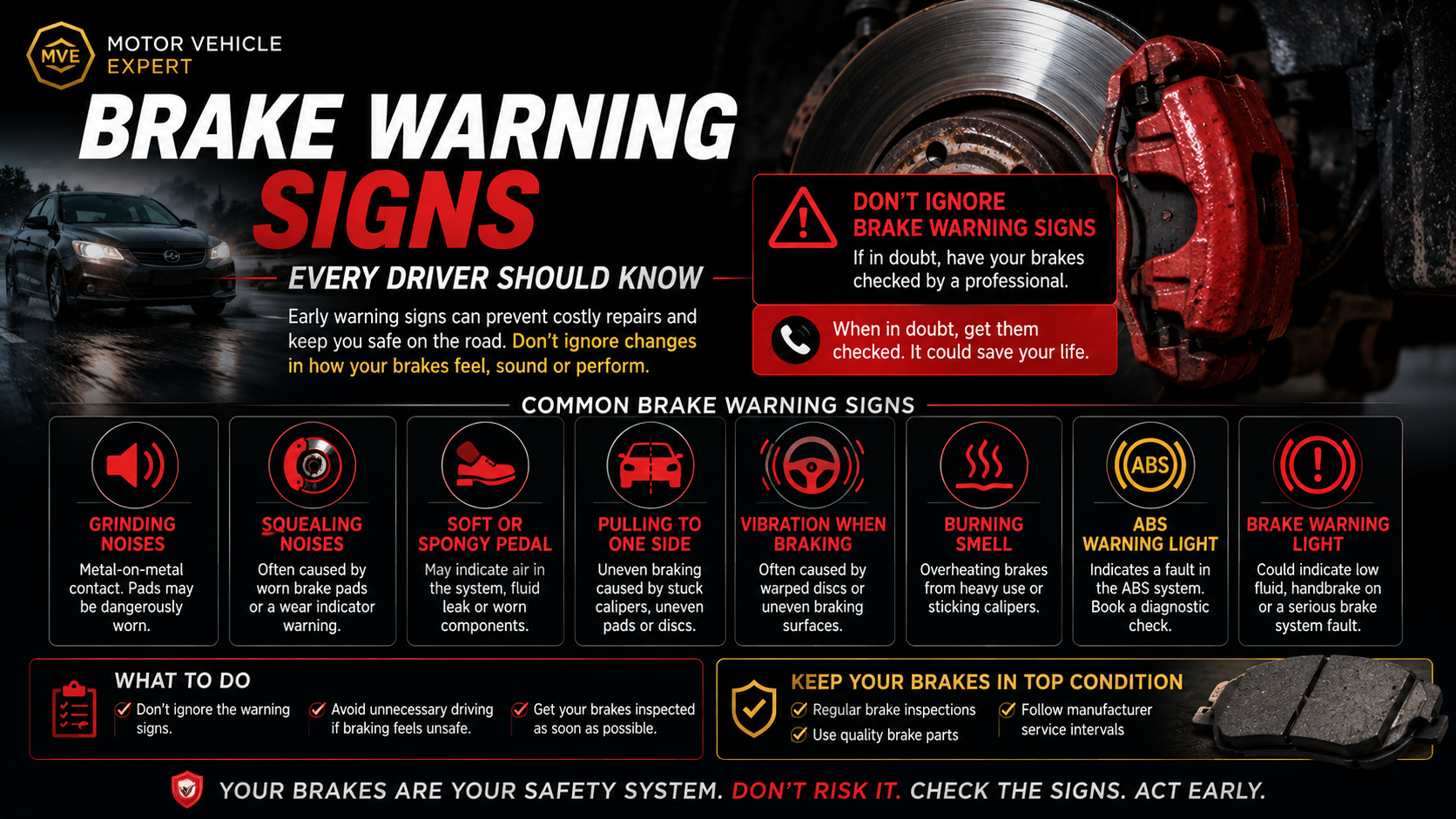
Brake problems can become dangerous quickly. Grinding, squealing, vibration, soft pedal feel, ABS warnings or pulling under braking should never be ignored. This UK mechanic-style guide explains the warning signs drivers should take seriously.

Brake warning signs and brake safety diagnostic guide
Quick answer

What brake warning signs should you not ignore?

Common brake warning signs include grinding, squealing, a soft or sinking pedal, vibration when braking, the car pulling to one side, burning smells, hot wheels and brake or ABS dashboard warnings.

If braking feels weak, the pedal sinks, the car pulls sharply, brake fluid is leaking or you hear heavy grinding, stop driving as soon as it is safe and arrange inspection.

Warning signs

Main brake warning signs

Different brake symptoms point to different faults. Noise, pedal feel, pulling, vibration, heat and dashboard lights all matter.

Noise

Squealing brakes

Can be caused by worn pads, brake dust, glazing, contamination or pad wear indicators.

Pedal feel

Soft or spongy pedal

May suggest air in the system, low brake fluid, a leak or a hydraulic braking fault.

Car pulls when braking

Can be caused by uneven braking, sticking calipers, tyres, suspension or alignment issues.

Pulling guide →

Brake warning light

A dashboard brake warning should be taken seriously, especially with poor pedal feel.

Brake light guide →

ABS warning light

Normal braking may still work, but anti-lock braking assistance may be unavailable.

ABS guide →

Burning smell or hot wheel

A hot smell near a wheel can suggest dragging brakes, a sticking caliper or overheated components.

Hot smell guide →

Longer stopping distance

If the car takes longer to stop, avoid driving normally until the brakes are checked.

Urgent

When brake symptoms are more urgent

  • !The brake pedal sinks, feels soft or travels much further than normal.
  • !The car pulls sharply to one side when braking.
  • !You hear grinding, scraping or metal-on-metal brake noise.
  • !The brake warning light appears with reduced braking performance.
  • !You smell burning or notice smoke or excessive heat near a wheel.
  • !You can see brake fluid leaking near a wheel or under the vehicle.
Common causes

What can cause brake warning signs?

Not every braking symptom is caused by the pads. Calipers, discs, tyres, suspension, fluid and ABS faults can also be involved.

Sticking caliper

Can cause heat, burning smells, pulling and uneven pad wear.

Next checks

What to check next

Start with the exact symptom. A noise, vibration, warning light or soft pedal does not always mean the same repair.

Notice the exact symptom

Noise, vibration, pulling, pedal feel and warning lights all point to different causes.

Check dashboard warnings

Brake, ABS and traction lights can help narrow down the fault.

Look for fluid leaks

Wet patches near the wheels or under the car should be treated seriously.

Do not ignore grinding

Grinding can quickly turn a pad replacement into a pads-and-discs repair.

Avoid guessing parts

Pads, discs, calipers, tyres and suspension can all create similar symptoms.

Arrange inspection

Braking faults are safety-related, so proper inspection is usually the safest next step.

MOT and costs

Brake problems, repair costs and MOT results

Brake faults can affect safety, repair costs and MOT results. Worn pads, poor braking performance, leaking components, warning lights and damaged brake parts can all create MOT problems.

If brake symptoms are caught early, the repair may be cheaper. If grinding, sticking calipers or worn discs are ignored, the final bill can increase.

FAQs

Brake warning sign questions

Common questions UK drivers ask when brakes make noise, feel different or show a warning light.

What is the most serious brake warning sign?

A soft or sinking brake pedal, visible brake fluid leak, weak braking or grinding noise should be treated as urgent.

Can grinding brakes be dangerous?

Yes. Grinding can mean the pads are badly worn and braking performance may be reduced.

Can worn brake pads trigger a warning light?

Yes, some vehicles have brake pad wear sensors or brake warning systems.

Why does my car shake when braking?

Brake disc issues are common, but wheel, tyre and suspension faults can also cause vibration.

Can brake warning signs fail an MOT?

Yes. Brake defects, poor braking performance, warning lights and worn components can affect MOT results.

Should I drive with brake warning signs?

If braking feels abnormal, the warning light is on, grinding is present or fluid is leaking, avoid driving and get the car inspected.

Motor Vehicle Expert publishes practical UK-focused vehicle diagnostics, maintenance, MOT, used car and repair cost guidance based on common driver symptoms and real-world garage questions.