
MOT brake guide

Can Brake Pads Fail MOT?

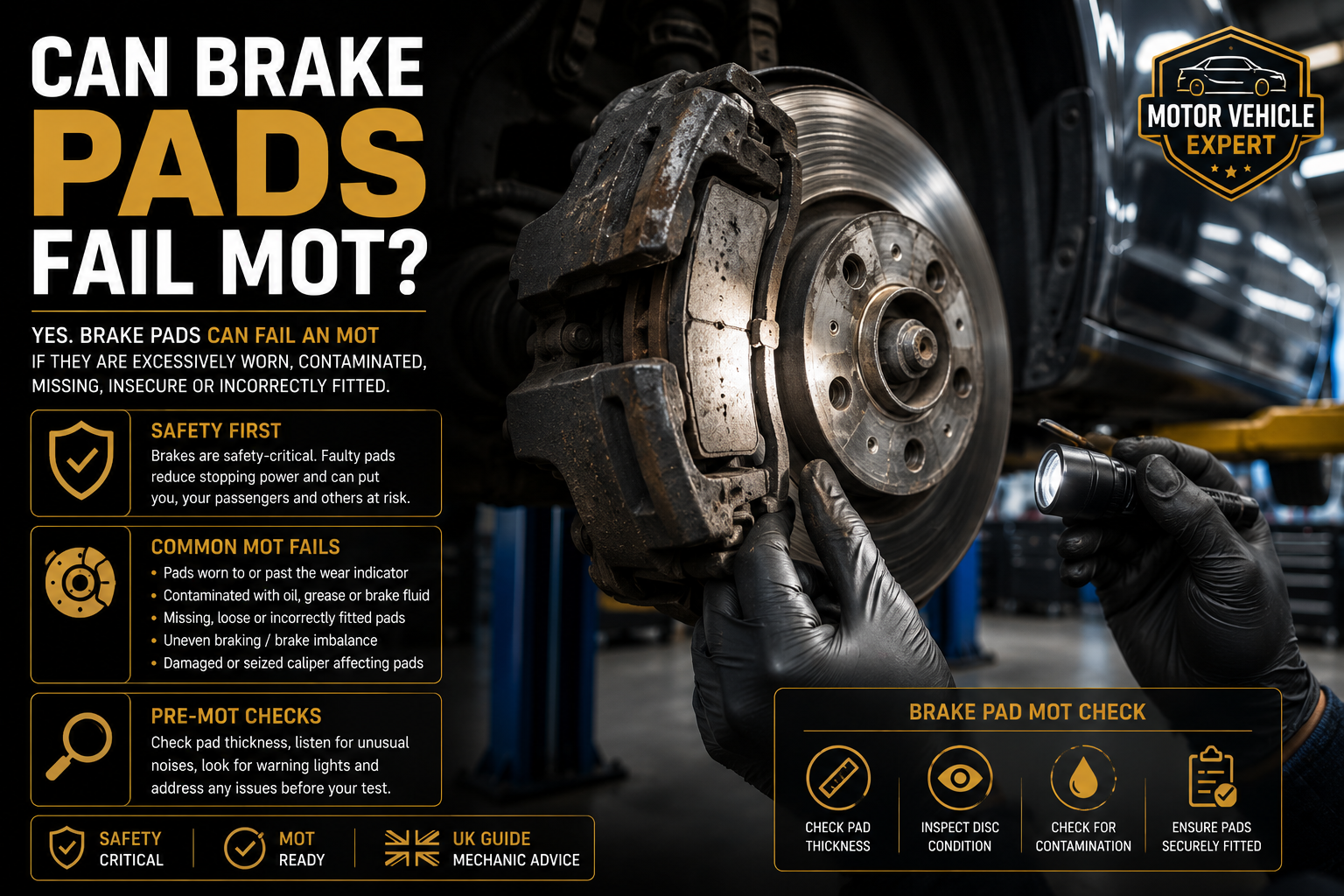
Yes, brake pads can fail an MOT in the UK if they are excessively worn, contaminated with oil or grease, missing, or incorrectly fitted. Because brakes are a safety-critical system, worn brake pads should be checked before the test rather than left until the MOT result.

Quick answer

Brake pads can fail an MOT if they are worn down to the wear indicator, below the minimum acceptable thickness, contaminated with oil or grease, missing, or incorrectly mounted.

An illuminated brake pad wear indicator by itself is not listed as a reason for MOT failure, but the actual pad condition still matters. If the pads are badly worn or unsafe, the vehicle can fail.

When brake pads can fail an MOT

The MOT inspection manual for cars and passenger vehicles lists brake lining and pad defects under the brakes section. Worn, contaminated, missing or incorrectly fitted pads can be recorded as major or dangerous defects depending on severity.

  • !Worn to wear indicator: usually a major defect.
  • !Worn below 1.5mm: classed as dangerous.
  • !Contaminated with oil or grease: usually a major defect.
  • !Missing or incorrectly mounted: classed as dangerous.

Brake discs and brake performance can also affect the MOT, so brake pads are not the only brake-related item checked.

Signs your brake pads may fail or need replacing

Squealing noise

Some pads have wear indicators that make noise when the pad is very worn.

Grinding sound

Grinding can mean the pad material is badly worn and metal contact may be occurring.

Brake warning message

A warning light does not automatically prove failure, but it should be checked.

Longer stopping distance

Reduced braking performance may point to worn pads, discs or other brake faults.

Pulling under braking

Uneven braking can suggest brake imbalance, sticking components or pad issues.

Visible thin pads

If you can see very little pad material through the wheel, arrange inspection.

Pre-MOT brake pad checks

  • 1Listen for squealing, scraping or grinding when braking.
  • 2Look through the wheels for obvious pad wear if visible.
  • 3Check whether the brake pedal feels normal and firm.
  • 4Look for brake fluid leaks or oily contamination near wheels.
  • 5Do not ignore brake warning lights or warning messages.
  • 6Have brakes inspected before the MOT if there is any noise or poor braking feel.

Can brake discs also fail the MOT?

Yes. Brake discs or drums can fail if they are significantly and obviously worn, insecure, fractured, missing or contaminated. A disc being below a manufacturer’s recommended limit is not automatically a fail by itself, but serious visible wear or unsafe condition can be.

Brake pads and discs should be judged together. Replacing pads on badly worn or damaged discs may not solve the underlying braking problem.

Brake pad replacement cost before MOT

Front brake pads

Often lower cost than full pad and disc replacement, but price depends on vehicle and parts.

Rear brake pads

Costs vary, especially where electronic parking brake systems are involved.

Pads and discs

More expensive, but sometimes necessary if discs are worn, scored or damaged.

For more detail, read the brake pad replacement cost UK guide.

Frequently asked questions

Can worn brake pads fail an MOT?

Yes. Pads worn to the wear indicator or below the minimum acceptable thickness can fail.

Is a brake pad warning light an MOT fail?

The warning light itself is not normally the reason, but the actual pad condition can still fail.

Can contaminated brake pads fail?

Yes. Pads contaminated with oil or grease can be an MOT defect.

Should I replace pads before the MOT?

If they are very worn, noisy or close to the wear limit, replacing them before the test is sensible.

Can brake pads pass but still get an advisory?

Yes. Pads may pass but receive an advisory if they are worn and likely to need attention soon.

Can bad brakes be dangerous?

Yes. Brake defects can affect stopping distance and vehicle control, so they should not be ignored.