
Quick answer
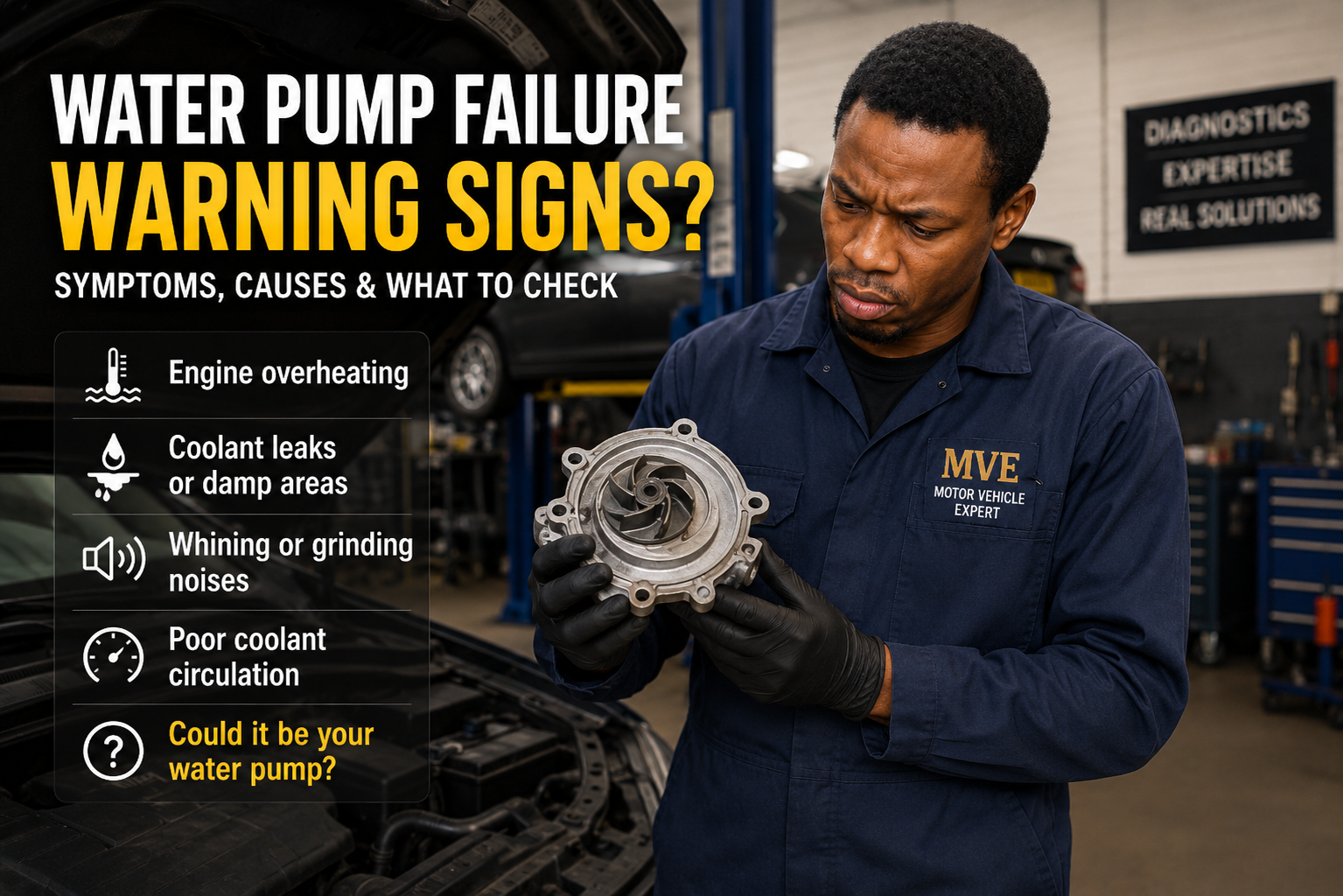
A failing water pump can cause engine overheating, coolant loss, whining or grinding noises, poor heater performance, bubbling coolant, unstable temperature readings and dried coolant residue around the pump, pulley, belt or timing cover area.
If the temperature gauge rises, the coolant warning light appears, steam comes from the engine bay or coolant is leaking badly, stop driving and let the engine cool. Never open the coolant cap while the engine is hot.
- !Stop driving if overheating starts or steam appears.
- ✓Whining noise + coolant loss can strongly point towards pump bearing or seal failure.
- !Cold heater + overheating may suggest poor coolant circulation.
The first time I experienced water pump failure
One of the earliest signs I noticed on an older car was inconsistent overheating combined with a faint coolant smell after longer drives.
At first the symptoms seemed random. Sometimes the temperature would stay normal, then suddenly rise in traffic or during motorway driving. The heater also occasionally changed temperature without warning.
I initially suspected the thermostat because the overheating was inconsistent, but later I noticed dried coolant staining near the belt side of the engine together with a slight whining noise.
That experience taught me how difficult water pump faults can be to identify early because they often imitate thermostat, radiator or coolant-level problems before complete failure happens.
If coolant circulation becomes weak or stops completely, overheating damage can happen extremely quickly even if the coolant level still appears normal.
What does the water pump do?
The water pump pushes coolant around the engine so heat can be carried away to the radiator. It also helps send hot coolant through the heater matrix, which is why a circulation fault can affect both engine temperature and cabin heat.
Some pumps are driven by the cambelt, some by an auxiliary belt, and some modern vehicles use electric water pumps. The symptoms can be similar, but the repair job can be very different depending on the engine layout.
What water pump failure looks like in real life
Gauge climbs under load
The engine may run hotter on hills, motorways or long drives because coolant flow cannot keep up.
Overheating while driving →Coolant drops slowly
A pump seal can seep when hot, leaving staining before it becomes a proper drip.
Coolant loss guide →Whine from belt side
A worn bearing can make a whining, grinding or rough noise that changes with engine speed.
Heater goes cold
Poor circulation or low coolant can stop hot coolant reaching the heater matrix properly.
Heater blows cold then hot →Coolant smell after driving
Leaking coolant can land on hot engine parts and evaporate before it reaches the ground.
Coolant smell guide →Temperature rises then drops
Weak circulation, trapped air or low coolant can make the gauge behave unpredictably.
Temperature gauge guide →Common water pump failure symptoms
Engine overheating
If coolant is not being moved properly, the engine cannot get rid of heat fast enough.
Overheating causes →Coolant leak near pump
A worn seal, gasket or housing can leak coolant around the pump area.
Coolant leak cost →Whining or grinding noise
Bearing wear can create noise from the pulley, belt or pump area.
Heater not hot
Poor coolant circulation can reduce heat through the heater system.
Heater not hot guide →Coolant bubbling
Poor circulation can create hot spots and bubbling, although head gasket faults can also cause this.
Bubbling coolant guide →Gauge goes up and down
Temperature movement can happen when coolant flow is weak, coolant is low or air is trapped.
Gauge fluctuation guide →Coolant leak signs from a water pump
- !Coolant dripping from the front or side of the engine.
- !Pink, blue, green, orange or white crusty residue near the pump.
- !Sweet coolant smell after driving.
- !Coolant level drops again after topping up.
- !Wetness around the belt, pulley, timing cover or engine mount area.
- !Steam or damp patches after parking.
- !Undertray wet but no clear puddle on the ground.
A small water pump leak can be hard to spot because the coolant may run down the engine, collect on the undertray or evaporate on hot parts. Dried coolant marks are often the clue.
How a bad water pump causes overheating
A water pump can fail by leaking, wearing its bearing, slipping on its drive, losing impeller efficiency or seizing. When coolant flow drops, heat stays in the engine instead of being carried to the radiator.
Overheats at idle
Weak circulation can show up when the car is sitting in traffic, especially if coolant is low as well.
Idle overheating guide →Overheats while driving
If the pump cannot circulate enough coolant under load, the temperature may rise on hills, motorways or long journeys.
Driving overheating guide →Heater blows cold while engine is hot
This can happen when coolant is low, air is trapped or the pump is not moving coolant through the heater matrix.
Coolant boils or bubbles
Poor flow can create hot spots. Bubbling can also be caused by airlocks, pressure faults or head gasket trouble.
Head gasket symptoms →Water pump noise symptoms
A noisy water pump usually points to bearing wear, pulley movement or belt-side trouble. The noise often comes from the front of the engine and may rise with engine speed.
- ✓Whining from the front or side of the engine.
- ✓Grinding or rumbling bearing noise.
- ✓Noise changes when the engine revs rise.
- ✓Coolant leak appears near the same area.
- ✓Belt or pulley area looks wet, stained or crusty.
- ✓Pulley has play or wobble when inspected by a mechanic.
Do not ignore a loud grinding noise around a belt-driven water pump. If the pump seizes or the belt fails, the repair can become much more serious.
Cambelt failure guide →Water pump or thermostat fault?
More likely water pump
Coolant leak near the pump, whining noise, pulley-area staining, poor heater flow, overheating under load or visible movement/noise from the pump area.
More likely thermostat
Engine takes too long to warm up, temperature stays low, or the engine suddenly overheats because coolant cannot flow to the radiator properly.
Thermostat guide →In real diagnostics, the thermostat, water pump, radiator, coolant level and pressure cap are often checked together because one symptom can look like another.
What to check first
1. Let the engine cool
Never open the coolant cap while the engine is hot. A hot cooling system can be pressurised.
2. Check coolant level
Low coolant can cause overheating and may be the first sign of a water pump leak.
3. Look around the pump area
Check for dried coolant, staining, wetness or crusty marks around the pump, belts, pulleys and timing cover.
4. Listen from the belt side
A worn pump bearing may whine, grind or rumble, especially as engine speed changes.
5. Watch the heater
A heater that turns cold while the engine is hot can suggest low coolant, airlocks or poor circulation.
6. Book pressure and flow checks
If coolant drops or temperature rises again, proper testing is safer than guessing parts.
How a garage confirms water pump failure
Pressure test
A cooling system pressure test can reveal leaks around the pump seal, housing or gasket.
Visual inspection
The pump area, pulley, belt, timing cover and surrounding parts are checked for staining or wetness.
Bearing and pulley check
A mechanic may check for roughness, play, wobble or noise from the pump bearing.
Temperature and flow checks
The system may be checked for poor circulation, blocked radiator flow or thermostat faults.
Bleeding check
Trapped air can mimic pump problems, so the system may need proper bleeding.
Head gasket check if needed
If overheating and bubbling continue, combustion gas testing may be needed.
When to stop driving
- !The temperature gauge reaches the red.
- !The coolant warning light appears.
- !Coolant is leaking heavily.
- !Steam appears from the engine bay.
- !The heater blows cold while the engine is hot.
- !The water pump area makes a loud grinding noise.
- !The engine loses power, knocks, smells hot or runs rough.
A failed water pump can cause rapid overheating. Continuing to drive can damage the head gasket, cylinder head, hoses and engine seals.
Water pump replacement cost in the UK
Water pump replacement cost depends mainly on access and how the pump is driven. A simple auxiliary-belt-driven pump is usually easier than a cambelt-driven pump hidden behind covers.
Auxiliary belt driven pump
Usually less labour if access is clear, but still depends on the vehicle layout.
Cambelt-driven pump
Often replaced with the cambelt because the same labour area is already open.
Cambelt guide →Electric water pump
Can be more expensive on some modern vehicles and may need diagnostic checks.
Coolant refill and bleed
After pump replacement, the cooling system usually needs fresh coolant and proper bleeding.
Related belts and seals
Gaskets, seals, belts, pulleys or tensioners may be replaced at the same time.
Overheating damage checks
If the car overheated badly, extra checks may be needed before fitting parts.
For wider repair budgeting, read coolant leak repair cost UK and car repair costs guide UK.
Do water pumps fail suddenly?
Some water pumps fail suddenly, but many give warning signs first. A slight coolant smell, small crusty leak, faint bearing whine or occasional temperature movement can come before a proper breakdown.
The problem is that once coolant circulation stops, the engine can overheat quickly. That is why repeated coolant loss, pump noise or temperature movement should be checked early.
Best mechanic-style advice
Do not diagnose a water pump by overheating alone. Check coolant level, leaks, pump noise, radiator flow, thermostat operation and pressure problems. A car can overheat from several cooling faults, and replacing the wrong part wastes money.
If there is coolant staining near the pump and a bearing noise from the same area, that is a stronger clue. If there is overheating with no leak or noise, the pump still needs checking, but so do the thermostat, radiator, airlocks and head gasket signs.
Related coolant and overheating guides
Frequently asked questions
What are the symptoms of a failing water pump?
Common symptoms include overheating, coolant leaks near the pump, whining or grinding noises, poor heater performance, coolant bubbling and unstable temperature readings.
Can a bad water pump cause overheating?
Yes. If the pump cannot circulate coolant properly, the engine cannot remove heat properly and may overheat at idle, in traffic or while driving.
Can a water pump leak coolant?
Yes. A worn seal, failed gasket or cracked pump housing can leak coolant. Sometimes the leak only leaves staining or crusty residue.
Can a bad water pump make the heater blow cold?
Yes. Poor coolant circulation can stop enough hot coolant reaching the heater matrix, causing weak cabin heat or hot-and-cold heater behaviour.
What noise does a failing water pump make?
It may make a whining, grinding, rumbling or rough bearing noise from the belt side of the engine. The noise may change with engine speed.
Can a water pump fail without leaking?
Yes. A pump can suffer internal impeller damage, bearing wear or poor circulation without an obvious coolant leak.
Can I drive with a failing water pump?
Avoid driving if the engine overheats, coolant leaks heavily, steam appears, warning lights come on or the pump is making a loud grinding noise.
Should the water pump be changed with the cambelt?
Often yes if the water pump is cambelt-driven or access overlaps. It can save labour compared with doing the same area again later.
Is a water pump fault the same as a thermostat fault?
No. A thermostat controls coolant flow to the radiator, while the water pump moves coolant around the system. Their symptoms can overlap, so both may need checking.
What should a garage check?
A garage may check coolant level, pressure loss, visible leaks, pump bearing noise, belt condition, thermostat operation, radiator flow and signs of head gasket trouble.