MOT lighting guide

Can Reverse Light Fail MOT?

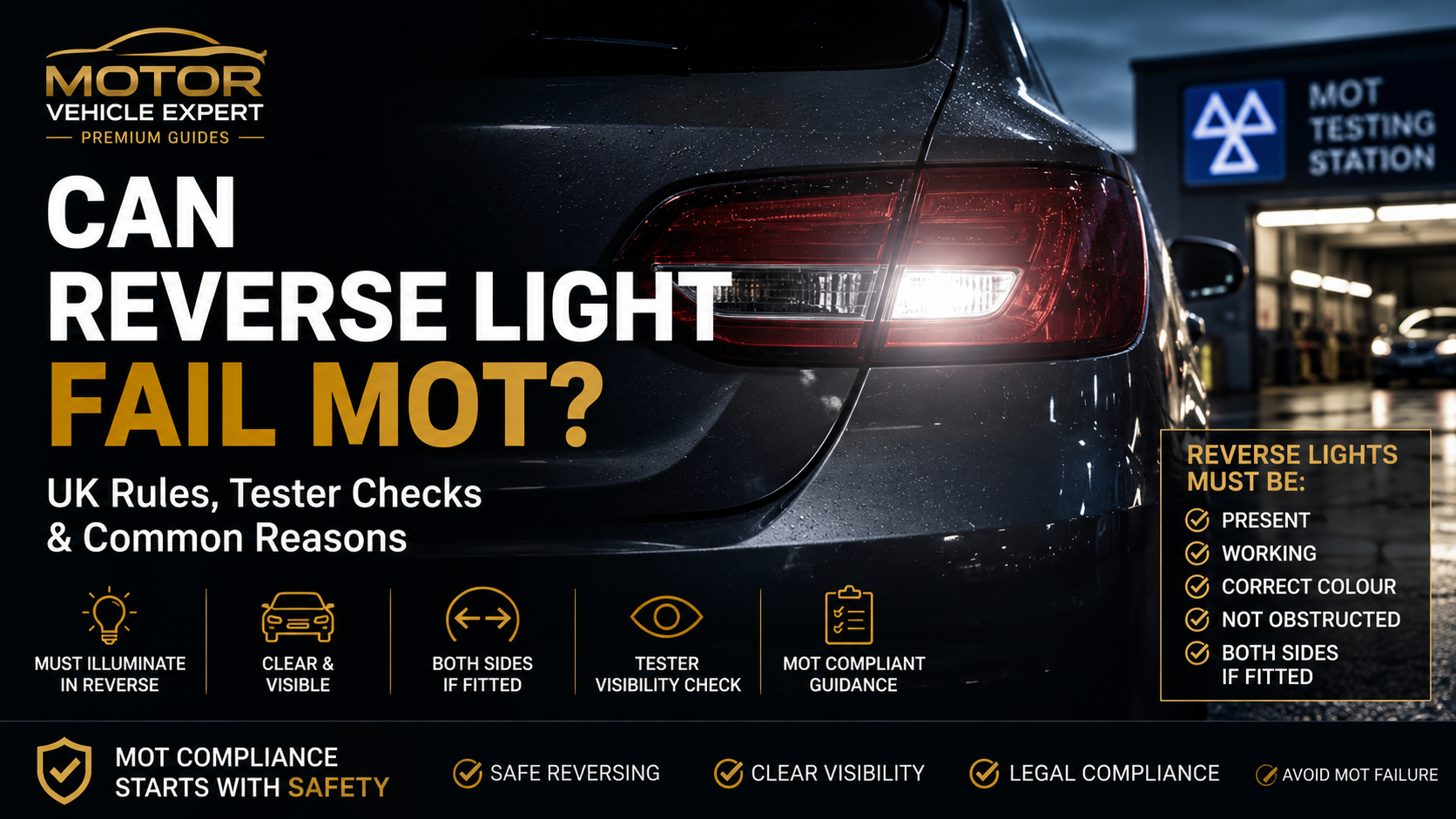
Reverse lights can fail an MOT in the UK if they do not illuminate correctly, show the wrong colour, stay on constantly, flicker, are damaged, insecure or have wiring faults affecting correct operation.

Can reverse light fail MOT UK guide
Quick answer

Will reverse lights fail an MOT?

A reverse light can fail an MOT if it does not illuminate when reverse is selected, shows the wrong colour, stays on constantly, flickers, has a damaged lens, is insecure or has a wiring fault affecting correct operation.

The fault is often simple, such as a bulb, fuse, connector, earth point or reverse light switch. But if it is left until test day, it can still become an avoidable MOT failure.

Tester view

What the tester is checking

The tester is checking whether the reversing lamp operates correctly for the vehicle. It should work when reverse gear is selected, display a suitable white light to the rear, and not remain on when reverse is not selected.

MOT tester checks

What testers check on reverse lights

These are the practical points that matter during the lighting inspection.

Operation

Does it come on in reverse?

The reversing lamp should illuminate when reverse gear is selected, where applicable for the vehicle.

Colour

Is the light white?

A reverse light should normally show white light to the rear, not red, amber, blue or heavily discoloured light.

Switching

Does it switch off?

The lamp should go out when reverse gear is deselected. A reverse lamp stuck on is a fault.

Lens condition

A cracked, missing, faded or water-filled lens can affect light output and colour.

Lamp security

The rear lamp should be secure, not hanging loose, taped badly or likely to detach.

Intermittent operation

Flickering or unreliable operation can point to a switch, earth, connector or wiring fault.

Failure points

When reverse lights can fail an MOT

These faults are common and usually easy to spot before the test.

Not working

Light does not come on

The reversing lamp does not illuminate when reverse gear is selected. This may be a bulb, fuse, switch or wiring issue.

Wrong colour

Wrong colour light

Reverse lamps should show white light. A damaged lens, wrong bulb or tinted lamp can cause the wrong colour.

Stuck on

Reverse light stays on

If the lamp stays on when the vehicle is not in reverse, it can confuse other road users and fail the check.

Damaged rear lens

Cracked, missing or faded lenses can affect brightness, colour and visibility.

Loose lamp unit

A rear lamp that moves around can affect operation and may be considered insecure.

Flickering or intermittent lamp

Intermittent operation is often caused by poor contacts, wiring breaks, water ingress or a faulty switch.

Common faults

Common causes of reverse light faults

These are the areas a garage would usually check first.

1

Blown bulb

A simple failed bulb is common on vehicles with replaceable rear bulbs.

2

Reverse light switch fault

On many manual cars, the reverse light switch is fitted on or near the gearbox.

3

Damaged rear wiring

Wiring near the boot lid, tailgate or rear lamp can break, corrode or rub through.

4

Poor earth connection

A bad earth can cause dim lights, flickering, warning messages or strange rear light behaviour.

5

Water ingress

Moisture inside the lamp can damage bulb holders, LED units and electrical contacts.

6

LED lamp unit failure

Some modern rear lights use LED units. If the reverse section fails, the repair may need a complete lamp unit.

Pre-MOT checks

Pre-MOT reverse light checks

Check this safely before the test, especially if you do not often reverse at night.

1

Select reverse safely

With the vehicle secure, check whether the reverse light illuminates when reverse gear is selected. Use safe conditions and avoid standing behind a vehicle that may move.

2

Use a helper

Ask someone to observe the rear lights while reverse is selected safely, or check the reflection against a wall or garage door.

3

Check the colour

The reverse light should show a clear white light, not red, amber or heavily discoloured light.

4

Inspect the rear lens

Look for cracks, missing pieces, faded plastic, water inside the lamp or loose rear lamp sections.

5

Check it switches off

When reverse is deselected, the reverse light should go out. If it stays on, the switch or control circuit may be faulty.

6

Investigate repeat faults

If bulbs keep failing, check the bulb holder, water ingress, wiring, earth points and lamp sealing.

Repair advice

Reverse light repairs are often simple

Many reverse light faults are quick to repair if the cause is a failed bulb, dirty connector, blown fuse or poor bulb holder contact.

If the bulb is fine but the reverse light never comes on, the reverse light switch, rear wiring, fuse, control module or earth connection may need diagnosis.

Tester-style warning

Do not ignore intermittent faults

If the lamp only works when you move the gear lever, tap the rear light or slam the boot, treat it as a real fault. Intermittent electrical faults can still show up during the MOT.

Fix the cause before the test rather than hoping it works on the day.

Manual cars

Manual gearbox reverse light faults

On many manual cars, the reverse light is triggered by a switch on or near the gearbox. If the bulb and fuse are fine but the light does not work, the gearbox switch is a common suspect.

A switch fault can also make the light flicker or only work when the gear lever is held in a certain position.

Automatic cars

Automatic gearbox reverse light faults

On automatic cars, the reverse light signal may come from the gear selector, transmission range switch or body control module. If the vehicle does not recognise reverse correctly, other symptoms may appear too.

If the reverse light stays on in the wrong gear or does not come on in reverse, get it checked before the MOT.

Real-world faults

Reverse light problems drivers often miss

These are common faults seen during MOT preparation and garage diagnosis.

Only checked in daylight

Reverse lights can look weak in daylight, so check against a wall or in shade if needed.

Water in the rear lamp

Moisture can make the bulb work sometimes and fail later.

Wrong bulb fitted

An incorrect bulb can affect brightness, colour or how the lamp sits in the holder.

Tailgate wiring break

Repeated boot opening can damage wiring, especially on hatchbacks and estates.

Poor earth at rear light

Bad earths can cause several rear lights to behave strangely at the same time.

LED section failure

Some LED rear lamp faults need a replacement lamp unit rather than a small bulb.

FAQs

Reverse light MOT questions

Common questions about reverse lights, bulbs, colour, switches and MOT failure.

Can reverse lights fail an MOT?

Yes, on vehicles where reversing lamps are required to be tested, they can fail if they do not operate correctly.

Will one reverse light out fail MOT?

It can if that reverse light is required to operate correctly for the vehicle.

What colour should reverse lights be?

Reverse lights should normally show white light to the rear.

Can reverse lights stuck on fail?

Yes. Reverse lights should not stay on when reverse gear is not selected.

Is it usually just a bulb?

Often yes, but reverse light switches, fuses, wiring and earth faults can also cause problems.

Do LED reverse lights fail too?

Yes. LED reverse light sections can fail and may need a full lamp unit depending on design.

Can a cracked reverse light lens fail MOT?

Yes, if the damage affects colour, brightness, security or allows water into the lamp.

Should I fix reverse lights before MOT?

Yes. Lighting faults are usually worth checking and repairing before the test.

Motor Vehicle Expert publishes practical UK-focused vehicle diagnostics, maintenance, MOT, warning light, used car and repair cost guidance based on common driver questions and real-world garage situations.