MOT steering guide

Can Power Steering Leak Fail MOT?

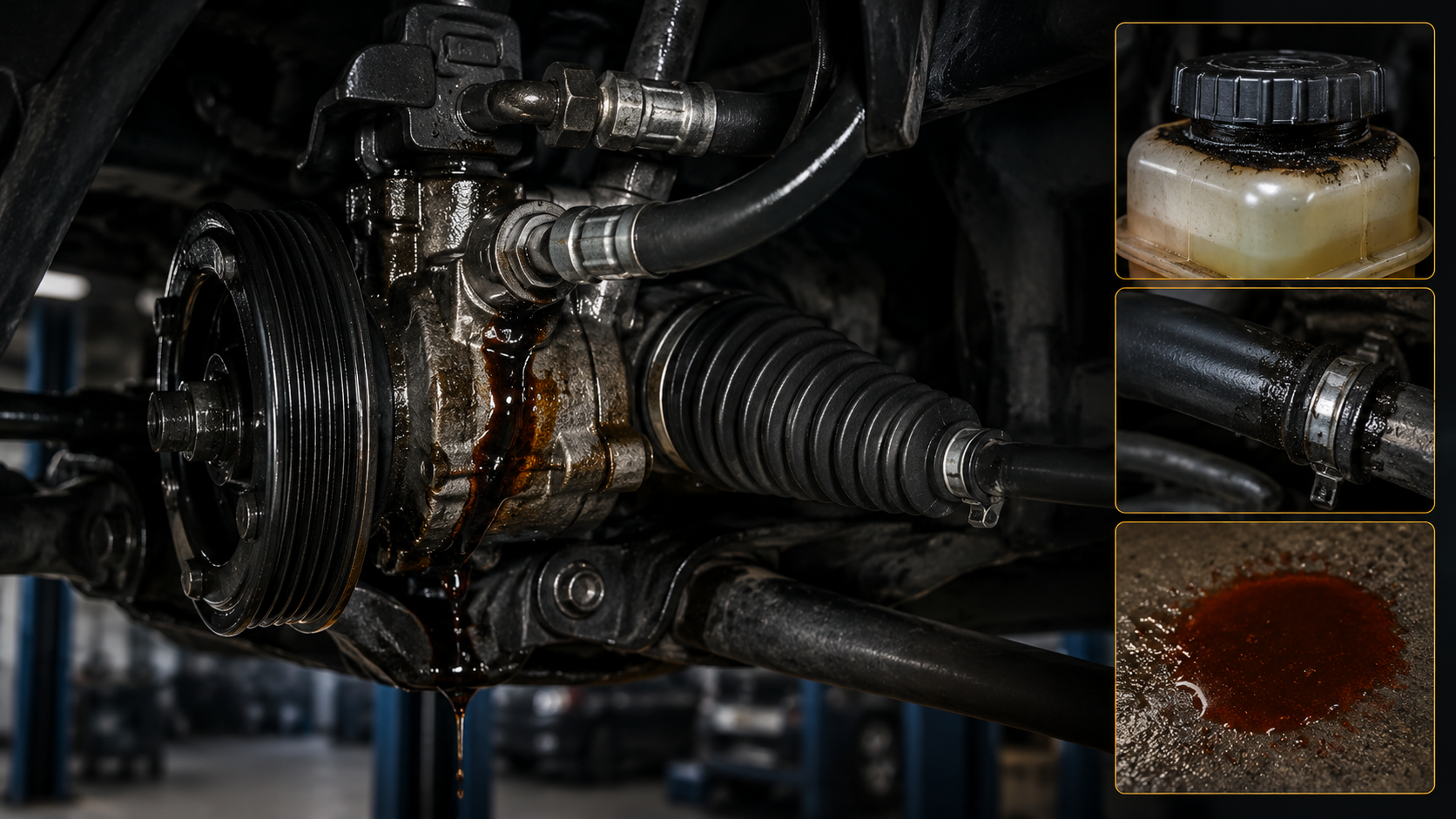
A power steering leak can fail an MOT in the UK if it affects steering operation, creates excessive fluid leakage or makes the steering unsafe. Minor sweating may pass, but serious leaks can quickly become dangerous and expensive.

Can power steering leak fail MOT UK guide
Quick answer

Will a power steering leak fail an MOT?

A power steering leak can fail an MOT if the leak is active, excessive, affects steering assistance, causes low fluid level, contaminates safety-related components, or makes the steering heavy, jerky or unsafe.

Minor sweating or light dampness may not always fail immediately. It may be noted as an advisory depending on severity, but any steering-related fluid loss should be treated seriously.

Tester view

Why steering leaks matter

The MOT tester is not just looking for a wet pipe. The concern is whether the steering system is secure, operating correctly and safe. If a leak causes reduced assistance, low fluid, noisy operation or unreliable steering feel, it becomes a bigger issue.

MOT tester checks

What testers check with power steering leaks

These are the practical points that decide whether the leak is minor, advisory or serious.

Operation

Does the steering work correctly?

The steering should not be excessively heavy, jerky, inconsistent or noisy due to fluid loss or pump problems.

Leak severity

Is fluid actively leaking?

Fresh fluid dripping from pipes, pump, rack or reservoir is more serious than old dry staining.

Safety risk

Is anything contaminated?

Fluid on belts, brakes, tyres, steering joints or suspension parts can raise the risk level.

Low fluid level

Low fluid can cause pump noise, heavy steering and inconsistent assistance.

Noisy steering pump

A whining or groaning pump can mean low fluid, air in the system or pump wear.

Rack and pipe condition

The rack, pipes, hoses and joints should not be leaking heavily or badly corroded.

Failure points

When a power steering leak can fail MOT

These are the faults that make a steering fluid leak more than a small advisory.

Leak

Active fluid leak

Fresh steering fluid dripping from hoses, metal pipes, rack seals, pump seals or the reservoir area can fail.

Assistance

Heavy steering

Reduced assistance or loss of assistance can make the vehicle difficult to control and may fail the MOT.

Noise

Noisy pump from low fluid

A whining or groaning pump can point to low fluid level, air in the system or pump damage.

Fluid contaminating components

Fluid leaking onto belts, brakes, tyres, suspension or steering joints is more serious.

Corroded power steering pipes

Metal pipes can rust badly and leak, especially on older vehicles.

Unsafe steering operation

Any fault that affects steering control is treated seriously at MOT.

Leak sources

Common causes of power steering leaks

These are common places to check on hydraulic power steering systems.

Power steering hoses

Rubber hoses can crack, soften or seep at joints as they age.

Metal pipes

Metal steering pipes can corrode, especially underneath the vehicle.

Steering rack seals

Rack seal leaks are common on older cars and may show fluid near the gaiters.

Power steering pump

Pump shaft seals, housing seals or pipe connections can leak.

Reservoir and cap

Loose caps, cracked reservoirs or poor return hoses can cause fluid loss.

Poor previous repair

Loose clips, wrong fluid, damaged seals or badly fitted pipes can cause repeat leaks.

Hydraulic steering

Hydraulic power steering leaks

Hydraulic power steering uses fluid, hoses, pipes, a pump and often a steering rack with seals. These systems can leak fluid and can become noisy or heavy if the level drops.

If the reservoir keeps needing top-ups, there is a leak that should be traced and repaired.

Electric steering

Electric power steering systems

Many newer cars use electric power steering and do not use hydraulic steering fluid. These systems cannot leak power steering fluid, but they can still have steering-related MOT issues if the steering assistance fails or a warning light indicates a fault.

Power steering warning light meaning →
Pre-MOT checks

Pre-MOT checks for power steering leaks

Check the steering system before the MOT, especially if you have noticed noise, heavy steering or fluid loss.

1

Look for fluid on the ground

Check under the front of the car for fresh red, amber, brown or clear oily fluid spots.

2

Check the fluid level

If your car has hydraulic steering, check the reservoir level using the correct method for your vehicle.

3

Listen when turning

Whining or groaning while turning at low speed can point to low fluid, air in the system or pump wear.

4

Feel for heavy steering

Heavy, jerky or inconsistent steering assistance should be checked before the MOT.

5

Inspect visible pipes and hoses

Look for wet joints, cracked rubber hoses, rusty pipes or fluid around the steering rack.

6

Repair active leaks

Do not rely on topping up the reservoir. Fix active leaks before presenting the car for test.

Repair advice

How to fix a power steering leak

Do not rely on repeatedly topping up the fluid. Find the leak source and repair it properly. Common fixes include replacing hoses, metal pipes, seals, clips, reservoirs, pumps or the steering rack.

After repair, the correct fluid should be used, the level should be set properly and the system may need bleeding to remove air.

Driving safety

Can you drive with a steering fluid leak?

A minor seep may be monitored, but an active power steering leak should be repaired quickly. Low fluid can damage the pump and may make steering heavy without warning.

If steering assistance changes while driving, stop safely and get the vehicle checked.

Real-world faults

Power steering leak problems drivers often miss

These are common faults seen during MOT preparation and steering diagnosis.

Fluid inside rack gaiters

Steering rack seals can leak into the rubber gaiters before dripping is obvious.

Noise only on full lock

A groan on full lock can be an early sign of low fluid or pump strain.

Rusty metal pipes

Power steering pipes can corrode where they run low under the car.

Wrong fluid used

Incorrect fluid can cause noise, seal problems or poor operation.

Leak mistaken for engine oil

Steering fluid can look like other oily leaks, so the source needs tracing properly.

Only topping up

If the reservoir keeps dropping, topping up is not a repair.

FAQs

Power steering leak MOT questions

Common questions about steering fluid leaks, low fluid, heavy steering and MOT failure.

Can a power steering leak fail an MOT?

Yes. It can fail if the leak is active, excessive, affects steering operation or creates a safety risk.

Can a small power steering leak fail MOT?

Minor dampness may not always fail, but active leaks or fluid loss affecting steering can fail.

Will low steering fluid fail MOT?

It can if steering assistance is affected or there is an obvious leak causing fluid loss.

Can heavy steering fail MOT?

Yes. Heavy, jerky or inconsistent steering can fail because it affects vehicle control.

Is whining from the pump serious?

Often yes. It may indicate low fluid, air in the system or pump wear.

Can I just top it up?

Only as a short-term measure. If the fluid level keeps dropping, the leak still needs repair.

Can electric power steering leak fluid?

No. Electric systems do not use hydraulic steering fluid, but they can still have steering faults.

Should I fix it before MOT?

Yes. Steering faults and active fluid leaks are best repaired before testing.

Motor Vehicle Expert publishes practical UK-focused vehicle diagnostics, maintenance, MOT, warning light, used car and repair cost guidance based on common driver questions and real-world garage situations.