<
Number plate lights MOT guide

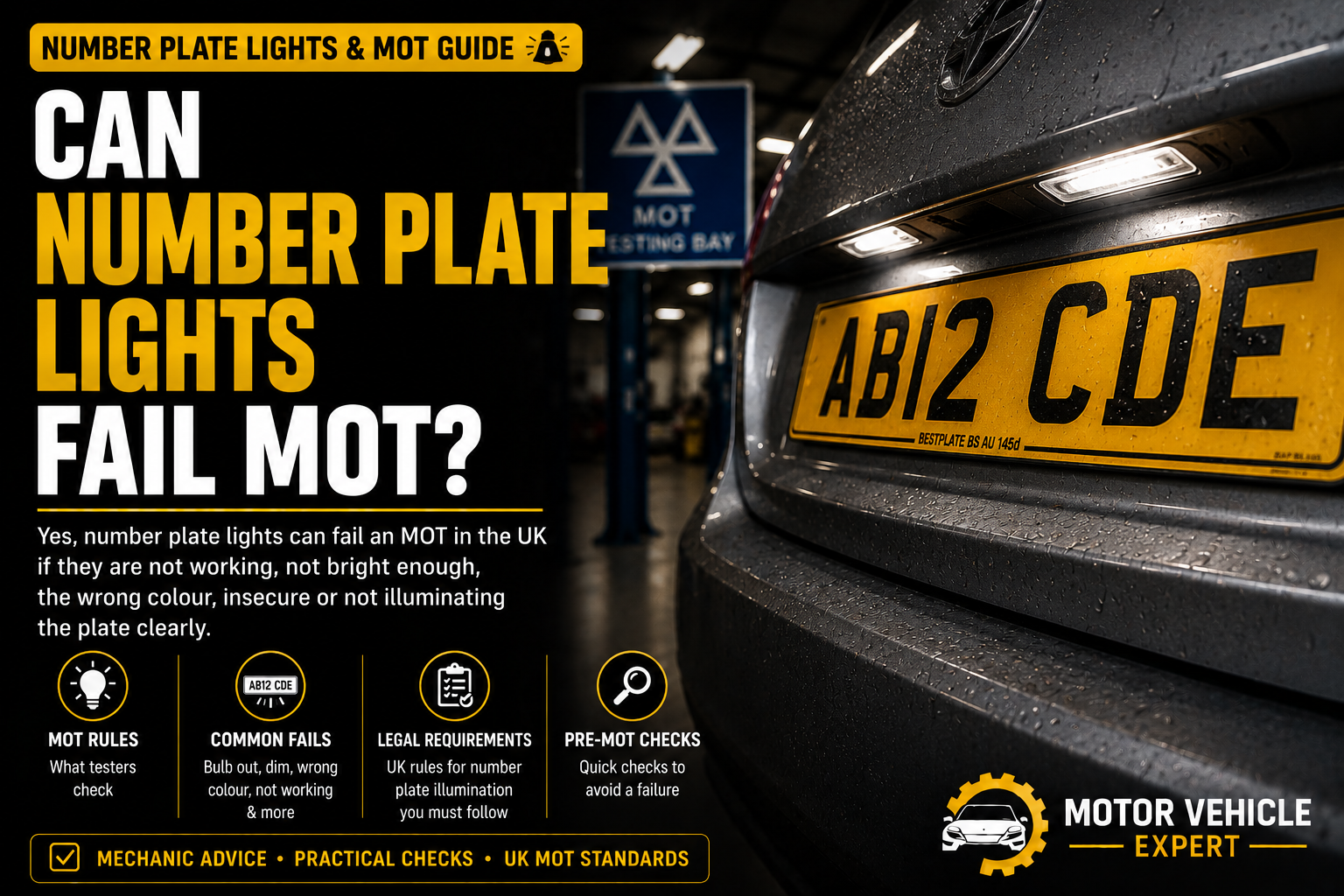
Can Number Plate Lights Fail MOT?

Yes, number plate lights can fail an MOT in the UK if they are not working, too dim, insecure, the wrong colour or fail to illuminate the rear number plate clearly at night.

Can number plate lights fail MOT UK guide
Quick answer

Will number plate lights fail an MOT?

A number plate light can fail an MOT if it does not work, is missing, is insecure, has a broken lens, shows the wrong colour, flickers, or does not illuminate the rear registration plate clearly enough.

If the vehicle has two rear plate lamps and one is out, the result depends on whether the registration is still properly illuminated. If part of the plate is left dark or difficult to read, expect it to be treated as a failure.

Tester view

How an MOT tester sees it

A tester is checking whether the rear registration plate can be identified clearly when the lights are on. A lamp that is dim, loose, full of water or not pointing at the plate properly may still be a problem even if it technically glows.

MOT tester checks

What testers check on number plate lights

These are the practical things that matter during the MOT lighting inspection.

Operation

Does the lamp work?

The rear number plate lamp should come on when the sidelights or headlights are switched on.

Illumination

Is the plate clearly lit?

The rear registration should be lit clearly enough to read. A working bulb is not enough if it does not light the plate properly.

Security

Is the lamp secure?

The lamp should not be hanging loose, missing, badly cracked or likely to fall off.

Lens condition

A damaged, missing or dirty lens can reduce light output or allow water into the unit.

Correct colour

The light should illuminate the plate correctly, not show an unsuitable colour or heavy tint.

Wiring condition

Obvious wiring damage, corrosion or flickering can point to an unreliable lamp.

Failure points

When number plate lights can fail MOT

These faults are common and easy to miss if you never check the rear of the car at night.

Bulb

Bulb not working

No light output from the rear number plate lamp is the simple failure. It is also one of the easiest checks to do at home.

Visibility

Plate not clearly visible

If the plate is only half-lit, too dim, obscured or hard to read, the lamp may not meet the required standard.

Lens

Broken or missing lens

A missing, cracked or damaged lens can affect illumination and can allow water to damage the bulb holder.

Loose lamp unit

The lamp should be properly attached, not hanging down, taped on or moving around.

Water inside the lamp

Moisture can corrode contacts and cause flickering or repeated bulb failure.

Flickering light

A flicker can mean poor contact, damaged wiring, a bad earth or a loose bulb holder.

Common causes

Why number plate lights stop working

The most common cause is a blown bulb. On older cars, corrosion in the bulb holder is also common because number plate lamps sit low at the rear of the vehicle and get exposed to water, road salt and dirt.

On hatchbacks and estates, wiring can also break where it passes through the tailgate hinge area. If the bulb is good but the lamp still does not work, the holder, earth, wiring or fuse may need checking.

LED units

What about sealed LED plate lights?

Some newer vehicles use sealed LED number plate lamps. If the LED unit fails, you may not be able to replace a simple bulb. The full lamp unit may need replacing.

LED plate lights can also fail if they flicker, are too dim, show the wrong colour or do not light the plate evenly.

Pre-MOT checks

Pre-MOT number plate light checks

This check takes less than a minute and can prevent an avoidable MOT failure.

1

Switch on sidelights

Turn the sidelights or headlights on, then walk to the rear of the vehicle and check the plate lamps.

2

Check the full plate

Make sure the whole registration is illuminated, not just one corner or one side.

3

Clean the lenses

Dirt, road grime and old polish can reduce light output from the plate lamp lens.

4

Inspect for cracks

Look for cracked lenses, missing covers, loose screws or water inside the lamp.

5

Replace failed bulbs

If one bulb is out, replace it before the MOT. Check the holder for corrosion at the same time.

6

Check the plate itself

A working light will not save a dirty, faded, cracked or badly spaced number plate.

Repair advice

Usually an easy repair

Number plate light faults are often among the simplest MOT issues to fix. In many cases, replacing a bulb, cleaning contacts, cleaning the lens or fitting a new lamp cover solves the problem.

If the bulb keeps failing, the light flickers, or the holder looks green and corroded, do not just keep fitting bulbs. Check for water ingress, damaged wiring or poor earth connection.

Tester-style warning

Do not leave it for test day

From an MOT tester’s point of view, this is an avoidable failure. It is quick to check and usually cheap to fix compared with tyres, brakes or suspension.

If the rear plate is not lit clearly when you check it at night, fix it before presenting the vehicle for test.

Real-world faults

Number plate light faults drivers often miss

These are common situations seen in real MOT and garage work.

Only one side lit

Some cars have two lamps. One may be out while the other still gives a small amount of light.

Lens full of water

The lamp may work today, then fail again because moisture is damaging the contacts.

Corroded bulb holder

A new bulb may not work if the metal contacts are corroded or loose.

Broken tailgate wiring

Repeated boot opening can damage wiring on some hatchbacks and estates.

Dirty lamp lens

The bulb may be working, but dirt on the lens can make the plate look poorly lit.

Aftermarket LED too blue

Bright does not always mean acceptable. The light must illuminate the plate properly and suitably.

FAQs

Number plate light MOT questions

Common questions about rear registration plate lights, bulbs, lenses and LED units.

Can number plate lights fail an MOT?

Yes. They can fail if the rear registration plate is not illuminated clearly or the lamp is missing, insecure or damaged.

Will one number plate bulb out fail MOT?

It can if the rear plate is not properly illuminated. The tester is checking whether the registration can be clearly seen.

Is a number plate light usually an easy fix?

Yes. Many faults are caused by a blown bulb, dirty lens, corroded holder or loose connection.

Do LED number plate lights fail too?

Yes. LED units can fail, flicker, go dim or need replacing as a complete lamp unit.

Can dirt cause an MOT issue?

Yes. Dirt on the lens or number plate can reduce visibility and should be cleaned before the MOT.

Do front number plate lights matter?

Number plate illumination applies to the rear registration plate.

Can a broken lens fail MOT?

Yes, if the broken lens affects illumination, exposes the lamp, lets in water or makes the unit insecure.

Should I check number plate lights before MOT?

Yes. It takes less than a minute and can prevent a simple avoidable failure.

Motor Vehicle Expert publishes practical UK-focused vehicle diagnostics, maintenance, MOT, warning light, used car and repair cost guidance based on common driver questions and real-world garage situations.