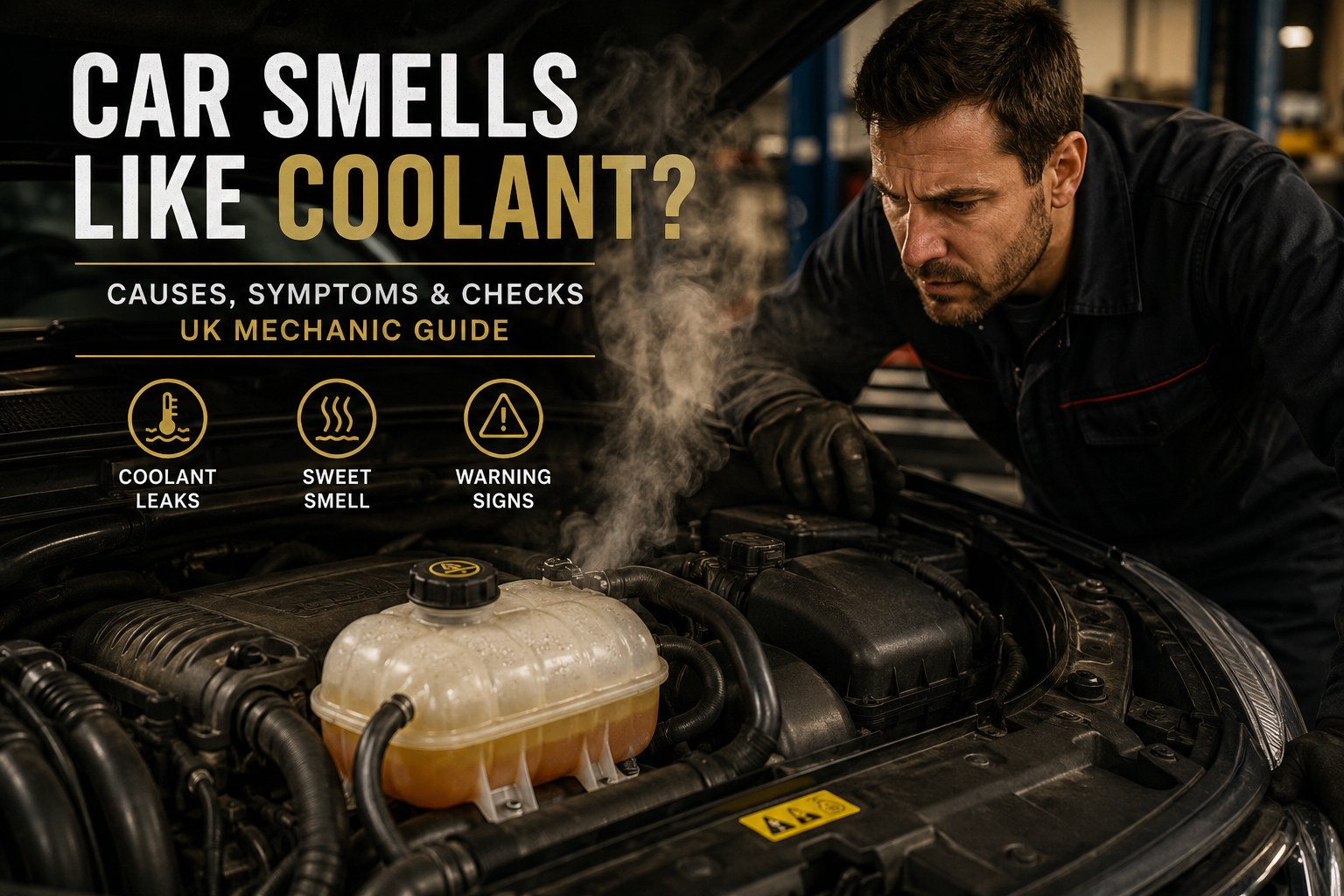
Cooling smell diagnostic guide

Car Smells Like Coolant?

A sweet coolant smell usually means coolant is leaking, evaporating on hot parts, escaping under pressure or entering the cabin through the heater system. It should not be ignored, especially if the coolant level drops, the engine runs hot, the windows mist up or the smell returns after every drive.

Important:

A coolant smell is often an early warning before overheating. Check the coolant level cold, look for staining and do not keep topping up without finding where the coolant is going.

Car smells like coolant UK guide

Coolant smells are closely linked to hidden coolant loss, coolant warning lights, overheating in traffic and repair costs. Use these related guides if the smell comes with low coolant, steam or rising temperature.

Quick answer

Why does my car smell like coolant?

If your car smells like coolant, check for coolant loss, overheating, steam, damp carpets, sweet smells through the heater vents and coloured residue around hoses, the radiator, thermostat housing, water pump or expansion tank.

A faint smell after recent coolant work may be spilled coolant burning off. A repeated sweet smell, dropping coolant level, low coolant warning light or rising temperature points more strongly to a coolant leak or cooling-system fault.

First clue

Where do you smell it?

Coolant smell inside the cabin often points towards the heater matrix or heater pipework. Coolant smell outside the car after parking often points towards a hot engine bay leak.

If the smell appears with overheating in traffic or when stationary, the cooling fan, coolant level and pressure system should also be checked.

Real-life signs

What a coolant smell looks like in real life

These are the clues drivers usually notice before they find the actual leak.

Real experience

The first time I noticed a coolant smell

One of the earliest cooling-system problems I experienced started with nothing more than a strange sweet smell after driving. There was no major puddle under the car and the engine still seemed to drive normally, so at first I ignored it.

After parking, the smell became stronger around the front of the car and sometimes through the heater vents. Eventually I noticed the coolant level slowly dropping and occasional temperature rises in traffic.

That experience taught me that coolant smells are often early warning signs before overheating begins properly. Small leaks, pressure loss and hidden cooling-system faults can stay unnoticed for a long time if drivers only wait for obvious steam or warning lights.

Important:

If a coolant smell keeps returning, do not assume it is harmless. Cooling-system problems are usually cheaper and safer to repair before overheating starts.

Sweet smell after parking

A small hot leak may smell stronger once the car is switched off and heat builds under the bonnet.

Windows mist up inside

Sweet-smelling mist or greasy film can point towards heater matrix leakage.

Smell when heater is on

A smell through the vents often points towards heater system coolant vapour.

Heater smell guide β†’
Coolant and overheating cluster

If the smell comes with coolant loss, warning lights or overheating

Use these pages to diagnose the cooling-system pattern more accurately.

Warning

Coolant warning light on

If the coolant warning light appears with a sweet smell, check the level cold and look for leaks.

Read coolant warning guide β†’
Hidden loss

Car losing coolant but no leak

Coolant can disappear without a puddle if it evaporates, leaks inside the cabin or escapes under pressure.

Read hidden coolant loss guide β†’
Repair cost

Coolant leak repair cost UK

Repair cost depends on whether the leak is from a hose, radiator, cap, water pump or heater matrix.

Read coolant leak cost guide β†’

Engine overheating when idle

If the temperature rises when stationary, the fan, coolant level and circulation need checking.

Idle overheating guide β†’
Common causes

Common reasons a car smells like coolant

Most coolant smells come from small leaks, pressure faults, heater issues or coolant dripping onto hot parts.

Leak

Coolant leak in engine bay

Hoses, radiator, thermostat housing, expansion tank, water pump or pipework can leak when hot.

Coolant leak repair cost β†’
Heat

Coolant on hot parts

Small leaks can drip onto hot engine or exhaust parts and create a strong sweet smell.

Cabin

Heater matrix leak

A sweet smell inside the cabin can point to a heater matrix or heater pipe leak.

Heater fault guide β†’

Engine overheating

Overheating can force coolant out of the system and create steam or a strong smell.

Overheating causes β†’

Recent service spill

Coolant spilled during maintenance can smell temporarily until it burns off.

Servicing guide β†’

Water pump seep

A water pump can leak from its seal or weep hole, leaving stains and a hot coolant smell.

Water pump symptoms β†’

Radiator leak

Small radiator leaks may smell before they leave a clear puddle, especially after motorway driving.

Radiator symptoms β†’

Internal coolant loss

Less common, but serious if the smell comes with white smoke, overheating or bubbling coolant.

Head gasket symptoms β†’
Cabin smell

Coolant smell inside the car

A coolant smell inside the cabin is more concerning than a brief smell outside the car. It may mean coolant is leaking into the heater system, especially if the smell is strongest when the heater is on.

If the screen keeps misting up with a sweet smell, the front carpets feel damp, or the windscreen has a greasy film, do not ignore it.

Heater matrix clues

Signs of a heater matrix leak

  • !Sweet smell through the heater vents.
  • !Greasy mist or film on the windscreen.
  • !Damp front carpets or wet footwell area.
  • !Coolant level slowly dropping.
  • !Heater performance changing or blowing cold.
Outside smell

Coolant smell outside the car or after parking

A coolant smell outside the car is often strongest after a journey because the system is hot and pressurised.

After parking

Heat soak can make a small leak smell stronger once the engine is switched off.

White or coloured residue

Dried coolant can leave chalky, crusty or coloured residue around joints, caps and hoses.

Warning signs

Warning signs that need faster attention

These signs mean the smell may be more than a small harmless residue smell.

!

Coolant level keeps dropping

Repeated top-ups mean coolant is escaping somewhere.

!

Temperature gauge rises

Coolant smell with overheating should be treated as urgent.

!

Steam from under the bonnet

Stop safely and let the engine cool before checking anything.

!

Heater blows cold while engine is hot

This can happen when coolant level is low or circulation is poor.

!

Windows mist with sweet smell

This can point towards coolant vapour inside the cabin.

!

White smoke or bubbling coolant

These signs need proper testing, especially if overheating is also present.

First checks

What to check first

Start with safe, simple checks before assuming the worst.

1

Let the engine cool

Never open a hot coolant cap. The system can be pressurised and dangerous.

2

Check coolant level

Look at the expansion tank when cold and compare it with the minimum and maximum marks.

3

Look for staining

Check around hoses, radiator edges, the expansion tank, thermostat housing and water pump area.

4

Check under the car

Fresh puddles or damp patches after parking can reveal a leak location.

5

Use heater clues

A smell that appears when the heater is on may point towards the heater matrix or cabin-side pipework.

6

Watch the gauge

Rising temperature, warning lights or steam make the problem more urgent.

Driving advice

Can you keep driving if the car smells like coolant?

If the smell is faint and appeared after recent coolant work, it may be residue burning off. Monitor the coolant level and temperature carefully.

Do not keep driving if the car is overheating, coolant is leaking heavily, steam appears, the heater blows cold while the temperature rises, or the coolant warning light comes on.

Stop driving if

When to stop and let it cool

  • !The temperature gauge rises above normal.
  • !Steam appears from the engine bay.
  • !The coolant warning light comes on.
  • !Coolant is leaking heavily.
  • !The heater blows cold while the engine is hot.
Head gasket?

Could a coolant smell mean head gasket trouble?

A coolant smell alone does not automatically mean the head gasket has failed. Most coolant smells are caused by external leaks, pressure cap faults, heater matrix leaks or spilled coolant.

But if the smell comes with coolant loss, bubbling coolant, overheating or white smoke, internal engine trouble should be checked.

More serious clues

Signs that need proper testing

  • !Coolant disappears with no obvious external leak.
  • !White smoke or sweet steam comes from the exhaust.
  • !Coolant bubbles in the expansion tank.
  • !Engine overheats repeatedly after topping up.
  • !Oil looks milky or coolant looks contaminated.
Repair costs

Repair cost depends on the source

The smell is only the clue. The real cost depends on where the coolant is escaping.

Hose or clip leak

Often a lower-cost repair if access is straightforward.

Radiator or tank leak

Usually more expensive than a simple hose or clip, depending on access and parts.

Heater matrix leak

Can be costly on some cars because dashboard access may take a lot of labour.

Water pump leak

Can be more expensive if the pump is cambelt-driven or difficult to reach.

Pressure cap or tank

May be lower cost if the fault is just a weak cap or cracked expansion tank.

Head gasket concern

Can be expensive and should be confirmed by testing before assuming the worst.

For more detail, see the coolant leak repair cost UK guide.

Used car checks

Coolant smell when buying a used car

A sweet coolant smell during a viewing or test drive is a warning sign.

1

Check coolant before and after driving

A falling level after a short test drive is not a good sign.

2

Look for dried residue

Check around hoses, radiator, expansion tank, cap and thermostat housing.

3

Check the cabin

Damp carpets, greasy misted windows or sweet vent smells can suggest heater matrix trouble.

4

Watch the temperature gauge

Do not dismiss a car that runs hot, even if the seller says it only needs coolant.

5

Be careful with β€œjust needs topping up”

Repeated coolant top-ups normally mean a leak or cooling fault.

6

Check for smoke and bubbling

White smoke, bubbling coolant or overheating can point to more serious issues.

Mechanic advice

Best mechanic-style advice

A coolant smell is one of those clues drivers often ignore because the car still drives normally. That is the mistake. Many cooling-system problems start as a smell before they become a warning light, steam cloud or overheating engine.

Start simple: check the coolant level cold, look for staining, check the cabin carpets and watch the temperature.

FAQs

Car coolant smell questions

Common questions about sweet coolant smells, leaks, cabin smells and overheating risks.

What does coolant smell like?

Coolant often has a sweet, chemical smell, especially when hot or leaking onto warm parts.

Why does my car smell sweet after driving?

A sweet smell after driving often points to hot coolant, a small leak, coolant residue burning off or a heater-system leak.

Can a heater matrix cause a coolant smell?

Yes. A heater matrix leak can cause a sweet smell inside the cabin, misted windows, damp carpets and coolant loss.

Can I drive with a coolant smell?

Only with caution if temperature and coolant level are normal. Stop if the engine overheats, steam appears or coolant level drops quickly.

Why does coolant smell only when parked?

Heat after a journey can make small leaks evaporate, making the smell stronger once parked.

Should I just top up coolant?

Topping up may help temporarily, but repeated coolant loss means the leak or fault still needs fixing.

Can coolant smell come through the vents?

Yes. A sweet smell through the vents can point towards heater matrix leakage or coolant vapour entering the cabin airflow.

Can coolant smell mean overheating?

It can. Coolant smell with steam, a rising temperature gauge or a warning light should be treated as urgent.

Can a coolant smell mean head gasket failure?

Not by itself. But coolant smell with coolant loss, white smoke, bubbling coolant and repeated overheating should be checked properly.

What should a garage check?

A garage may pressure test the cooling system, inspect hoses, radiator, cap, thermostat housing, water pump, heater matrix and test for combustion gases if needed.

Motor Vehicle Expert publishes practical UK-focused vehicle diagnostics, maintenance, MOT, warning light, used car and repair cost guidance based on common driver questions and real-world garage situations.