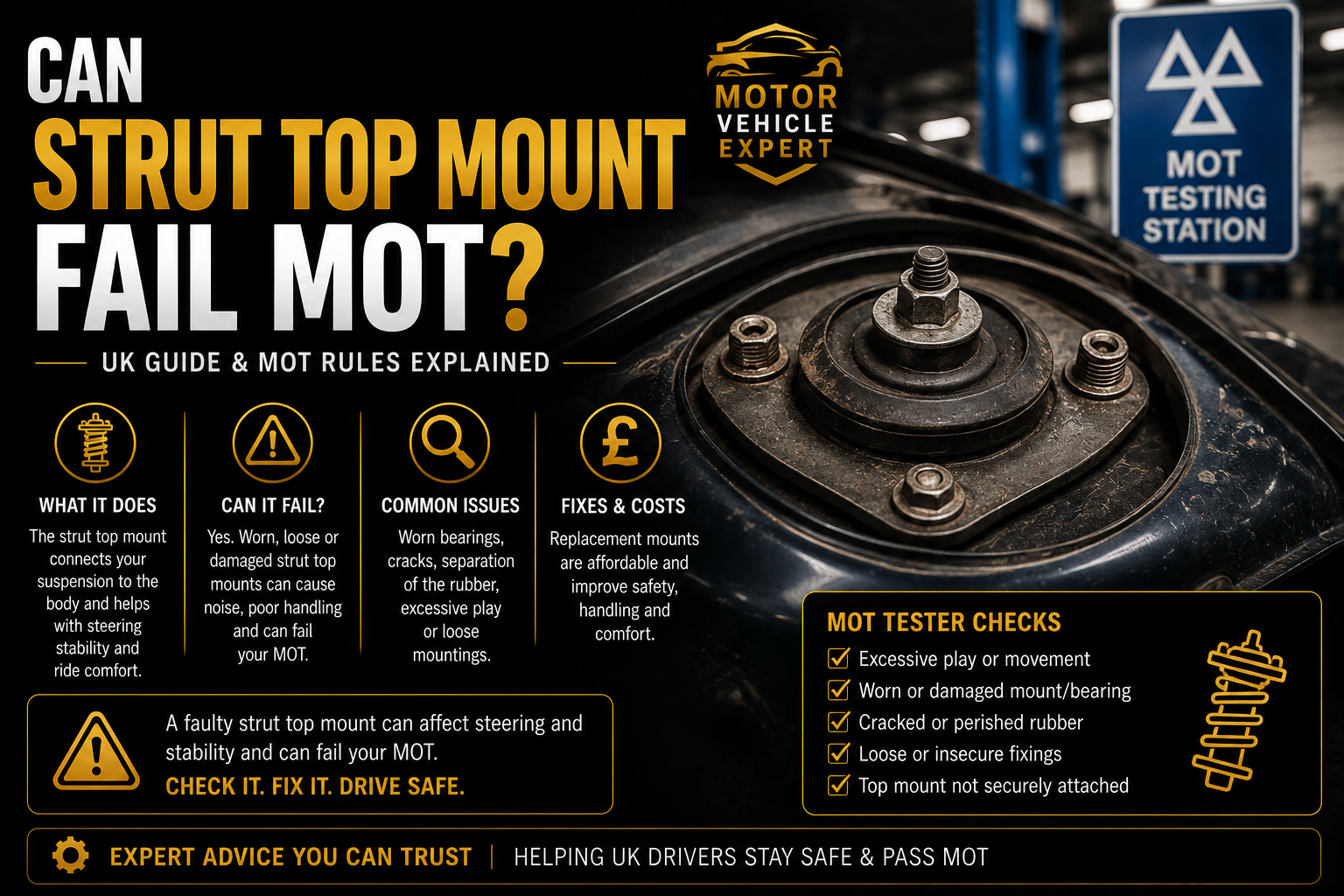
Strut top mount MOT guide

Can Strut Top Mount Fail MOT?

Yes, a strut top mount can fail an MOT in the UK if it is worn, loose, cracked, excessively corroded or causes unsafe suspension movement, steering instability or knocking noises.

Can strut top mount fail MOT UK guide
Quick answer

Will a strut top mount fail an MOT?

A strut top mount can fail an MOT if it has excessive play, loose fixings, badly worn rubber, a damaged or seized bearing, visible movement, corrosion around the mounting area, or any defect that affects suspension security.

Minor rubber wear may receive an advisory, but serious looseness, knocking, rough steering or insecure mounting should be repaired before the test.

Tester view

What the tester is looking for

The tester is checking whether the suspension strut is securely mounted and whether the top mount is allowing excessive movement. If the mount is loose, badly worn or the surrounding structure is weak, it can affect steering, braking stability and tyre contact.

MOT tester checks

What testers check on strut top mounts

These are the practical points that matter during a suspension inspection.

Security

Is the strut secure?

The top mount should hold the strut securely without loose fixings or excessive movement.

Movement

Is there excessive play?

Visible movement, knocking or lift at the mount can point to worn rubber, loose fixings or a damaged bearing.

Structure

Is the mounting area sound?

Rust, cracks or damage around the suspension turret or mounting area can become a serious MOT issue.

Bearing condition

A rough, seized or noisy top mount bearing can affect steering movement on front strut setups.

Rubber condition

Badly split or collapsed rubber can allow abnormal suspension movement.

Related parts

Shock absorbers, springs, drop links and lower arms can cause similar symptoms.

Failure points

When a strut top mount can fail an MOT

These faults should be repaired before test day if they are obvious.

Play

Excessive play

Too much movement in the top mount can affect suspension control and steering stability.

Fixing

Loose fixing

Loose nuts, bolts or mounting hardware can make the suspension strut insecure.

Rubber

Split or collapsed rubber

Badly deteriorated rubber can reduce support and allow abnormal movement.

Worn bearing

A rough or seized top mount bearing can affect steering rotation on front strut setups.

Corrosion or damage

Rust, cracks or impact damage around the mounting area can become an MOT issue.

Unsafe suspension movement

Any defect that affects suspension security or vehicle control can fail.

Warning signs

Common symptoms of worn strut top mounts

These symptoms often show up during low-speed driving, parking or driving over rough roads.

Clunking over bumps

Often heard from the front suspension area, especially over speed bumps or potholes.

Creaking when steering

A creak, groan or twang when turning can point to a worn or dry top mount bearing.

Knocking at low speed

A worn mount can knock when manoeuvring, braking lightly or driving over uneven roads.

Heavy or uneven steering

The steering may feel rough, notchy or reluctant to self-centre.

Visible movement

The strut top may move more than expected when steering or bouncing the car.

Top bearing

Strut top mount bearings

On many front suspension designs, the strut top mount includes a bearing that lets the strut rotate as you steer. If this bearing wears, dries out or seizes, it can cause creaking, spring twang, notchy steering or clunks.

A rough top bearing can also make the spring twist and release suddenly when the steering is turned.

Rubber mount

Rubber mount wear

The rubber section helps absorb shock and hold the strut in position. When it collapses, splits badly or separates, the strut can move more than it should.

That movement can create knocking and may affect suspension security.

Pre-MOT checks

Pre-MOT strut top mount checks

These checks can help you spot an obvious top mount problem before the MOT.

1

Listen over bumps

Listen for clunks, knocks or creaks over speed bumps, potholes and uneven roads.

2

Turn lock to lock

Turn the steering and listen for grinding, twanging, creaking or notchy movement.

3

Check steering feel

The steering should feel smooth and return normally, not bind or jump.

4

Inspect visible mounts

Look under the bonnet for rust, loose fixings, cracked rubber or unusual movement.

5

Check tyre wear

Uneven tyre wear can suggest suspension movement or alignment issues.

6

Get a ramp inspection

If you hear knocking, a garage can check the strut, mount, bearing, spring and related suspension parts properly.

Repair advice

Should you replace strut top mounts before MOT?

Yes, if there is clear knocking, excessive movement, rough steering or visible damage. Strut top mounts are suspension safety components, and faults can worsen over time.

Top mounts are often replaced when fitting new shock absorbers or struts because much of the same labour is involved.

Both sides?

Should top mounts be replaced in pairs?

Not always, but it is sensible to check both sides. If one mount is worn due to age and mileage, the other side may also be tired.

For balanced suspension behaviour, many garages recommend replacing related parts in axle pairs where appropriate.

Repair costs

Typical UK strut top mount repair costs

The final cost depends on the vehicle design, labour time and whether the strut or bearing is replaced at the same time.

Top mount replacement

Often moderate cost, depending on access and suspension design.

Top mount and bearing

Commonly replaced together if the bearing is noisy, rough or seized.

Strut and mount together

Can cost more, but may be sensible if the shock absorber is also worn or leaking.

Coil spring replacement

Sometimes springs are inspected or replaced while the strut assembly is apart.

Coil spring guide →
Similar faults

Top mount faults can mimic other suspension problems

A proper inspection is important before replacing parts.

Real-world faults

Strut top mount problems drivers often miss

These are common situations seen during MOT preparation and suspension diagnosis.

Spring twang when parking

A seized top bearing can make the spring wind up and release suddenly when steering.

Knock blamed on drop links

Drop links are common, but top mounts can create a similar knock over bumps.

Rust around the turret

The mount may be worn, but the surrounding metal also needs checking for corrosion.

One side sits differently

Uneven ride height can point to springs, mounts, struts or suspension damage.

Steering does not self-centre

A rough top bearing can make steering feel sticky or slow to return.

Tyres wearing unevenly

Suspension movement and poor alignment can quickly damage tyres.

FAQs

Strut top mount MOT questions

Common questions about noisy top mounts, worn rubber, bearings and MOT failure.

Can noisy top mounts fail MOT?

Yes, if the noise is linked to excessive wear, looseness or unsafe suspension movement.

Are strut top mounts checked on MOT?

Yes, they can be checked as part of suspension condition and security.

Do top mounts affect steering?

Yes, especially on front strut suspension where the mount includes a bearing.

Can worn rubber be an advisory?

Minor deterioration may be an advisory, but serious movement or damage can fail.

Should top mounts be replaced in pairs?

Not always, but many garages recommend checking both sides for even wear and balanced suspension behaviour.

Can top mounts cause tyre wear?

Yes, if the mount allows movement that affects suspension geometry or alignment.

Can a seized top mount bearing fail?

Yes, if it affects steering movement, causes unsafe operation or creates excessive strain in the suspension.

Best next step before MOT?

Have knocking, creaking, visible movement or rough steering inspected before the test.

Motor Vehicle Expert publishes practical UK-focused vehicle diagnostics, maintenance, MOT, warning light, used car and repair cost guidance based on common driver questions and real-world garage situations.