
Quick answer
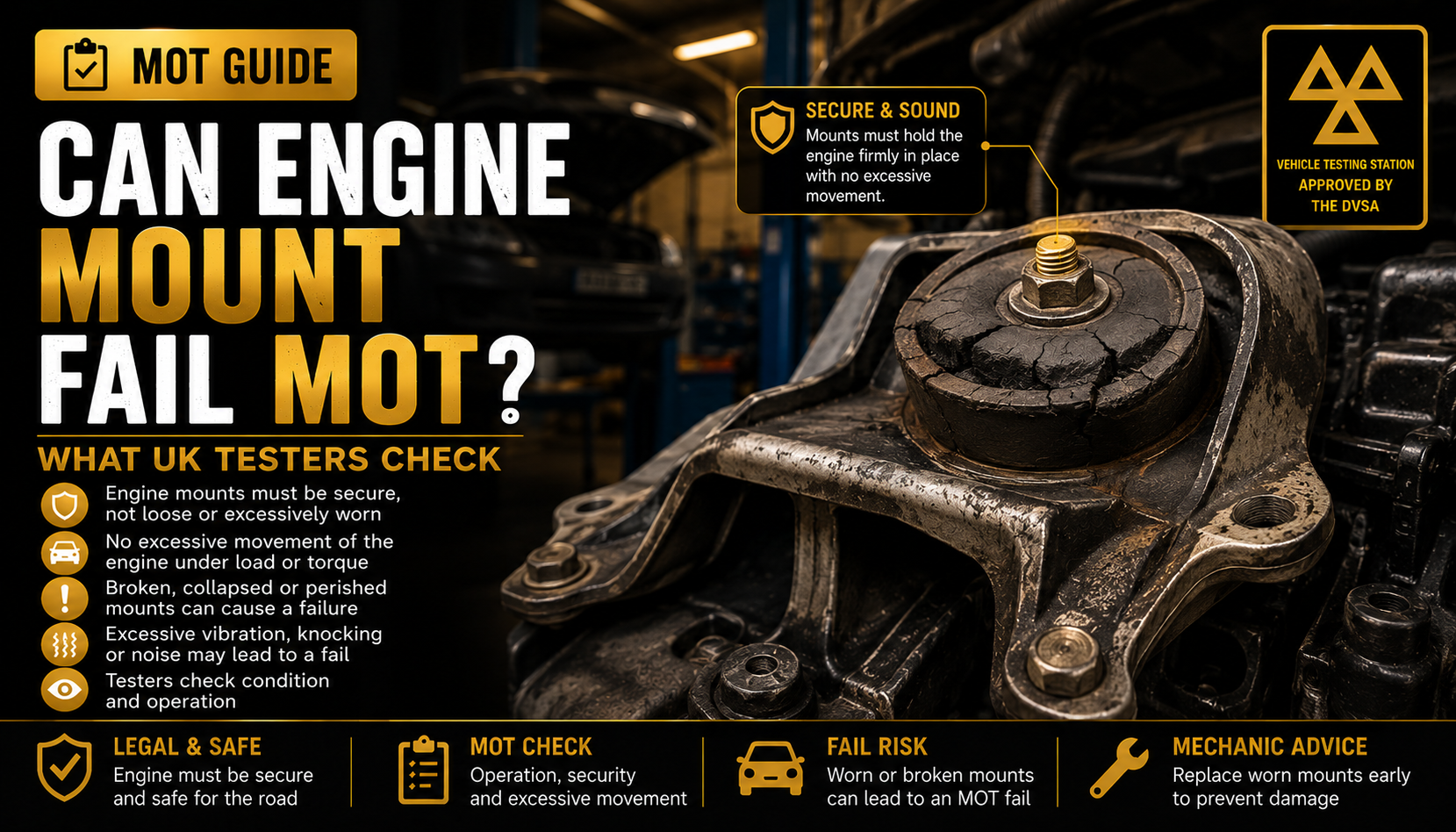
Engine mounts secure the engine and gearbox while reducing vibration. If a mount is damaged or detached, it can become an MOT issue.
Minor wear may not fail immediately, but severe movement or insecurity can.
When an engine mount can fail MOT
Broken mount
Cracked or separated mount components.
Excessive movement
Engine moves too much under load.
Insecure fixing
Loose bolts or failed mounting points.
Metal contact
Failed rubber can allow harsh contact.
Danger to nearby parts
Movement may strain hoses or wiring.
Severe deterioration
Rubber mount badly split or collapsed.
Common symptoms of worn engine mounts
Typical symptoms include vibration at idle, clunks when accelerating, harsh gear changes, engine rocking when revved and extra noise through the cabin.
Some drivers notice symptoms long before MOT time.
What to check before your MOT
1. Listen for clunks
Noise when setting off or changing gear can be a clue.
2. Feel for vibration
Excessive idle vibration may suggest failed mounts.
3. Inspect visible mounts
Look for split rubber or leaking hydraulic mounts.
4. Check engine movement
Large rocking movement may indicate wear.
5. Check related noises
Knocks under acceleration can point to mount issues.
6. Repair early
Ignoring failed mounts can damage other components.
Should you repair it before MOT?
Yes, especially if vibration or engine movement is obvious. Mount faults often worsen over time and can affect drivability.
Replacing worn mounts early can improve comfort and prevent further wear elsewhere.
Related MOT and fault guides
Frequently asked questions
Can worn engine mounts fail MOT?
Yes, if wear is serious enough.
Do mounts cause vibration?
Yes, failed mounts often increase vibration.
Can gearbox mounts fail too?
Yes, transmission mounts can also be inspected.
Is it dangerous?
Severe failures can strain other components.
Are mounts expensive?
Costs vary widely by vehicle and mount type.
Best next step?
Inspect and replace worn mounts before MOT.